


Since the interviews for this investigation were conducted, some affected residents have confirmed beginning to receive compensation payments, although many others say they are still waiting for clarity on when they will be paid.
By Situmbeko Sikuka | Mongu
At sunrise in Mongu, Nabiwa Imikendu wakes up on borrowed land, surrounded by the remains of a life he says was dismantled in the name of development. Just months ago, he had a home, fruit trees, and a yard built over decades in Greenview, an area cleared to pave way for the expansion of Mongu Airport. Today, he is among more than 600 families still waiting for compensation they say government promised would arrive within three months.
“We appreciate the development that the UPND government is undertaking, especially the expansion of Mongu Airport,” said Imikendu. “But the programme came at the wrong time. When it started, it was during the rainy season, and people could not do anything.”
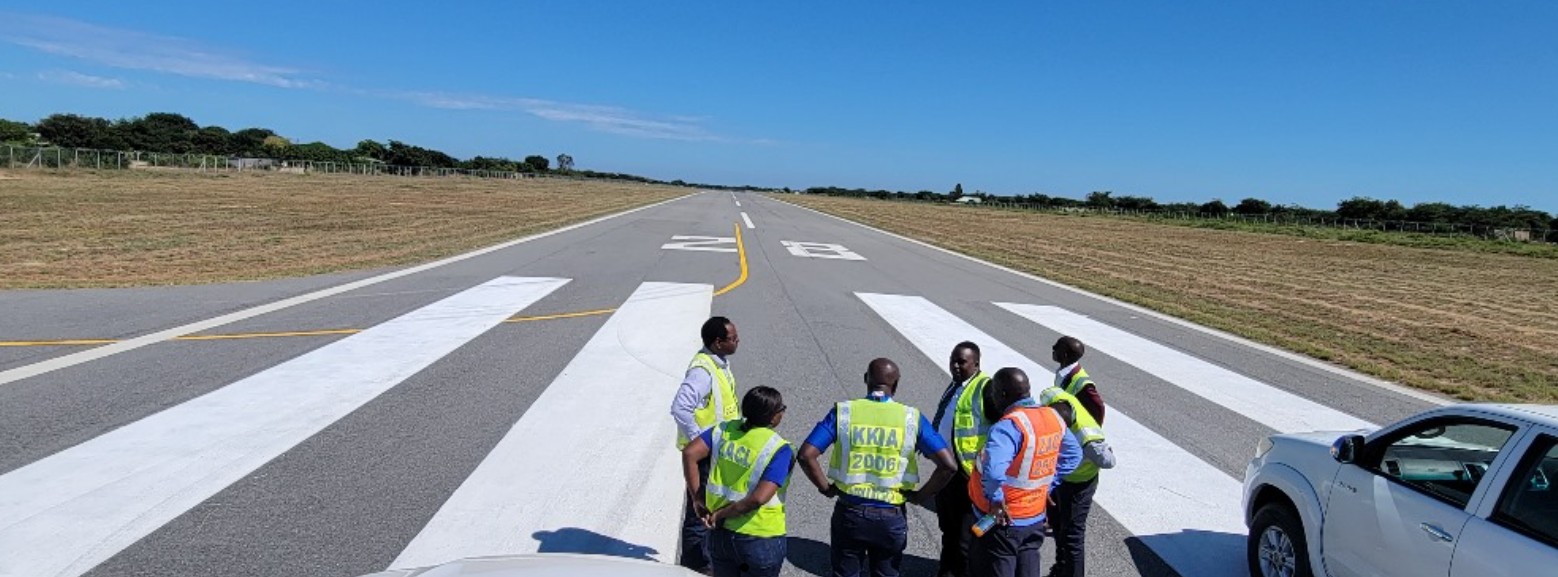
The Mongu Airport expansion project includes runway rehabilitation, terminal renovations, and wider infrastructure upgrades, including the fencing off of the affected area. The project is being undertaken by Zambia Airports Corporation Limited (ZACL) in partnership with the Ministry of Transport and Logistics. While authorities say the first tranche of compensation for displaced residents alone is expected to exceed K67.5 million, the total cost of the overall project has not been publicly disclosed in available official documents.
A Radio Liseli investigation found that while construction and renovations at Mongu Airport continue to be celebrated as a major development milestone for Western Province, many displaced residents say they were left without clear agreements, without compensation, and without certainty about when—or whether—they will be paid.
Some families demolished their own homes after being told compensation would follow. Others abandoned fields, fruit trees, and businesses built over generations. Months later, many remain in temporary shelters, relying on relatives and neighbours for survival as frustration grows over what residents describe as delayed promises and limited accountability.
“We have lived in this place for about 50 years, and then someone comes today and tells you to move out,” said Imikendu. “It is very unfair, but we have succumbed to the pressure from government.”
According to testimonies gathered by Radio Liseli from multiple residents, the arrangement appeared straightforward: relocate first, receive compensation later. However, Imikendu said there are no minutes or written agreement between the government and the affected residents.
“This has never been negotiated on both sides, but we were merely told, ‘government is doing this and you have to comply,’ he said. “Unfortunately, complying where there is not even a single paper of agreement or some minutes written, even to call it a gentleman’s agreement would be wrong because we never said anything ourselves.”
But months after leaving their homes, many residents say the promised compensation has not materialised.
“We waited from November to December last year, there was nothing. We were even asked to sign for the money which we never received,” another resident said.
The delays have left some families living in temporary shelters and relying on relatives or neighbours for accommodation. Others say they are struggling to rebuild their lives after losing farmland and sources of income tied to the displaced area, while some residents say they have yet to vacate the land altogether.
Under Zambia’s Constitution and the Lands Acquisition Act, compulsory acquisition of land by the state requires compensation for affected persons. Land governance experts say international best practices further require free, prior and informed consultation with communities before displacement.
“When a developer intends to displace people, there should be consultation under the principle of free, prior and informed consent. This principle means that before people are displaced, they must be consulted freely, without coercion or intimidation,” said Patrick Musole, Director of the Zambia Land Alliance, a Zambian civil society network that advocates for equitable land governance, land rights protection, and fair access to land, especially for vulnerable and marginalised communities.
Residents have repeatedly taken their concerns to the provincial administration office seeking clarification on when payments will be made. However, affected families say responses have been slow and, in some cases, unclear.
Radio Liseli sought clarification from Zambia Airports Corporation on whether compensation funds had been allocated, when the money was disbursed, and why many affected residents had still not been paid months after their displacement. However, the corporation did not respond to the questions or reply to emails and phone calls.’
The provincial administration, through the chairperson of the committee overseeing compensation for the displaced families, Richard Mulwanda — who is also Deputy Permanent Secretary — confirmed that all 643 affected persons would eventually be compensated.
Mulonda said the Ministry of Finance had already released part of the funds, and that some beneficiaries were expected to start receiving compensation soon.
“The first tranche is in the tune of K67.5 million, and that will help us attend to the first beneficiaries,” he said. “…so we will be in a position to cater for a specific number which I think will be known after our department of finance has concluded the compilations.”
Even as compensation concerns remain unresolved, government officials have publicly praised the airport project as a major development milestone for Western Province.
In a recent statement, Western Province Permanent Secretary Simomo Akapelwa welcomed the renovations at Mongu Airport, describing the upgraded facility as a boost to tourism and investment in the region. He further urged the Zambia Airports Corporation, the Zambia Tourism Agency, and private stakeholders to work together in marketing Mongu and Western Province as a viable destination for tourism and business.
Residents say the contrast between visible progress at the project site and their own unresolved situation has deepened feelings of abandonment.
“We understand that this is development, yes, the expansion of the airport,” said Imikendu. “But we are also human beings. Look at this place, where will I find another property like this, as big as it is? I will not find one. Now I will be compelled to stay in a shanty compound. My life won’t be the same.”
The dispute has raised broader questions about how major infrastructure projects are being implemented and whether affected communities are receiving adequate protection during displacement processes.
Photo Credit | Ministry of Transport and Logistics
This article was produced for MakanDay’s Local Reporting Network. Sign up to get stories like this one as soon as they are published.

Discover more from MAKANDAY
Subscribe to get the latest posts sent to your email.