


An investigation into the growing human, medical, and economic burden created by Zambia’s rapidly expanding motorbike transport sector.
By MakanDay Centre for Investigative Journalism
The hospital ward called “Gatoma”
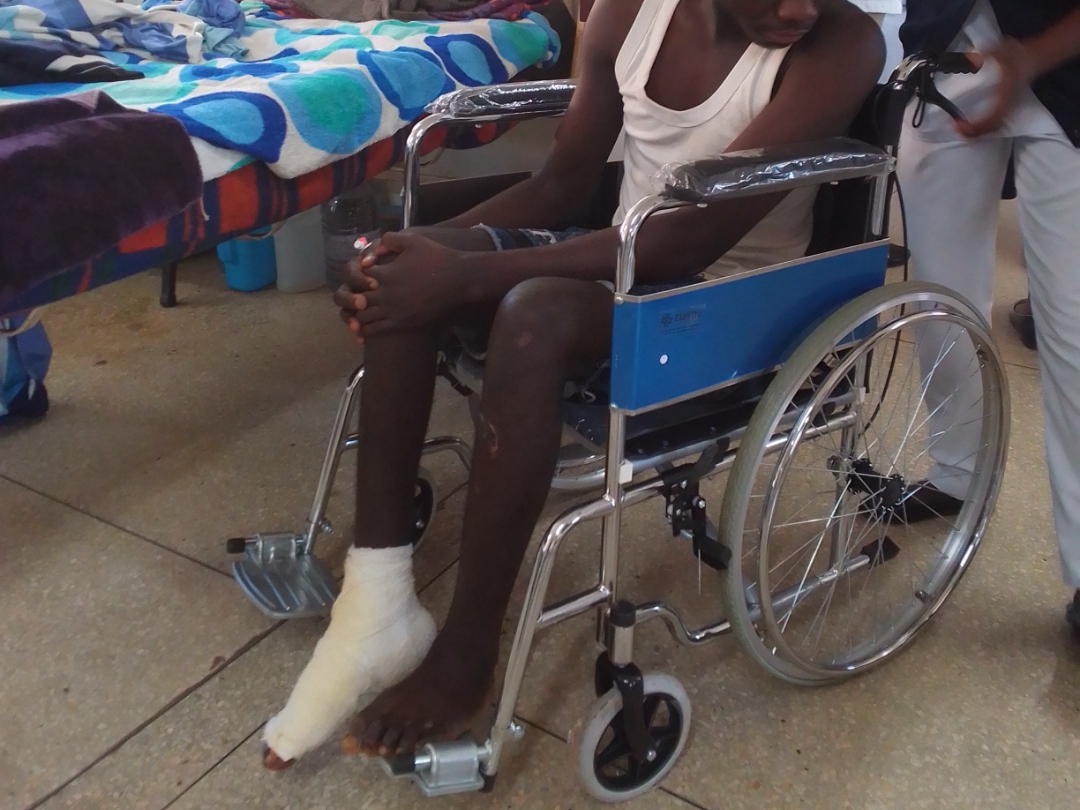
At Chipata General Hospital, one ward has earned a nickname that reflects the growing reality of Zambia’s roads: “Gatoma.” Named after a motorbike supplier, the ward is increasingly filled with victims of motorcycle crashes — young riders, passengers, and schoolchildren whose injuries are overwhelming hospitals across the country.
A MakanDay investigation found that this shadow transport network, operating largely outside the law, is increasingly stretching Zambia’s public health system.
Road Transport and Safety Agency (RTSA) provincial data shows that Eastern, North-Western, and Luapula provinces are among the areas experiencing some of the sharpest increases in motorcycle crashes and deaths, reflecting how deeply the informal transport system has expanded beyond major urban centres.
In Eastern Province alone, motorcycle-related crashes rose from 239 in 2021 to 656 in 2025, while fatalities increased from 27 to 88 over the same period. North-Western Province recorded a rise in crashes from 118 to 633, with deaths increasing from 11 to 87. In Luapula Province, crashes climbed from 97 in 2021 to 551 in 2025, while fatalities rose from three to 41.
For decades, Chipata has served as a hub for motorbike transport, a shift that began when motorbikes gradually replaced bicycles as a cheaper and faster mode of movement.
More than 1,500 kilometres away, at Solwezi General Hospital, hospital data show that 684 motorbike accidents were recorded in 2024, with four victims brought in dead and three later dying in hospital. In 2025, the number rose to 951, with seven deaths, and in January 2026 alone, 59 accidents were recorded.
At Mansa General Hospital — the main referral facility in Luapula Province — the surge in motorbike-related injuries is overwhelming the system. Victims are now being admitted across male, female, and children’s surgical wards because of the growing number of cases. Hospital data shows a steep rise: from 199 cases in 2022 to 525 in 2023, 808 in 2024, and 1,040 in 2025. Some riders are as young as 15.
“All these issues culminate in injuries, deaths, and long-term complications such as disabilities—people losing their limbs,” said Mackford Chipili, the hospital superintendent. “As a hospital, we are incurring huge costs in rehabilitating and trying to save these patients from their injuries.”
Even these figures capture only part of the true scale of the crisis. Across Zambia, hospitals are increasingly carrying the burden of a transport system operating outside effective regulation.
“It’s becoming a public health problem,” said Solwezi General Hospital Clinical Care Director Dr Joshua Chisanga.
The human cost
To understand the human cost of these accidents, consider the case of Snefa Njobvu from Chipata. She fell from a motorbike, severely injuring her leg, and was admitted to Chipata General Hospital for a week before being referred to Lusaka — about 600 kilometres away — for specialised treatment at significant cost to her family after the rider reportedly fled the scene. She was only assisted by nearby farmers working close to where the crash occurred.
“The bone was completely damaged. I’m now waiting to be moved to Lusaka for specialist treatment,” she said.
Under Zambia’s Road Traffic Act and Public Service Vehicle Regulations, motorcycles are not recognised or licensed as public passenger transport. Only designated vehicles such as buses and taxis are legally permitted to carry fare-paying passengers.
“Under the current legal framework, motorcycles cannot be licensed to operate as public service vehicles for passenger transport,” said Mwelwa. “RTSA, working jointly with the Zambia Police Service and local authorities, has intensified enforcement measures aimed at curbing illegal passenger-carrying operations.”
According to RTSA, these measures include routine road compliance inspections and joint enforcement operations with the Zambia Police, impounding motorcycles operating illegally as public transport, prosecuting offenders found contravening road transport regulations, conducting public sensitisation campaigns on road safety and legal compliance, and verifying rider licensing, registration, and insurance compliance. RTSA says it has also increased surveillance in identified high-risk areas where illegal motorcycle taxi operations are prevalent.
However, despite these enforcement efforts, motorcycle-related accidents and injuries continue to rise sharply across the country, placing increasing pressure on Zambia’s health system.
RTSA data shows serious motorcycle-related injuries rose from 402 cases in 2021 to 1,613 in 2025, while slight injuries climbed to nearly 2,000 cases annually.
Health experts and international agencies warn that the economic burden of road traffic injuries extends far beyond the crash itself. According to the World Health Organization (WHO), road traffic crashes cost most countries about 3% of their Gross Domestic Product through medical treatment, rehabilitation, funeral costs, lost productivity, and long-term disability. In Zambia, a UNDP road safety investment case found that severe road traffic injuries can cost thousands of dollars in medical care alone, while families often lose income when victims or caregivers are unable to work. The report estimates that road traffic accidents cost Zambia about US$700 million annually — equivalent to roughly K16.7 billion or 4.7% of the country’s Gross Domestic Product.
Funeral after funeral
On that April afternoon in Chingola, as brass instruments played and mourners lowered Nkhoma’s body into the ground, another motorbike crash had already occurred elsewhere in Zambia.
For families across the country, the motorbike has become more than transport. It is increasingly becoming a source of funerals, disability, debt, and trauma.
Young riders continue taking to the roads without licences, insurance, or proper training. When crashes happen, the cost is carried not only by victims, but also by hospitals, families, and communities already struggling economically.
“Unless that pattern is broken, the funerals will continue,” said one rider at Nkhoma’s burial.
Additional reporting by: Pride Nyirenda (Luanshya, Copperbelt Province), Beverly Subeti Busanga (Chingola), James Mwape (Ndola, Copperbelt), Helga Chola (Mansa, Luapula Province), Christian Kasonde (Kasama, Northern Province), Doris Chifunda (Mbala, Northern Province), Joseph Mwape (Luwingu, Northern Province), Richard Simbaya (Isoka, Muchinga Province), Kebby Sianjame (Kalomo, Southern Province), Vincent Phiri (Chipata, Eastern Province), and Sanjimba Kanganja (Solwezi, North-Western Province).
This article was produced by MakanDay’s Local Reporting Network. Sign up to get stories like this one as soon as they are published.

Discover more from MAKANDAY
Subscribe to get the latest posts sent to your email.