


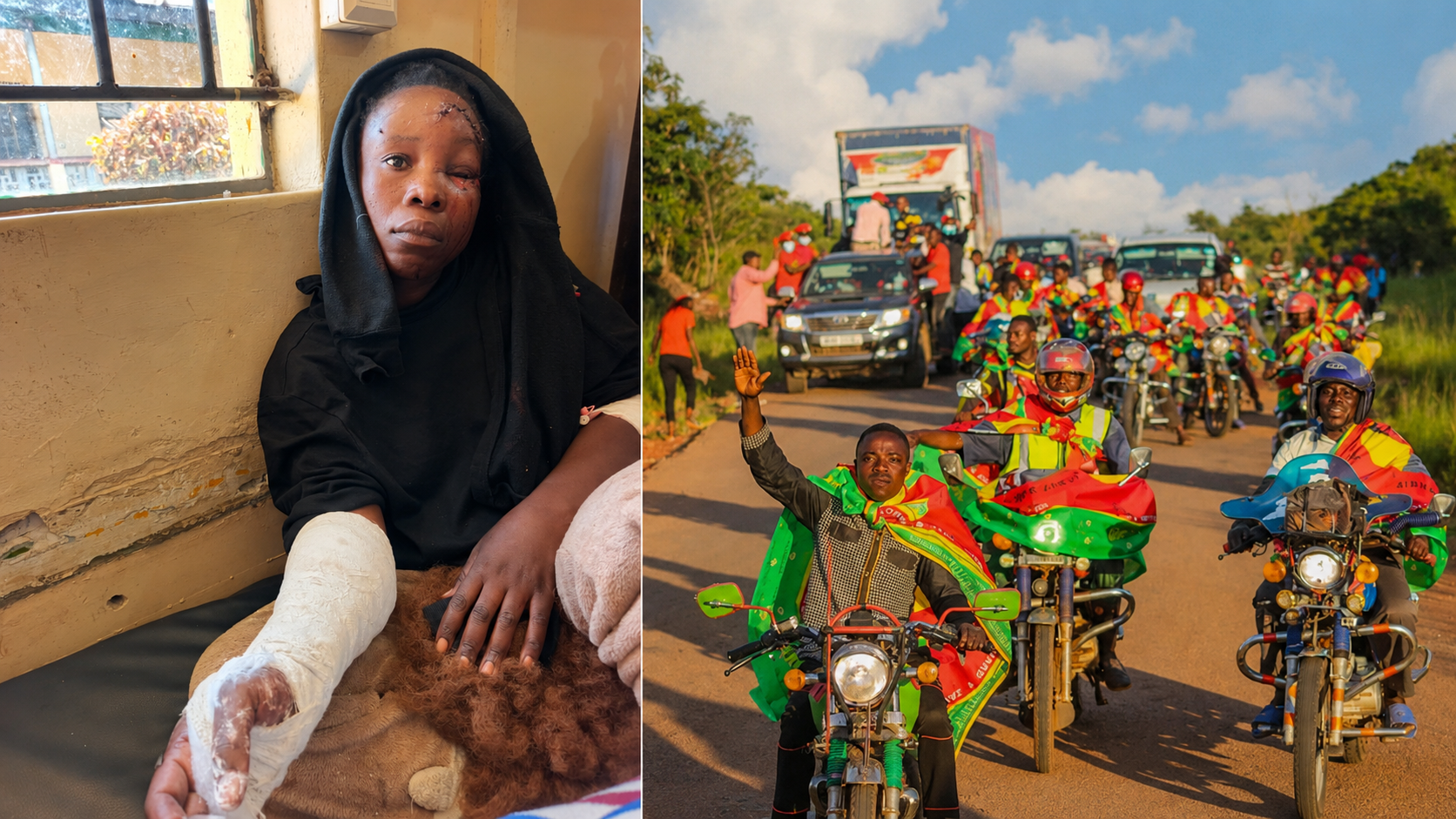
An investigation into how politics, weak enforcement, and youth unemployment are driving Zambia’s expanding and largely illegal motorbike transport sector.
By MakanDay Centre for Investigative Journalism
Funeral after funeral
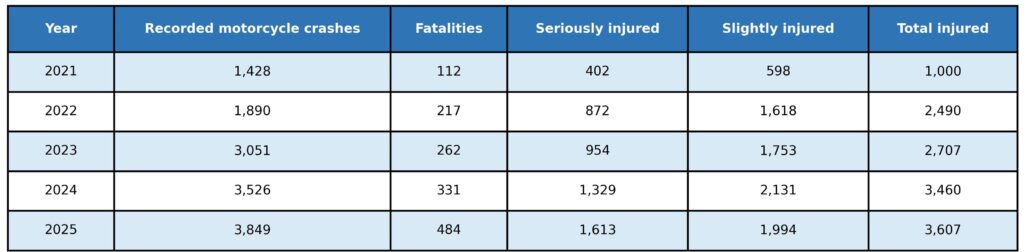
Road Transport and Safety Agency (RTSA) figures show motorcycle deaths in Zambia have risen sharply, from 112 deaths in 2021 to 484 in 2025 — the equivalent of nearly one person dying every day in motorcycle-related crashes.
On a grey April afternoon in Chingola, mourners gathered around the grave of 24-year-old Maxwell Nkhoma as brass instruments from the Chiwempala Reformed Church choir echoed through the cemetery. Days earlier, Nkhoma had been riding a motorbike along the busy Kitwe–Chingola Road when he collided with a truck near Chambishi.
By the time his body was lowered into the ground on 15 April 2026, another funeral linked to a motorbike crash was already being prepared elsewhere on the Copperbelt.
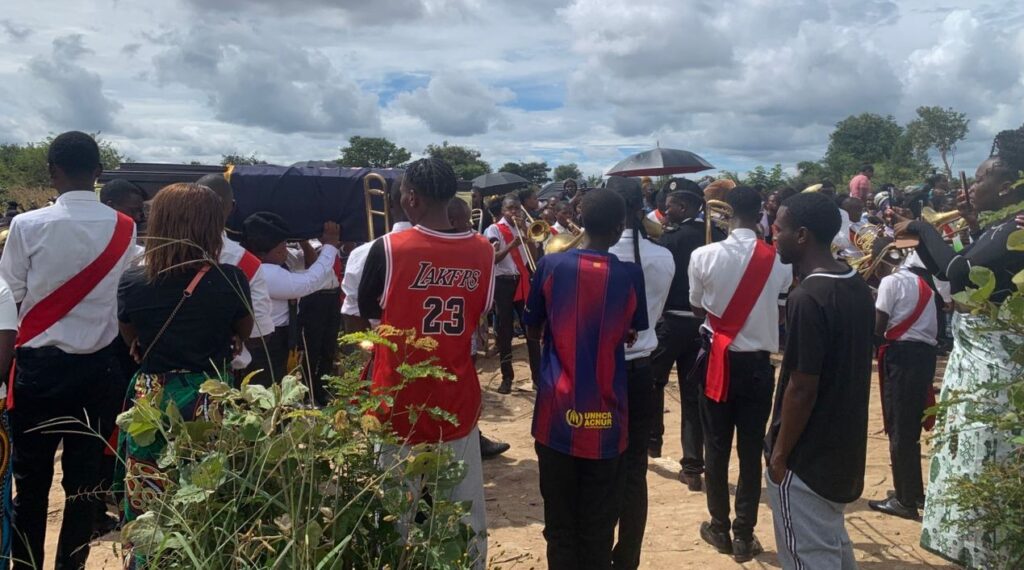
Across Zambia, scenes like this are becoming increasingly common. Hospitals are filling with crash victims, graveyards are receiving young riders, and police statistics point to a transport sector operating largely outside the law. Yet even as deaths rise, politicians are increasingly embracing motorbike riders as a growing political constituency ahead of the August general elections — through public endorsements, empowerment programmes, and direct engagement with largely unregulated rider groups.
“When you’re talking about accidents, they can even happen to those who are qualified and have licences,” said Minister of Youth, Sport and Arts Elvis Nkandu, whose empowerment programme has distributed motorbikes in parts of northern Zambia despite the sector’s growing association with fatalities and weak regulation. “So accidents can be there, but I think what we need to do is to caution our bikers on the importance of observing traffic rules.”
A three-month investigation by the MakanDay Centre for Investigative Journalism, working with a nationwide network of young investigative journalists mentored and trained by MakanDay across Zambia, found that what is often presented as youth empowerment is also feeding a dangerous and weakly regulated transport system marked by poor enforcement, unlicenced riders, allegations of political interference, and mounting public health costs.
RTSA data obtained by MakanDay paints the clearest picture yet of the scale of Zambia’s motorcycle crisis. Recorded motorcycle crashes rose from 1,428 in 2021 to 3,849 in 2025, while fatalities increased from 112 to 484 over the same period.
Nkhoma’s death is one of many recent motorbike-related deaths across Zambia. In case after case, the pattern is similar: grieving families, public outrage, and official regret — often without meaningful action.
Widely circulated footage on social media showed the severity of the crash. Police say investigations are ongoing.
“The motorbike reportedly cut in front of the truck, resulting in a collision,” a police report stated.
“There is always the excuse of unemployment, and yes, young people are being empowered (by politicians) with motorbikes, but we need laws that will safeguard the lives of riders and the people using them as public transport,” said Emmanuel Zulu in an interview with MakanDay during Nkhoma’s burial.
A week later, a journalist working on this investigation attended another burial — this time of 18-year-old Sydney Chishala Kaunda in Mufulira. The burial had initially been postponed as the family struggled to raise money and sought compensation.
“Unfortunately, the victim was riding without a licence and the motorbike was not registered, making it difficult to pursue compensation,” the journalist said.
According to Copperbelt Police Commissioner Mwala Yuyi, 2026 accident statistics indicate that only one in ten motorbikes is registered, and just one in fifteen riders is licenced.
RTSA says that by the end of 2025, more than 53,000 motorcycles had been registered nationally and an additional 1,367 tricycles, while about 35,000 riders had been licenced — figures authorities say still fall short of the rapidly growing number of operators on the roads.
The rise of an unregulated transport system
RTSA confirmed to MakanDay that under Zambia’s current legal framework, motorcycles cannot legally operate as public passenger transport, despite the rapid expansion of the sector across the country.
What began largely as an informal survival strategy for unemployed young people — with motorbikes sourced mainly from neighbouring Tanzania and Mozambique — has evolved into a rapidly expanding but weakly regulated transport network operating across towns and rural districts.
Most of the motorbikes dominating Zambia’s informal transport sector are low-cost imports from China and India, with brands such as Bajaj, TVS and Haojue among the most common on the roads. Models such as the Bajaj Boxer BM150 have become popular because they are cheap, fuel efficient, and easy to maintain.
But authorities say the rapid expansion of these motorcycles is outpacing enforcement, licencing, and safety controls.
Passengers interviewed during this investigation said they continue using motorbikes despite the risks because of limited public transport options, poor road networks, affordability, and the ability of motorbikes to move quickly through congested areas.
Politics on two wheels
As elections approach, politicians are increasingly engaging motorbike riders as a key constituency of unemployed youths. In some areas, motorcycles are being distributed through empowerment programmes, while rider groups are becoming visible features at political meetings and campaign events.
“We appreciate the support because many of us were unemployed and struggling to survive,” said one rider in Kaputa who said he recently received a motorbike through a political empowerment programme. “The motorbike has helped me make money and support my family, but the truth is that when politicians give out these bikes, they also expect support in return during campaigns and political activities. The challenge is that many riders are on the road without licences, training, or proper safety equipment. We need empowerment, yes, but we also need rules that protect both riders and passengers.”
In some parts of the country, motorbike riders operating without licences or registration have also become a prominent feature of political mobilisation activities, including escort processions and roadside welcome events during visits by senior political leaders. This was evident during President Hakainde Hichilema’s recent visit to Chinsali in Muchinga Province for Labour Day celebrations, where large numbers of motorbike riders participated in welcome processions.
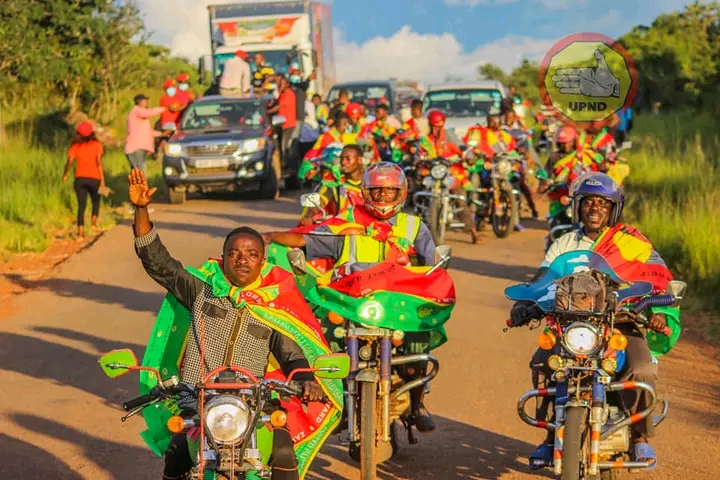
In Solwezi, the growing visibility of motorbikes has extended beyond campaign activities into formal government engagement. In a public statement in May, RTSA said its Solwezi team had held what it described as a “fruitful engagement meeting” with the North-Western Motor Bikes Association at the Provincial Administration offices.
The meeting was attended by Minister of Transport and Logistics Frank Tayali and North-Western Province Minister Robert Lihefu, with discussions focusing on road safety and responsible riding practices.
During the meeting, Tayali signalled that government was considering stronger regulation of the sector rather than relying solely on enforcement measures.
“This regulatory framework is something that is extremely urgent and very important,” he said. “In fact, part of the legal framework that we are trying to develop is that you cannot sale a motorbike without a helmet.”
However, critics argue that such high-level engagements risk legitimising a transport sector that continues to operate largely outside effective regulation, with many riders still lacking licences, registration, and insurance.
Nkandu admitted distributing motorbikes in two districts in northern Zambia, including his constituency, Kaputa, under what he described as an empowerment programme. However, he dismissed suggestions that the initiative was promoting the illegal use of motorbikes as public transport, arguing that the programme provides only 12 motorbikes per constituency.
“Anything that can alleviate the challenge of transporting people is welcome,” he said in an interview with a Radio Mano journalist working on this project from in Kasama, when asked why he was promoting motorbike use as public transport despite legal restrictions.
He added that his efforts have been limited to Nsama and Kaputa, arguing that he cannot be accused of wrongdoing because motorbikes are already widespread across northern Zambia.
In the same week that Nkhoma died, aspiring Kalulushi parliamentary candidate Rashida Mulenga held a meeting with motorbike riders and shared a video of the engagement on her Facebook page. The post was captioned: “Our engagement and interaction with some of our motorbike riders from Kalulushi District. Ours is leadership that listens and interacts with the people.”
During the meeting, one rider appealed to Mulenga to help empower riders with motorbikes and assist those operating without licences. Her response to those requests was not captured in the video. However, she is seen riding one of the motorbikes without a helmet.
Mulenga avoided repeated attempts by a Chingola-based journalist to obtain her response. She initially agreed to be interviewed but later failed to return calls or respond to messages.
Across Zambia, a rapidly expanding and largely illegal motorbike transport sector is reshaping mobility and livelihoods. But beneath that growth, a more dangerous system is taking hold — driven not only by economic desperation, but also by weak regulation, political visibility, and growing pressure to accommodate the sector despite mounting fatalities.
However, it remains difficult to determine how many motorbikes are being distributed by political actors, as some donations are reportedly made discreetly through informal local arrangements.
Allegations of political interference
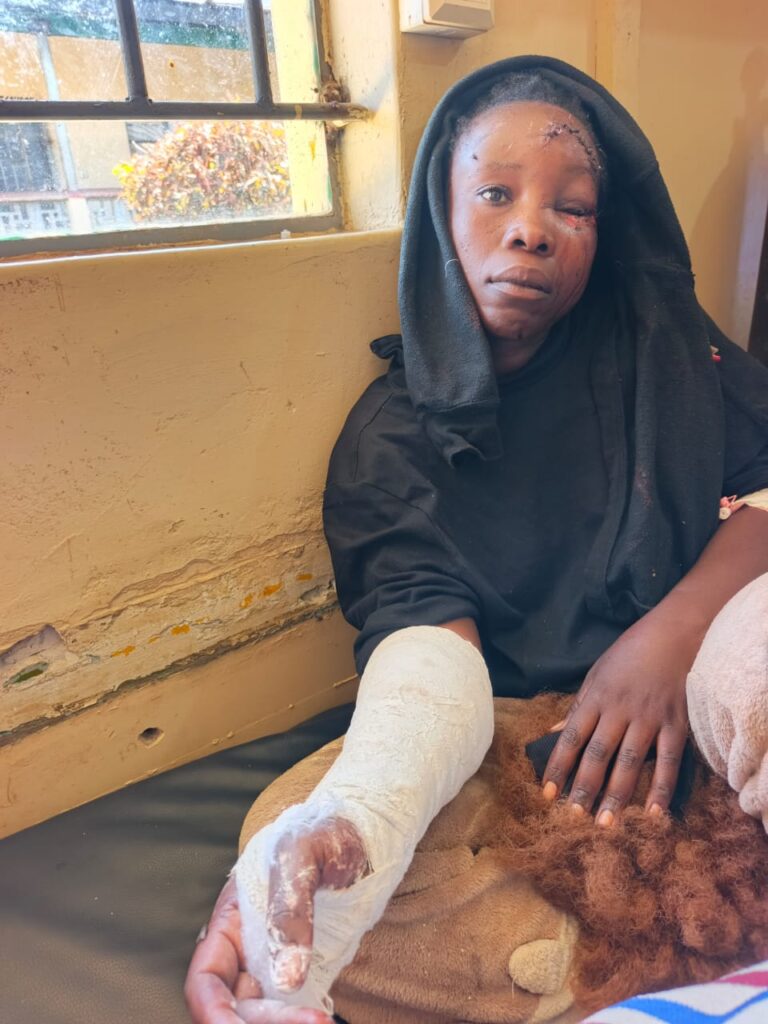
As this story was being finalised, a journalist working on the investigation in Luwingu, Northern Province, shared images of an injured woman admitted to hospital after the motorbike she was travelling on crashed into a stationary truck. The rider, who was reportedly unlicenced, and two passengers sustained serious injuries.
Interviews with riders, police sources, and community members — alongside field reporting across multiple provinces — point to a deeper layer of complexity. MakanDay gathered accounts from sources in Chipata, Chingola, and Solwezi alleging that when police or RTSA impound motorbikes, instructions to release them sometimes come from political actors, mainly ruling party leaders at provincial and district level.
“You impound one bike, and a phone call comes telling you to release it,” said an RTSA officer in Chipata, pointing to what he described as growing political interference in enforcement.
MakanDay put these findings to RTSA, seeking clarification on enforcement, licencing, and allegations of political interference in the impounding and release of motorbikes.
In its response, RTSA acknowledged awareness of such allegations but said enforcement was conducted “strictly within the provisions of the law”.
“RTSA has noted such allegations circulating in certain areas,” said Chilufya Mwelwa, RTSA Head Public Relations. “Where credible complaints or evidence of interference are presented, RTSA is prepared to investigate the matter through appropriate internal and inter-agency mechanisms.”
Mwelwa said the agency had introduced measures aimed at safeguarding the integrity of enforcement operations, including documented impoundment procedures, supervisory approval requirements, joint enforcement operations with security agencies, and internal audit mechanisms.
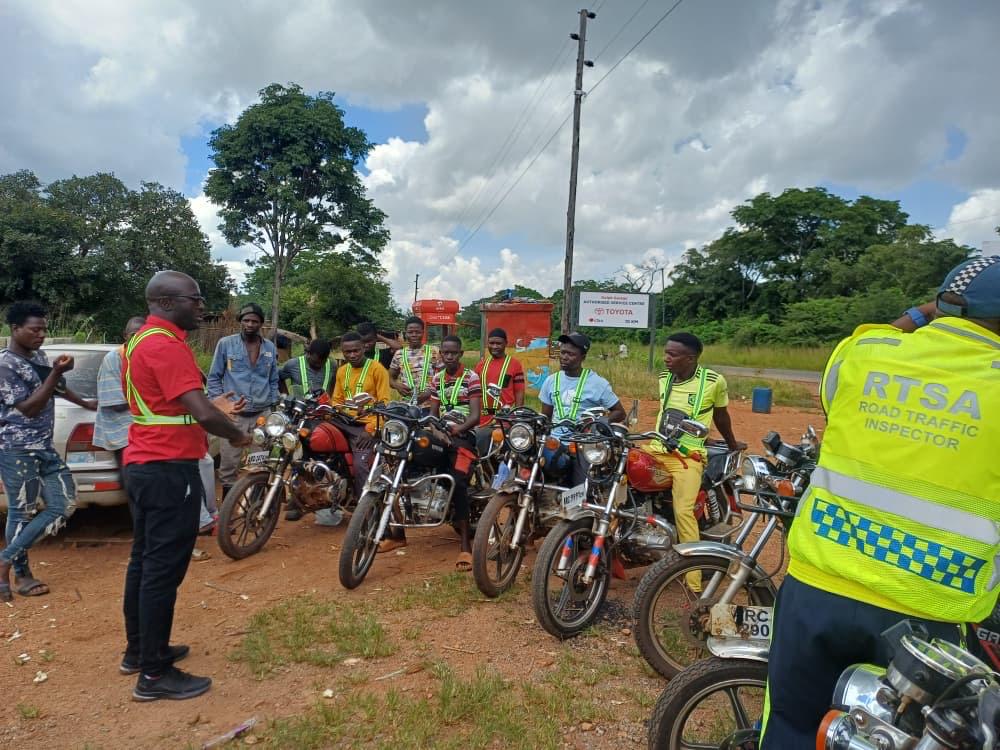
In Solwezi, riders and traders alleged that some traffic police officers are working with the North-Western Motorbike Association, a group formed by riders to regulate the sector. Sources say the association collects money from operators without proper documentation, with a portion allegedly shared with some traffic police officers.
Police in the area denied wrongdoing but confirmed receiving intelligence reports that the association was collecting money from riders without issuing official government receipts.
“I wish to categorically state that the police have never received any official complaint from the riders against the association pertaining (to) the issue of the money being collected without government receipts,” said North-Western Province Police Commissioner Brighton Siwale.
Graham Kahang’u, chairperson of the association, denied the allegations but said the group is affiliated with RTSA and works closely with the police to promote road safety.
Receipts allegedly issued by the association show that some offences, such as failure to wear safety attire, can attract fines of up to K120 — equivalent to about US$6.
A crisis beyond the road
What is emerging is a system where risk is pushed downward — onto young riders, passengers, and families — while political visibility and influence increasingly flow upward.
Young riders take to the roads without licences, insurance, or protection. When accidents happen, the cost is carried by families, communities, and an already strained public health system.
As the August elections draw closer, the motorbike has become more than transport — it is now part of Zambia’s evolving political landscape. But for many families, it is increasingly becoming a vehicle of loss.
On that April afternoon in Chingola, as brass instruments played and mourners lowered Nkhoma’s body into the ground, the questions remained unanswered.
“Unless that pattern is broken, the funerals will continue,” said one rider at the funeral.
In Part II, MakanDay investigates the hidden human and economic cost of Zambia’s rapidly expanding motorbike transport sector — from overwhelmed hospitals to families pushed into debt and disability.
Additional reporting by: Pride Nyirenda (Luanshya, Copperbelt Province), Beverly Subeti Busanga (Chingola), James Mwape (Ndola, Copperbelt), Helga Chola (Mansa, Luapula Province), Christian Kasonde (Kasama, Northern Province), Doris Chifunda (Mbala, Northern Province), Joseph Mwape (Luwingu, Northern Province), Richard Simbaya (Isoka, Muchinga Province), Joseph Kapandula (Itezhi Tezhi, Southern Province), Kebby Sianjame (Kalomo, Southern Province), Sikuka Situmbeko (Mongu, Western Province), Vincent Phiri (Chipata, Eastern Province), and Sanjimba Kanganja (Solwezi, North-Western Province).
This article was produced by MakanDay’s Local Reporting Network. Subscribe through our website and follow our Facebook page to receive stories like this one as soon as they are published.

Discover more from MAKANDAY
Subscribe to get the latest posts sent to your email.