


By Mercy Mulenga | Kitwe
Despite clear laws banning its sale, deadly kachasu is traded in plain sight in Kitwe, protected by weak penalties, missing prosecution data and alleged tip-offs.
Kachasu is illegal under Zambian law, unlicenced, untaxed, and widely recognised as dangerous. Yet in Kitwe’s central business district, within sight of shops, markets and council offices, the illicit brew is being sold openly, disguised as energy drinks and soft beverages, and consumed by some of the city’s most vulnerable residents.
A MakanDay investigation has found that kachasu, often made from fermented maize husks and sugar, is thriving in plain sight despite existing laws that prohibit its production, sale, and consumption. Produced without quality control, the brew carries serious health risks, including methanol poisoning, rapid intoxication, permanent blindness, and death.
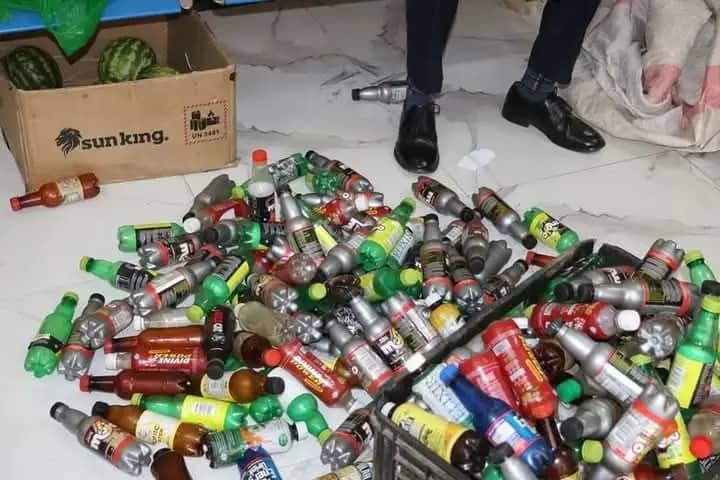
On-the-ground checks revealed a well-organised informal trade operating behind supermarkets, inside busy markets, and beneath braai stands. Traders conceal bottles in buckets and boxes, often masking the alcohol in familiar energy drink containers to evade detection. Buyers are warned to remain discreet, while sellers appear confident, some claiming advance knowledge of council inspections.
Despite repeated assurances from Kitwe City Council that enforcement operations are ongoing, the illicit trade continues largely unchecked.
Data on arrests and prosecutions requested by MakanDay remain unavailable weeks after a formal press query was submitted. The only publicly documented enforcement case this year resulted in a K1,000 fine imposed on a single trader, an amount traders say can be earned in one day.
As deaths linked to illicit alcohol continue to be reported elsewhere in the country, the situation unfolding in Kitwe raises urgent questions: Why does the trade persist so openly? Who is failing to enforce the law? And why do penalties appear too weak to deter a business that thrives on risk, secrecy and official inaction?
Acting on directions provided by multiple sources, a walk along a quiet road behind Pick n Pay in Kitwe town led to a man in his early forties, visibly intoxicated and holding a soft drink bottle filled with kachasu. Without hesitation, he pointed out one of the traders operating nearby, offering a glimpse into an illicit trade that continues largely unchecked in the heart of the city.
The trader, seated while selling fried sausages, locally known as “ilenda ilepya”, kept a bucket beside him containing bottles of kachasu disguised as energy drinks. The concealment allowed the illegal alcohol to be sold in plain sight, blending seamlessly into everyday informal trading activity.
Chisokone Market, Kitwe’s largest trading hub, has also emerged as a major hotspot for kachasu sales. Findings indicate that several vendors selling meat chops hide boxes beneath their braai stands, filled with bottles of varying sizes containing the illicit brew. The methods of concealment suggest an organised and adaptive trade, designed to evade routine inspections.
The practice of disguising kachasu in energy drink bottles is not new. According to Kitwe City Council, the local authority is aware of the tactic and maintains that operations to curb the vice are ongoing, according to Public Relations Officer Emmanuel Lupikisha. However, observations on the ground raise a critical question: why are traders operating so openly without consequence?
One cigarette vendor alleged that the kachasu trade is widespread and that sellers are well known in the markets, but arrests rarely occur. The vendor further claimed that some council workers are among the customers, an allegation that, if true, would point to serious conflict-of-interest concerns.
Another trader disclosed that kachasu sellers now operate with confidence, claiming they often receive tip-offs ahead of inspections. These advance warnings, the trader said, allow sellers to temporarily hide their stock and resume business afterward, reinforcing a sense of protection and impunity.
Despite repeated assurances from the council about routine inspections, the illicit trade continues to thrive. A small bottle of kachasu sells for as little as K10, making it easily accessible to vulnerable consumers, particularly youths, while exposing deep cracks in enforcement and accountability.
Efforts to quantify enforcement outcomes have so far yielded little transparency.
Statistics on arrests and prosecutions linked to kachasu trading have not been made available to MakanDay, despite several weeks having passed since a press query was submitted to the council. The only response received is that the department responsible has not yet provided feedback.
The only publicly documented enforcement action last year occurred six months ago, when the council confiscated 175 bottles of suspected kachasu during a public health operation at Chisokone Market. The alcohol was seized from a single trader identified only as Mr. Chitako, who was issued an administrative fine of K1,000.
The penalty has raised concern, particularly when weighed against both the health risks posed by kachasu and the reported profits generated from the trade.
Several vendors told MakanDay that daily earnings from kachasu sales can reach at least K1,000, sometimes more, meaning the fine imposed could be recouped in a single day.
According to sources, the penalty was calculated solely based on the quantity of alcohol confiscated. Traders found with smaller quantities are often briefly detained and released upon payment of fines, but such cases are rarely publicised.
Unlike licenced liquor traders, kachasu sellers do not pay taxes or rent approved trading premises. Instead, they operate in undesignated locations and at unrestricted hours, in violation of Statutory Instrument No. 86 of 2021, issued under the Liquor Licensing Act No. 20 of 2011.
Yet, with no publicly available prosecution data, Chitako remains the only trader documented as having been arrested and fined since last year, highlighting significant gaps in enforcement.
As the persistence of the illicit trade points to regulatory weaknesses, a memo dated 18 December 2025, issued by Town Clerk Patrick Kambita, convened a meeting with bar and nightclub owners. The meeting focused on laws governing alcohol sales and concerns over unregulated activities during the rainy and festive season, which the council warned could increase the risk of disease transmission.
During the meeting, participants raised concerns about the early-morning operation of illegal drinking places, commonly referred to as shebeens or illegal drinking places, particularly in market areas.
Responding, the Director of Public Health, Rodney Banda, said the local authority would work closely with other stakeholders, including the Zambia Police, to strengthen enforcement.
However, traders in Kitwe told MakanDay that inspections are typically intensified only during festive periods. Contrary to council claims, they alleged that routine inspections often occur only after complaints are lodged.
Others attributed weak enforcement to limited manpower, saying the council struggles to monitor all markets effectively. The number of enforcement officers at Kitwe City Council has not been disclosed.
The situation in Kitwe reflects a broader national crisis. In early 2024, during the launch of the Coalition Against Alcohol in Lusaka, Vice President Mutale Nalumango said nearly 70 percent of alcohol produced in Zambia is illicit, citing a study by the Centre of Primary Care Research. Some of the alcohol, the study found, is made using toxic substances such as methylated spirits and industrial chemicals.
The deadly consequences are already evident. In September last year, seven people died and one was left permanently blind after consuming a lethal mixture of methylated spirit, sweetener, and water in areas bordering Chisamba and Kapiri Mposhi in Central Province. Central Province police commanding officer Charity Munganga described the incident as alarming and avoidable.
Public health experts warn the risks are severe
Dr Quincy Mwabu, Executive Director of Medical for Quality Healthcare in Zambia, said illicit alcohol such as kachasu often contains methanol, which can cause sudden illness, blindness, organ failure, and death.
“No tradition or economic pressure can justify consuming substances that can kill within hours,” he said.
Meanwhile, the Zambia Compulsory Standards Agency says it does not regulate kachasu because it is illicit and unbranded. Its Communications and Public Relations Manager Brian Hatyoka warned the public that the safety of such brews cannot be guaranteed.
As deaths linked to illicit alcohol continue to surface, experts warn that without urgent, coordinated enforcement, particularly in high-risk informal and peri-urban markets, the toll on human life will persist.

Discover more from MAKANDAY
Subscribe to get the latest posts sent to your email.