


By John Mukela
Two events this week might appear unrelated, but that is an illusion.
The first was the chill-inducing promise by Donald Trump, President of the United States.
“A whole civilization will die tonight, never to ?be brought back ?again,” Trump said in a post on ?his Truth ?Social.
“I don’t want that ?to ?happen, but it probably will,” he added.
Did the President really mean it?
Or perhaps being the supreme negotiator that he is, this was merely a tactical bargaining chip, to force Iran to a deal?
Because by any measure, it’s a gargantuan task, eliminating a whole civilization in one night.
What would be the quickest way to achieve that, one might ask, in such a large country as Iran – 1.65 million square km – larger than Spain, Germany, France and the UK combined?
And exactly what did Trump mean by ending an “entire civilization?”
Did he mean ending an entire civilization by destroying its infrastructure – power stations, railways and bridges?
Or not just destroying those, but also it’s entire population?
But maybe that is a moot point. Because whatever was meant, people would most certainly die too.
Of course, the quickest and most efficient way, in one night, for that size of country, would be by maybe dispatching not one, but several atomic bombs?
That could definitely get the job done.
But at what cost?
Was Trump really willing to do that?
Annihilate an entire civilization for the Strait of Hormuz?
Because no sooner had the words left his mouth, we woke up the following day to hear that a mini deal had been struck.
The two-week ceasefire gives Trump room to maneuver and Iran space to breathe again, after weeks aerial bombardment, destruction and massive casualties.
Both sides will relish the break in hostilities, and the end goal is a retreat back to the negotiating table for a longer-term cessation.
It is normally not heard, but we heard it this week too.
Pope Leo XIV, without singling out President Trump by name, condemned Trump’s statement characterizing the threat as “truly unacceptable,” and called on “all people” to “reject war, especially a war which many people have said is an unjust war.”
The Pope has long spoken about injustice in broad moral terms.
However, this week, Trump’s threats to end “civilization” in Iran prompted him to cross into explicitly political territory – a move Vatican historians have called extraordinarily rare.
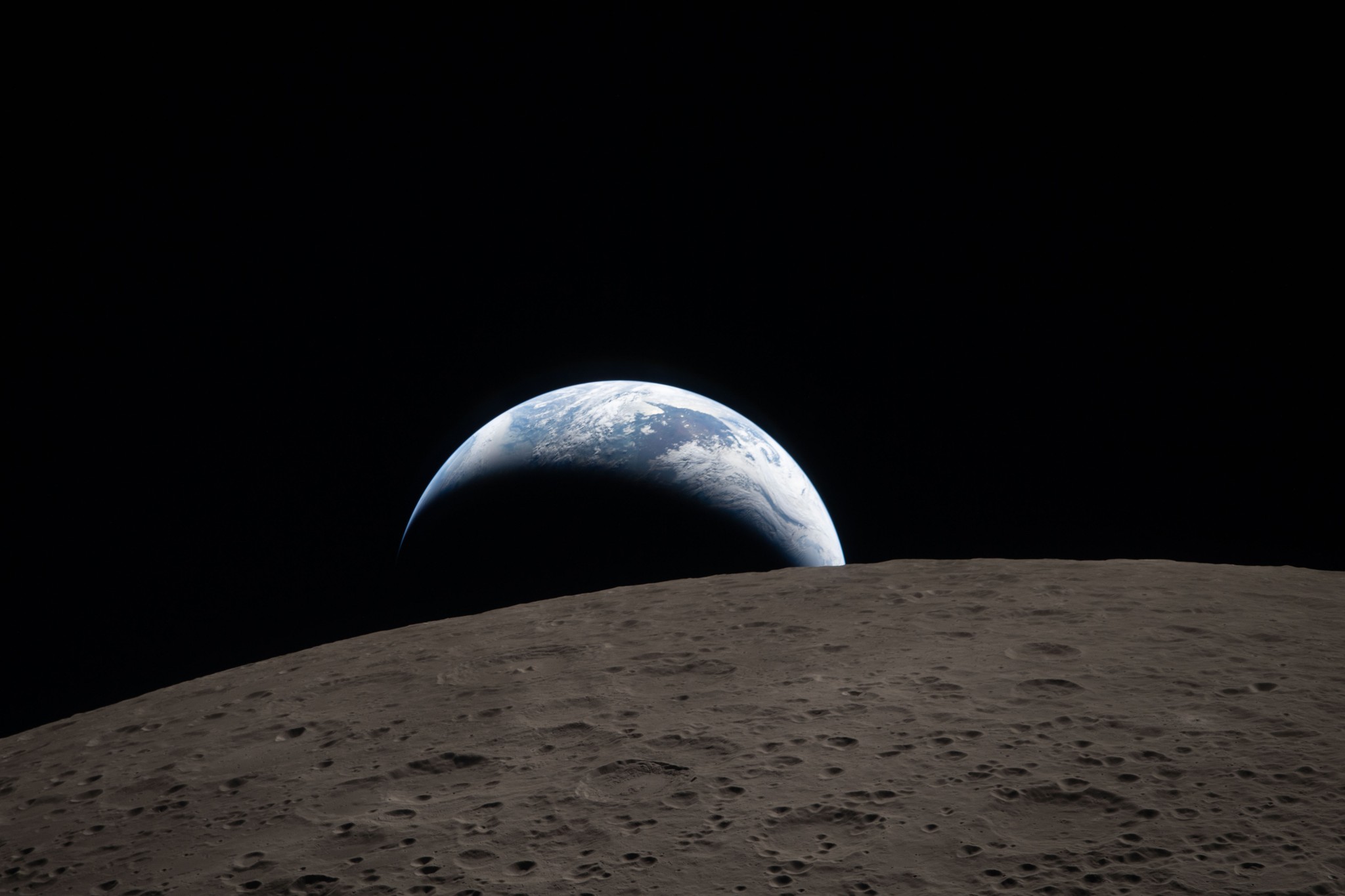
The second related event this week, far removed from the turmoil of the Iran conflict, was the Artemis II mission and its images of the dark side of the moon and of earth – a blue marble floating in the dark void of space.
While 50 years ago the Apollo missions were framed around male, Cold War-era heroism, Artemis was designed to send the first woman and first black person to the moon.
Its multinational crew reflects greater inclusion and diversity of who represents humanity in space.
While Apollo symbolized geopolitical rivalry, the Artemis space programme increasingly shows international partnership, with NASA working with other space agencies – Canadian, European, Chinese.
It reflects a shift from “space race” competition to a shared global model.
Isn’t it therefore rather ironic that Trump’s threat to annihilate an entire civilization, should coincide this week with his symbolic leadership of a peaceful U.S.-led space initiative that essentially rekindles our sense of self as humanity, our reimagined understanding of our common destiny, and our definition of civilization itself?

Discover more from MAKANDAY
Subscribe to get the latest posts sent to your email.