


By Malacki Ndlovu
In Chama district in eastern Zambia, living alongside wildlife has become a matter of life and death.
In Kalikhu village, a young widow struggles to explain how her husband never returned from a routine evening visit to their maize field. He had gone to check on the crop, as many farmers do after nightfall, guarding against roaming animals. He was later carried home dead.
“He went to check the field in the evening and never came back,” she says, holding her one-year-old child. “People later brought him home dead. The elephants had attacked him. The Department of National Parks and Wildlife did nothing, not even help with the funeral.”
Her story is not unique.
In Kapilingizya another village in Chama, an elderly man was killed by a buffalo while harvesting a tree on his farmland. His family received no compensation. Instead, the only form of assistance came in the form of buffalo meat distributed at the funeral.
“The way people wait for game meat after someone dies is painful,” his widow said. “It does not replace a life.”
Across Chama, such deaths have become part of a wider crisis. Wildlife incursions are not only claiming lives but also destroying crops, livelihoods, and food security. Families living near wildlife corridors are increasingly forced to choose between protecting their fields and risking death, often with no compensation or protection when tragedy strikes.
When a person is injured or killed by a wild animal in Zambia, the law offers their family no compensation, no structured support, and no clear pathway to justice. As fatal human–animal conflicts rise across the country, communities living near wildlife zones are left to absorb the cost of conservation with little protection from the state.
This investigation finds that despite government acknowledgment of a national crisis, Zambia’s legal and institutional framework has failed to protect citizens living alongside wildlife, particularly in Game Management Areas such as Chama district.
Zambia recorded over 2,200 cases of human–animal conflict in the second quarter of 2025 alone, according to Tourism and Arts Minister Rodney Sikumba. The most affected regions include Muchinga, Eastern, Southern, Western provinces, and the Lower Zambezi, with incidents involving elephants, buffalos, hippos, crocodiles, and bush pigs.
“This is a national emergency,” Sikumba said in a press statement, acknowledging the threat posed to communities living near wildlife habitats.
But while the government recognises the scale of the crisis, families of those killed by wildlife remain without compensation or sustained support. A review of the Zambia Wildlife Act No. 14 of 2015 shows that the law is silent on compensation for injury or death caused by wild animals.
The Wildlife Act governs conservation, wildlife ownership, and the management of Game Management Areas. However, it does not provide for financial compensation when a person is injured or killed by wildlife.
Section 76 of the Act allows compensation only in limited and symbolic terms. When a wild animal is killed while a person is defending property, the law permits the affected individual to be granted ownership of the carcass or meat.
Beyond this, the legislation makes no provision for funeral assistance, medical expenses, or compensation for loss of income. It also offers no structured support for widows, children, or other dependants left behind when a breadwinner is injured or killed, leaving families to absorb the full social and economic impact of the loss.
As a result, families who lose breadwinners to wildlife attacks are left to fend for themselves.
In Chama district, where communities farm and settle near wildlife corridors, the consequences are deadly.
In Chankhalanga village of Chief Kambombo, Rhosa Goma lost her husband after he was attacked by wildlife while cutting timber to build a shelter. After his death, officials from the Department of National Parks and Wildlife provided one bag of mealie meal, some beans, and a buffalo for funeral rites.
“That support ended there,” she said. “I was left with two children and no source of income.”
Beyond fatalities, wildlife incursions are destroying livelihoods and food security.
On the outskirts of Chama town, farmer James Kumwenda surveys his ruined maize field.
“The elephants came at night and ate everything,” he says. “All the food we depended on is gone.”
Across the district, farmers report entire fields flattened overnight, food stores destroyed, and homes damaged. To protect crops, villagers light fires, beat drums, and take turns guarding fields, often sleeping in forests for weeks at a time.
Many of those killed were attacked while guarding fields at night. Some farmers have stopped planting altogether, saying it is “a waste of seed”.
At Chama District Hospital, medical staff say the official figures understate the scale of the crisis because not all cases are reported at the hospital.
Senior Resident Medical Officer Dr Gift Zimba says the hospital records serious wildlife-related injuries every month.
“Some victims die before reaching the hospital,” he said. “Others are buried immediately without postmortems. These deaths are never captured in official statistics.”
Without accurate data, policy planning and prevention remain weak.
Where is DNPW?
A visit to the Department of National Parks offices in Chama found the premises deserted.
“They are all in the field,” a local source said.
Yet community members and local leaders say the department’s response to human–animal conflict is often delayed, inconsistent, or entirely absent. No publicly available data shows how many officers are deployed in the district, how many incidents they respond to, or how mitigation funds are allocated.
Authorities blame environmental stress, climate change, and human activity for rising conflict. On the ground, communities point to deeper failures: poorly planned settlements, unprotected migration corridors, and conservation success that has not been matched with safeguards for people.
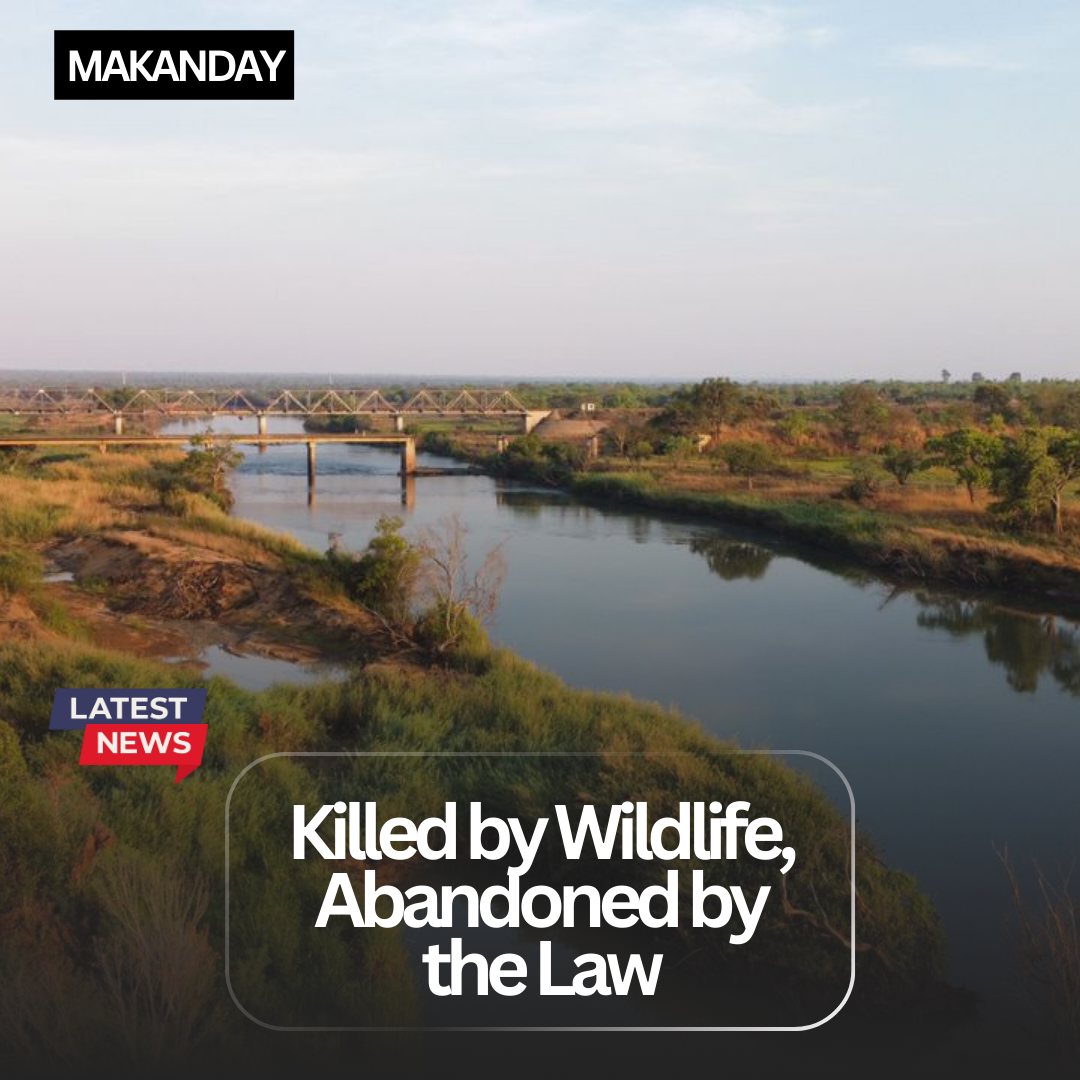
As water sources shrink, both wildlife and communities converge on the Luangwa River, often at night, when fatal encounters are most likely. Entire maize fields are destroyed overnight. Some farmers have stopped planting altogether, calling it “a waste of seed”.
“We accept conservation, but not death”
Traditional leaders in Chama say coexistence with wildlife has become unsustainable.
“Chama is a Game Management Area. We know animals bring tourism money,” said Senior Headman Lameck Mphande of Mundalanga village. “But people are dying. Let wildlife be kept in protected zones. Communities cannot live like this.”
Officials say plans exist to install solar-powered electric fencing and to use Constituency Development Funds for mitigation. But timelines remain unclear, and most high-risk areas are still unfenced.
Responsibility is fragmented across institutions, wildlife authorities, central government, parliament, and local councils. In Chama, that fragmentation has meant warnings without action, and deaths without accountability.
Zambia’s wildlife is a national asset and a pillar of tourism. But in districts like Chama, its costs are borne entirely by the poorest communities.
Without compensation, enforcement, and preventive infrastructure, conservation remains dangerously unbalanced.
Produced by Radio Kwenje in Chama for MakanDay. The article has been edited and fact-checked by MakanDay.

Discover more from MAKANDAY
Subscribe to get the latest posts sent to your email.