

By Linda Soko Tembo
Zambia’s media landscape is expanding, but not necessarily becoming freer.
A new national report shows that while platforms are growing, journalists are still struggling to access information, operate without fear, and navigate restrictive laws.
The result is a system where freedom exists in principle—but is limited in practice.
A new report by the Media Institute of Southern Africa Zambia suggests that while progress has been made1, the conditions under which journalists operate remain constrained, uneven, and, in some cases, increasingly fragile.
A mixed picture
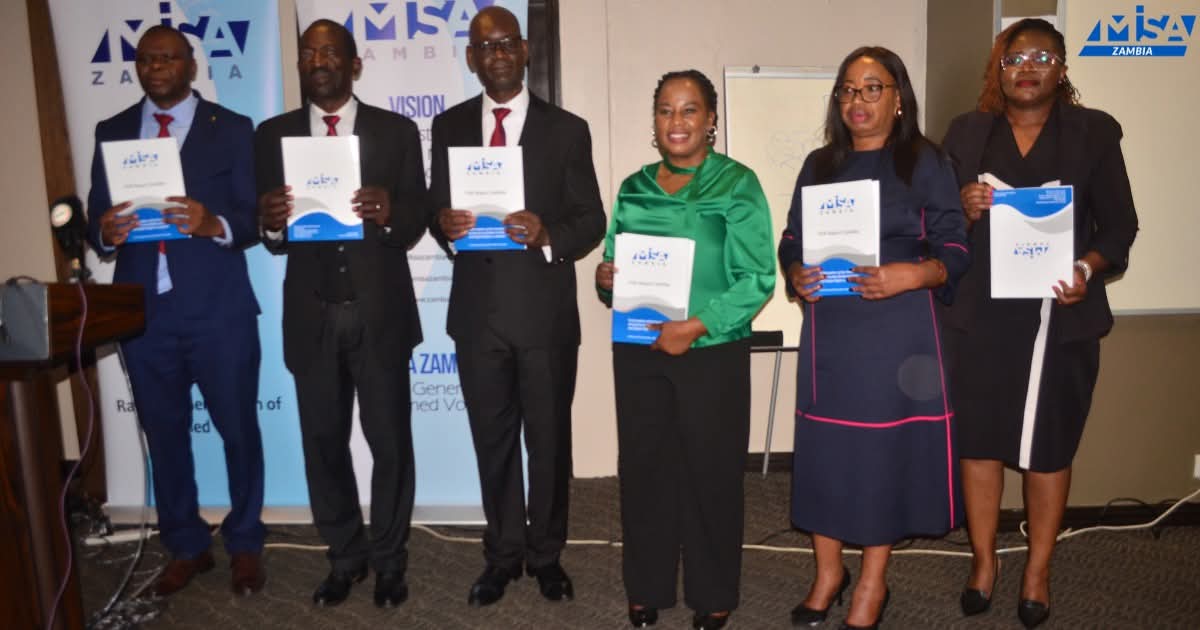
The Freedom of Expression (FOX) Report by the Media Institute of Southern Africa (MISA Zambia) examines how journalists and other stakeholders perceive the media environment in the country over a six-month period. The newly-released report, titled “a perception of the freedom of expression, media freedom and digital rights in Zambia,” covers the period from July to December 2025.
Its findings are based not on theory, but on lived experience—drawing from journalists, civil society, government, and academia. At its launch, MISA Zambia Chairperson Lorraine Mwanza Chisanga described the outcome as “a mixed but important picture”.
“The report reveals that 62 percent of journalists believe that the media does not operate freely,” she said, adding that this reflects ongoing challenges despite existing democratic frameworks.
That mix is telling. While Zambia has seen growth in media platforms and a modest improvement in perceptions of freedom, the day-to-day environment for journalists tells a more complicated story.
Freedom without access
One of the clearest signals of that contradiction lies in access to information. According to the report, 65 percent of journalists struggle to access information, and79 percent struggle to access government officials. These are not small barriers. They strike at the core of journalism. Because without access, there is no accountability.
Chisanga warned that this limitation weakens the media’s watchdog role and reduces citizens’ ability to participate meaningfully in governance. In practical terms, it means stories are delayed, diluted, or never told at all.
A legal framework that restricts
Beyond access, the report highlights deeper structural concerns within Zambia’s legal framework.
Seventy-five percent of respondents say existing laws restrict media operations, with cyber-related legislation and regulatory frameworks cited as key pressure points.
Government acknowledged these concerns. Representing the Ministry of Information and Media, Permanent Secretary Thabo Kawana, through a statement delivered by Director for Press and Media Morden Mayembe, reaffirmed the state’s commitment to improving the media environment.
“Access to information remains a cornerstone of democracy,” the statement read, noting ongoing efforts to strengthen the implementation of the Access to Information Act and institutional frameworks.
However, the government stressed that journalists in Zambia operate under the same legal framework as ordinary citizens, as there is currently no specific law granting them special protections or status.
Mayembe said that while international frameworks recognise certain rights and protections for journalists, these have not yet been fully incorporated into national law.
He noted that Zambia has no legislation clearly defining who qualifies as a journalist or media practitioner, nor any law that grants them a distinct legal status.
“Consequently, journalists operating in public spaces are subject to the same legal framework as all other citizens. They are not granted automatic exemptions or special treatment simply by virtue of their profession,” he said.
He explained that journalists are required to comply with the law like any other citizen. This includes respecting privacy rights, observing restrictions on public gatherings and access to restricted areas, and avoiding offences such as defamation, hate speech, misinformation, or the publication of information exempted under the Access to Information Act.
He added that although international and regional human rights instruments recognise that journalists may, in certain circumstances, be entitled to specific protections in the public interest, these remain largely aspirational in Zambia until they are formally domesticated.
“As such, law enforcement agencies and the courts are bound to apply existing laws as enacted,” he said.
In this context, the government said assessments of press freedom should take into account the country’s legal framework, adding that progress will depend on continued dialogue among government, the media, and civil society.
Digital shifts and new risks
The report also examines emerging trends in the digital space, including the growing influence of bloggers and artificial intelligence.
While digital platforms have expanded access to information, they have also introduced new risks, including misinformation and ethical concerns.
The gaps are significant. According to the report, 80 percent of media houses lack policies on artificial intelligence, while 94 percent have no code of conduct governing its use.
Closing the event, Austin Kayanda said the report should serve as a catalyst for action, not just a reflection of challenges.
“The findings remind us that while progress has been made, significant work still lies ahead, particularly in improving access to information, addressing restrictive legal frameworks, and ensuring the safety and independence of journalists,” he said.
As Zambia approaches the 2026 general elections, stakeholders are being urged to strengthen collaboration and create an environment where the media can operate freely and citizens can access information without fear.
Now in its sixth edition since its introduction in 2022, the FOX Report remains a key accountability and advocacy tool, tracking the state of media freedom, freedom of expression, and digital rights in Zambia.
- Zambia has more than 260 broadcasting stations, comprising 192 radio stations, 62 television stations, and six subscription management services, according to the Independent Broadcasting Authority.
Discover more from MAKANDAY
Subscribe to get the latest posts sent to your email.