


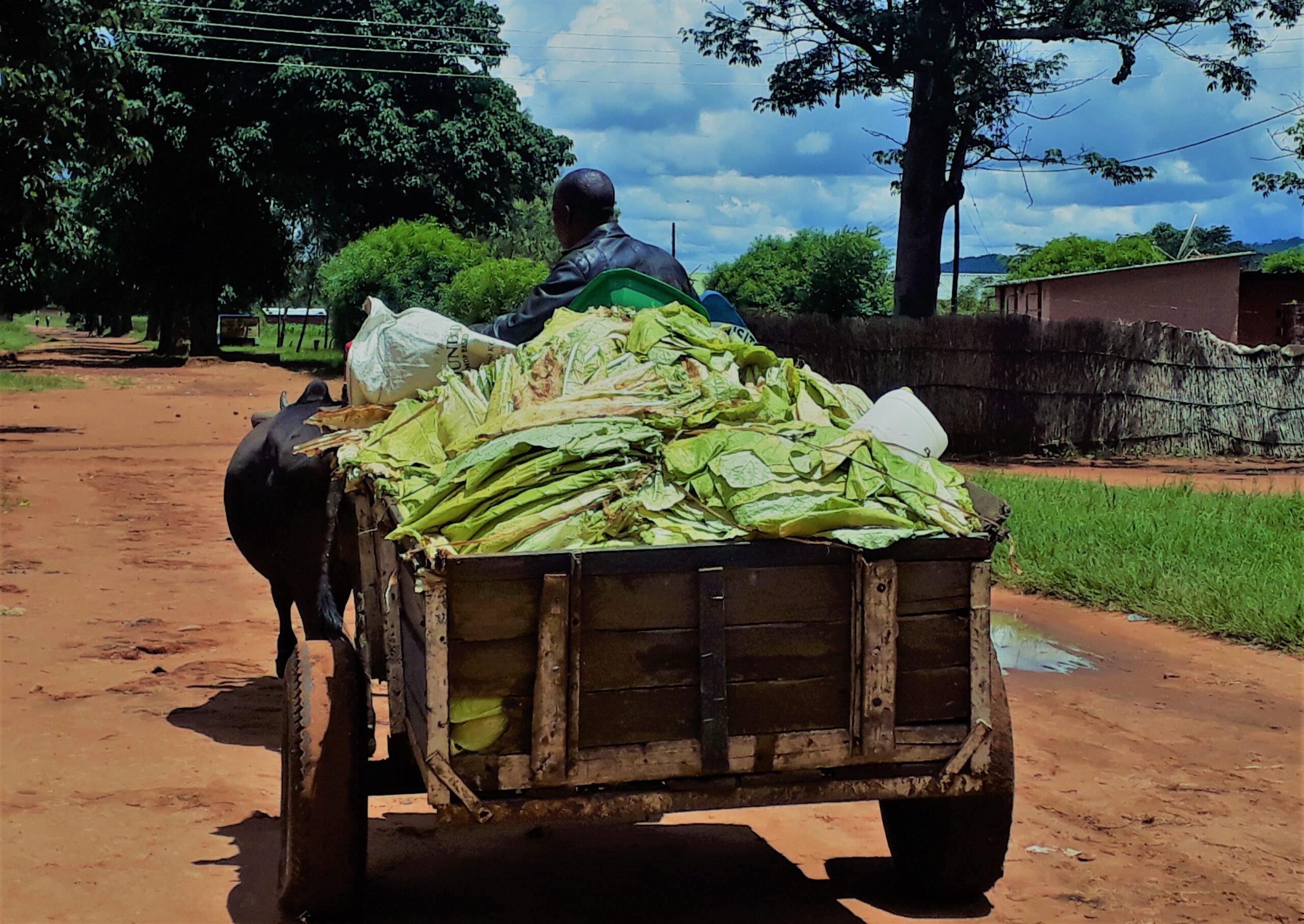
Zambia needs agricultural growth, not another Ilomba
As Zambia prepares to establish a new agency to drive agricultural expansion, former Vice-President Dr Guy Scott’s warning about resource-hungry statutory institutions raises an important question: Will the agency improve the lives of farmers or become another burden on public resources?
In his book Adventures in Zambian Politics: A Story in Black and White, former Vice-President Scott draws on the legend of the Ilomba, a mythical bloodsucking creature, to describe statutory institutions that develop an appetite for resources while delivering little in return.
It is an analogy worth revisiting as Zambia prepares to establish another government agency, this time to drive agricultural expansion.
In the 2027 national budget, the government has outlined plans to increase maize production to 10 million tonnes, soya beans to three million tonnes and expand irrigation to at least 500,000 hectares by 2031. The intention is to attract investment, increase exports and make agriculture a stronger driver of economic growth.
These are worthwhile ambitions. Zambia has enormous agricultural potential, much of which has yet to be fully realised. The country needs greater production, modern farming methods, reliable markets and more employment opportunities.
But Zambia has travelled this road before, often with similar promises of investment, employment and improved agricultural production.
As our analysis published earlier this week shows, more than two decades ago, the government introduced the farm block development programme with much the same ambitions.
Yet research into some of those investments documented concerns about displaced communities, restricted access to grazing land and employment opportunities that fell short of expectations.
In Mumbwa, Mkushi, Choma and Kalomo, large-scale agricultural investments raised questions about whether surrounding communities were receiving a fair share of the benefits.
These experiences should not be ignored simply because the government has announced new targets and proposed another institution to coordinate agricultural development.
We are not opposed to commercial farming. On the contrary, Zambia needs serious investment in agriculture. But investment should improve people’s lives rather than leave them poorer or more vulnerable.
For a small-scale farmer struggling to access land, affordable inputs or reliable markets, another government agency means little unless it brings real improvements. And for rural communities that have lost land to commercial farming investments, the promise of agricultural growth can ring hollow.
A farming project that produces thousands of tonnes of crops while neighbouring communities struggle to access land, employment or affordable food cannot automatically be described as a success.
There is also an environmental cost that deserves attention.
Our analysis of forest-monitoring data shows that agriculture remains a major driver of tree-cover loss in Zambia. Expanding production by clearing more land, without adequate safeguards, risks damaging the very natural resources on which agriculture depends.
The government must therefore explain how much of its planned production increase will come from improving yields on existing farmland and how much will require opening new areas.
But perhaps the most troubling issue is the protection of customary land.
In an interview with MakanDay, Zambia Land Alliance Executive Director Patrick Musole raised concerns about weaknesses in the country’s land laws, particularly the conversion of customary land into state land.
He explained that once customary land is converted, there is no straightforward legal pathway for returning it to its original status, even where an investor abandons the intended project.
What happens then to communities whose ancestral land has been converted for investments that never materialise?
Mr Musole also challenged the assumption that land without buildings or cultivated fields is unused. He said rural communities depend on such land for grazing, collecting firewood, harvesting mushrooms and accessing other natural resources.
Land that appears vacant to an investor may already be serving important community needs.
He called for stronger legal protection of customary land and legislation to regulate compensation for displaced communities.
These concerns deserve serious attention as the government prepares to expand commercial agriculture.
Before allocating land to investors, authorities must ensure that affected communities are genuinely consulted, their rights protected and any resettlement commitments honoured.
The proposed farm block development agency must not become another Ilomba, consuming public resources while delivering little in return. Its success should not be measured merely by hectares allocated, investment pledges announced or the size of its administrative structures.
Instead, the government should demonstrate how the agency will improve access to land, support small-scale farmers, create decent jobs and ensure that surrounding communities share in the benefits of agricultural investment.
Agricultural growth should mean more than bigger harvests and higher export earnings. It should mean secure livelihoods, affordable food, decent jobs and opportunities for rural families.
Zambia has an opportunity to learn from the mistakes of earlier agricultural investments.
The real achievement will not be how much land is brought under commercial production, but how many Zambians are better off because of it.

Discover more from MAKANDAY
Subscribe to get the latest posts sent to your email.