

By Gibson Zulu
Billions of kwacha allocated to key government ministries went unfunded in 2025, while critical projects in healthcare, education, agriculture and water supply missed their targets, raising fresh concerns about the delivery of essential public services.
An analysis of the Auditor General’s Report for the financial year ended December 31, 2025, by the Civil Society for Poverty Reduction (CSPR) and ActionAid Zambia revealed that five ministries recorded combined funding shortfalls of nearly K15 billion, with agriculture and health accounting for the largest share.
The findings reveal that none of the 40 planned early childhood education centres were constructed, only 15 of 100 targeted piped water schemes were completed, and billions of kwacha in agricultural loans remained outstanding.
In a joint statement issued on November 10, 2026, CSPR and ActionAid Zambia warned that the funding gaps, coupled with recurring financial irregularities and weak accountability systems, risk undermining essential services.
The organisations called for stronger parliamentary oversight, improved financial controls and greater transparency to ensure that public spending delivers measurable benefits to citizens.
The organisations argued that accountability should go beyond announcing budget allocations and releasing funds to demonstrating measurable results from public expenditure.
They warned that recurring audit findings pointed to unresolved weaknesses in financial controls that could undermine public confidence and affect access to essential services.
Health sector records K4.553 billion funding shortfall
According to the Auditor General’s Report, the Ministry of Health received K16.945 billion against an authorised budget provision of K21.498 billion, leaving a funding shortfall of K4.553 billion.
Under the Primary Health Services Programme, K1.429 billion remained unfunded, including K1.350 billion allocated to primary healthcare grants. Other affected budget lines included antiretroviral drugs, vaccines, medical supplies and clinical equipment.
Of the 17 targeted outputs under the programme, 10 were fully achieved, three were partially achieved and four were not achieved.
The audit also identified 6,720 units of renal fluids valued at US$11,500, equivalent to K222,640, which had expired at two health facilities and had not been disposed of 12 months later.
At Mbala General Hospital, the absence of an oxygen plant resulted in K853,291 being spent on procuring and transporting oxygen from Kitwe and Kasama.
The ministry also had outstanding obligations amounting to K3.564 billion, with some invoices dating back to 2014.
CSPR and ActionAid Zambia said the findings highlighted weaknesses in planning, procurement and financial management that could affect patient care and increase the cost of delivering healthcare services.
They called for predictable domestic financing for primary healthcare to reduce disruptions in essential services, particularly for vulnerable households unable to afford private healthcare.
Education funding gap raises concerns over service delivery
The Ministry of Education received K29.148 billion against an authorised provision of K30.410 billion, resulting in a funding shortfall of K1.262 billion.
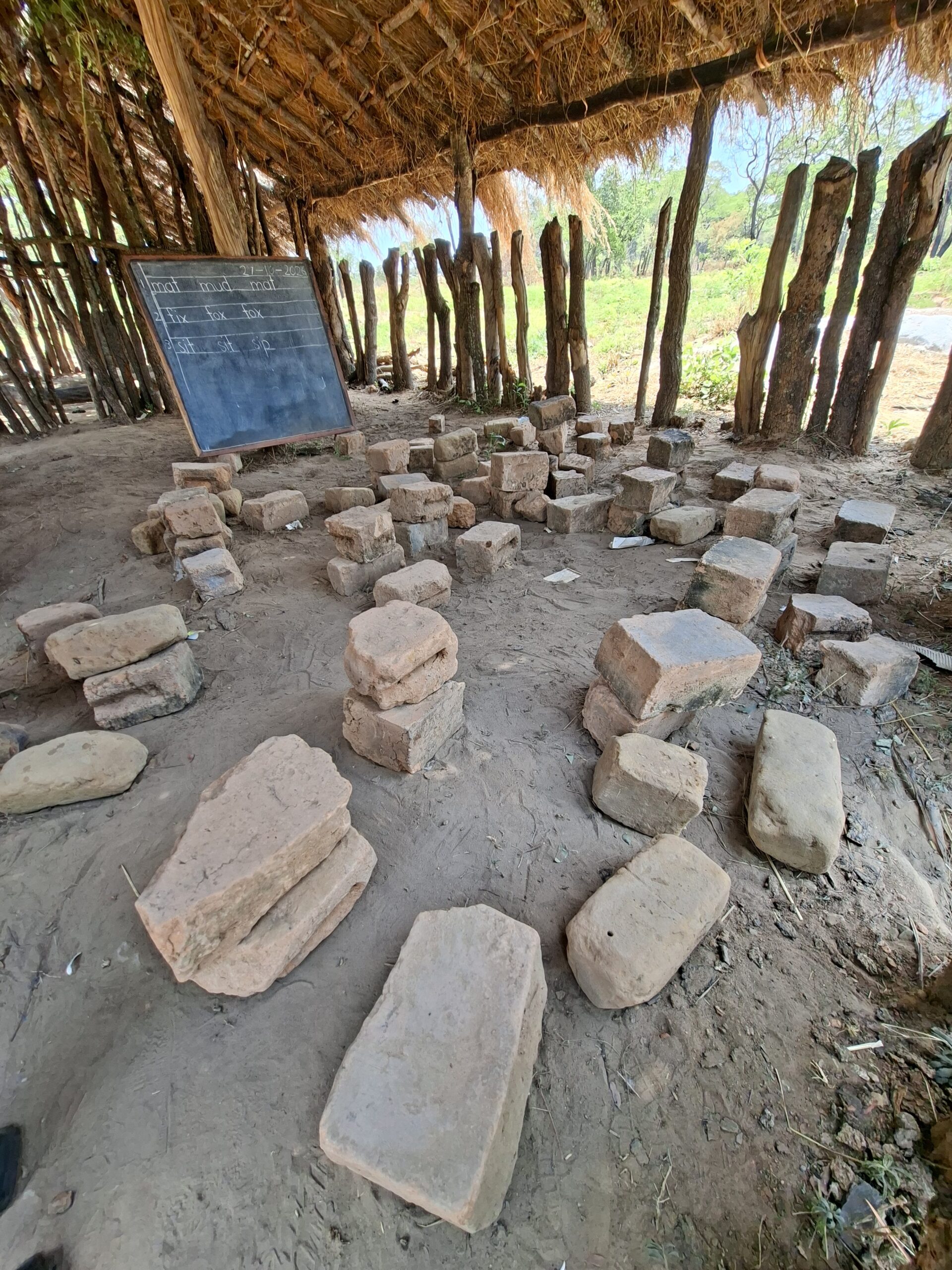
The audit revealed that none of the 40 targeted early childhood education hubs and satellite centres had been constructed during the period under review.
It further showed that only 36 percent of Grade One entrants had prior early childhood education experience, against a target of 60 percent.
The printing of syllabi and sample teaching and learning materials for Form One was also still in progress a year after the introduction of the new curriculum.
In addition, the audit identified 125 officers at 24 stations who received salaries totalling K1.229 million despite not appearing on staff returns or being known to management at the respective stations.
CSPR and ActionAid Zambia said education financing should be assessed against improvements in learning conditions, including completed classrooms, availability of teaching materials and adequate support for teachers and learners.
They called for stronger payroll controls and closer monitoring of education programmes to ensure that public expenditure delivers the intended benefits.
Water and sanitation projects fall short of targets
The Ministry of Water Development and Sanitation recorded a funding shortfall of K705.1 million.
Despite receiving 80 percent of the budget allocated to the Water Supply and Sanitation Programme, the ministry implemented only 67% of its planned activities.
The audit showed that only 15 of the targeted 100 piped water schemes were constructed, while 103 of the planned 500 boreholes were rehabilitated.
It further revealed that 374 boreholes were constructed against a target of 947, while only 19 of the targeted 100 piped water schemes were rehabilitated.
CSPR and ActionAid Zambia expressed concern that delays in water infrastructure development could prolong difficulties faced by communities without reliable access to safe water and sanitation.
They warned that inadequate water infrastructure could increase exposure to waterborne diseases and affect children’s education and women’s livelihoods, particularly in communities where households spend considerable time searching for water.
The organisations called for government payments to contractors to be linked to independently verified physical progress and for project information to be made accessible to beneficiary communities.
Audit identifies K41.974 million in unpaid customs duties
On revenue mobilisation, the Auditor General’s Report showed that the Zambia Revenue Authority collected K160.654 billion against a budget provision of K158.995 billion.
However, the audit identified K41.974 million in customs duties and taxes that remained unpaid as of August 31, 2026, despite the assessments having been registered between 105 and 467 days earlier.
The report also identified 13 temporary import permits covering goods valued at K9.033 million for duty purposes, for which there was no supporting evidence of extensions or payment of applicable duties.
Other findings included unremitted immigration fees amounting to US$39,940 for 2024 and US$393,880 for 2025.
The audit further recorded K3.501 million in unpaid seed royalties, K30.479 million in outstanding mining area charges and K626.640 million in uncollected penalty fees.
CSPR and ActionAid Zambia said the revenue collection performance should not overshadow weaknesses in the enforcement and recovery of outstanding public revenue.
They called on the Government to distinguish between assessed, disputed, recovered and lawfully written-off amounts, while publishing clear timelines for recovering outstanding payments.
The organisations warned that failure to collect revenue lawfully owed to the Government could reduce resources available for essential public services and national development programmes.
Agriculture records K7.710 billion funding shortfall
The Ministry of Agriculture received K11.808 billion against an authorised budget provision of K19.518 billion, leaving a funding shortfall of K7.710 billion.
The audit revealed that nine key output targets under the Agriculture Development and Productivity Programme were not achieved.
Projects involving roads, power lines, agricultural extension tablets, farmer training centres, nutrition centres and screen houses recorded no achievement against their respective 2025 targets.
The report also identified weaknesses in the administration of the Farmer Input Support Programme (FISP).
According to the audit, 62,052 farmers in 21 districts had remained on the programme for eight years, despite a graduation plan providing for a maximum participation period of five years.
The farmers redeemed agricultural inputs valued at K520.988 million.
The report further showed that 466,400 farmers who had not fulfilled their Food Reserve Agency marketing bond obligations accessed inputs costing K186.560 million in the following farming season.
Separately, 345 households received FISP inputs valued at K3.054 million after benefiting from K1.590 million under the Food Security Pack.
Under the Sustainable Agriculture Financing Facility, K793.460 million was disbursed to 8,886 beneficiaries, but only 363 had fully repaid their loans.
The audit recorded K725.123 million in outstanding loans, representing a reported recovery rate of nine percent. The figures require consideration of the repayment schedules to establish how much was overdue.
The report also found that 960 individuals who had not applied for loans were allocated loans amounting to K83.194 million.
Of these, seven redeemed K559,940, which had not been recovered as of August 31, 2026.
CSPR and ActionAid Zambia said the findings raised concerns over beneficiary verification, coordination of agricultural support programmes and the management of public funds.
They called for transparent beneficiary selection and graduation procedures, stronger verification systems and improved loan recovery arrangements.
The organisations also cautioned against measures that could unfairly exclude vulnerable farmers from government support programmes.
Social protection payments flagged over missing disability records
The Ministry of Community Development and Social Services recorded a funding shortfall of K756.754 million.
The Auditor General’s Report identified K1.166 million paid to 162 beneficiaries under the disability component without supporting disability cards or medical certificates.
The finding raised questions about documentation and verification controls but did not, on its own, establish that the beneficiaries were ineligible for assistance.
The audit also highlighted overlaps between beneficiaries of the Food Security Pack and the Farmer Input Support Programme.
CSPR and ActionAid Zambia called for stronger verification procedures to safeguard public resources while ensuring that eligible beneficiaries are not unfairly excluded from social assistance.
They urged the Government to publish information on programme coverage, payment timelines, eligibility requirements and grievance procedures to improve transparency and accountability.
CSPR, ActionAid demand action on recurring audit findings
Following the audit findings, CSPR and ActionAid Zambia called on the Government, Parliament, the Public Accounts Committee, controlling officers, internal auditors and law-enforcement agencies to take measurable steps to address weaknesses in public financial management.
The organisations recommended the publication of an audit action matrix identifying unresolved findings, responsible institutions and officers, corrective measures, recovery targets and implementation deadlines.
They also called for predictable financing of essential services, particularly healthcare, education, water and sanitation, agriculture and social protection.
Discover more from MAKANDAY
Subscribe to get the latest posts sent to your email.