


By Charles Mafa
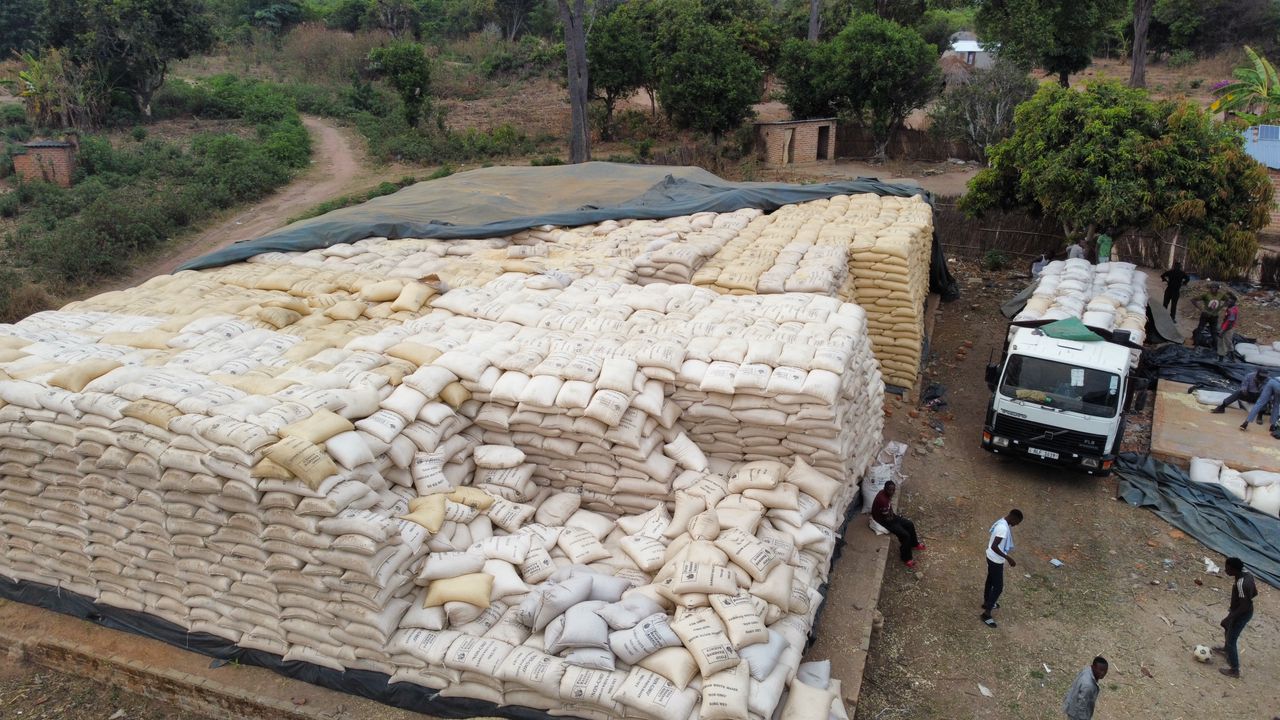
Zambia is preparing another major expansion of commercial agriculture, promising higher production, increased exports and greater private investment. But previous projects have faced allegations of land displacement, failed employment promises and limited benefits for rural communities.
The government now wants to increase maize production to 10 million tonnes, soya beans to three million tonnes, and wheat and sugar to one million tonnes each under its proposed 2027 agricultural reforms. It also aims to generate US$1 billion annually from beef exports.
Five of the eight targets under the Grow Zambia Agenda focus on agriculture and livestock, reflecting the government’s ambition to make the sector a major driver of economic growth.
Its plans include establishing a farm block development agency, attracting commercial investors, expanding mechanisation and bringing at least 500,000 hectares under irrigation by 2031.
The government argues that producing more than Zambia consumes will create export opportunities and improve farmers’ incomes.
But past investments show that expanding commercial agriculture does not necessarily translate into better livelihoods for surrounding communities.
A 2013 investigation by the international human rights organisation FIAN documented concerns over displacement, land access, employment and the distribution of benefits from large-scale agricultural investments in Zambia.
Although the findings are more than a decade old, they expose weaknesses that remain relevant to the government’s latest expansion plans.
Two decades of agricultural expansion
Zambia has pursued large-scale agricultural investment before. In 2002, under the late President Levy Mwanawasa, the government introduced a farm block development strategy to attract commercial investors and increase agricultural production.
The model envisaged large commercial farms operating alongside medium- and small-scale producers, including through outgrower schemes.
According to FIAN’s 2013 report, the proposed farm blocks generally covered between 65,000 and 155,000 hectares. Each was designed to accommodate a major commercial farm of approximately 10,000 hectares, alongside smaller commercial and agricultural holdings.
The strategy targeted areas with productive soils, water resources and transport infrastructure.
But FIAN found that some land earmarked for investment was already being used by communities for farming, grazing and other livelihood activities. It also questioned whether customary land rights were adequately protected.
More than two decades later, the government is proposing a new agency to coordinate farm block development, infrastructure and private investment.
Yet the budget speech presented by Finance Minister Situmbeko Musokotwane on 7 November 2026 offers no assessment of the earlier programme’s performance, including how much land was developed, how many jobs were created or whether smallholder farmers benefited.
That leaves a critical gap: what will the new agency do differently?
Mumbwa: Investment promises and land disputes
One case examined by FIAN involved Amatheon Agri, a German-backed agricultural company operating in Mumbwa district, Central Province.
At the time of the 2013 study, the company reportedly held approximately 30,000 hectares in the Big Concession farming area, with plans to expand.
The investment was expected to increase production, create employment and contribute to food security. However, FIAN cited reports that approximately 39 homes faced displacement linked to the development.
It also identified a gap between projected and reported employment. The project’s environmental impact assessment anticipated approximately 1,000 jobs, but the company reported just over 100 permanent employees at the time of the study. Amatheon Agri’s website has since reported 200 permanent employees.
The figures relate to different periods and may not be directly comparable. They do, however, demonstrate why employment promises need to be measured against independently verified outcomes.
FIAN also questioned the employment potential of increasingly mechanised commercial farms.
The historical findings do not establish Amatheon’s current landholdings, employment levels or resettlement outcomes. But they illustrate the need for transparent reporting on what large agricultural investments deliver to surrounding communities.
That is particularly important as the government seeks to attract more commercial producers while accelerating mechanisation.
Choma and Kalomo: The value of communal grazing land
In Southern Province, FIAN examined agricultural investments associated with the DWS Global Agricultural Land and Opportunities Fund, then linked to Deutsche Bank’s asset management business.
The report stated that the fund acquired approximately 27,000 hectares in Choma and Kalomo districts in 2008, reportedly through African Crops Limited.
The farms produced crops including tobacco, wheat, soya beans and maize.
According to FIAN, communities raised concerns that the reopening and consolidation of commercial farms could restrict access to grazing areas used by small-scale livestock farmers.
The study also recorded some benefits, including improved water access following the construction of a dam, although it questioned how secure those arrangements were.
The case highlights a problem with treating land that is not cultivated as land that is not being used.
Communal land can support grazing, firewood collection, water access and other activities essential to rural livelihoods. Allocating it to commercial investors can therefore have consequences beyond the loss of farmland.
The government’s latest strategy prioritises land near water resources and transport infrastructure, but the budget speech gives little indication of how existing communal land uses will be assessed before allocation.
Mkushi: Mechanisation versus employment
FIAN also examined investments by Chobe Agrivision, a commercial agricultural business associated with Chayton Africa.
At the time of the study, Chayton had acquired seven farms covering approximately 16,916 hectares in Zambia, including operations in Mkushi.
The report cited a projected 1,639 jobs, compared with approximately 390 workers reportedly employed during the investment period. More than half were casual workers.
FIAN also referred to research suggesting that farm takeovers and mechanisation had contributed to job losses.
These figures reflect a particular period and cannot establish the investment’s eventual employment performance. Nevertheless, they point to a tension in the government’s latest strategy.
Zambia wants to expand mechanisation while improving rural incomes.
The proposed reforms include establishing six agricultural mechanisation centres in each district by 2031, building on 125 existing centres.
Mechanisation can improve productivity, reduce physically demanding work and help farmers cultivate more land. But its economic benefits depend on affordability, access and the effect on employment.
The budget speech provides no estimates of jobs likely to be created or displaced by the programme, or details of how smallholder farmers will access the proposed services.
Mpika: When promised investment fails
A proposed biofuel project involving German company Ferrostaal in Mpika district provides another warning.
According to FIAN, the land proposed for jatropha production ranged from approximately 150,000 to 191,103 hectares, depending on the account.
Ferrostaal reportedly withdrew from the project in 2010 following a change in corporate strategy.
Although only about 7.5 hectares had initially been planted, researchers reported displacement and other negative effects on local communities.
FIAN also raised concerns about the conversion of customary land into state land for investments that failed to materialise.
The case illustrates how communities can face consequences from proposed developments even when the anticipated investment never takes place.
The government now says it will prioritise credible investors with demonstrated financial capacity and export potential.
Who benefits from agricultural expansion?
Large-scale farming can attract capital, introduce technology, increase production and improve infrastructure. It can also create markets for surrounding farmers. But these benefits are not guaranteed.
FIAN’s 2013 study questioned whether some commercial agricultural investments generated sufficient employment or improved food access for poorer rural households.
It argued that investments should be assessed not only by the capital committed, but also by their contribution to employment, food security and the protection of land rights.
That distinction matters as Zambia prepares to establish an agency responsible for coordinating farm block development and engaging private investors.
Its effectiveness will depend partly on whether investment agreements contain measurable commitments on employment, community participation, environmental protection and productive land use.
Agricultural expansion and the environmental cost
Zambia’s agricultural ambitions come amid growing pressure on its forests and tree cover.
An analysis of data from Global Nature Watch, an online platform operated by the World Resources Institute, identifies agriculture as the leading recorded driver of tree-cover loss in Zambia between 2001 and 2025.
In 2025, Zambia recorded approximately 276,687 hectares of tree-cover loss. Permanent agriculture accounted for 188,827 hectares, or 68.2%, while shifting cultivation accounted for a further 82,010 hectares, or about 29.6%.
Together, the two categories represented nearly 98% of recorded tree-cover loss that year.
The longer-term trend is striking.
Annual tree-cover loss attributed to permanent agriculture rose from 22,613 hectares in 2001 to 188,827 hectares in 2025. Loss associated with shifting cultivation increased from 5,739 to 82,010 hectares over the same period.
These figures do not mean that all tree-cover loss amounts to permanent deforestation. Nor do they establish that large-scale commercial farming alone is responsible.
They do, however, demonstrate the scale of pressure associated with agricultural land use.
The government’s plans include expanding irrigation to at least 500,000 hectares by 2031, using existing reservoirs, rivers, lakes and dams, including Mwomboshi and Kafulafuta.
It also intends to promote high-yielding, climate-resilient seed varieties.
What remains unclear is how much additional production will come from higher yields on existing farmland and how much will require bringing new land under cultivation.
That distinction has significant environmental implications.
Improving productivity on existing farmland could reduce pressure to clear additional land. Expanding cultivation into new areas could increase competition for land and water while accelerating tree-cover loss.
Export ambitions versus domestic food security
Exports are central to the government’s agricultural strategy.
It plans to promote large-scale crop production along the TAZARA and Lobito railway corridors, while allowing investors to consider other transport routes, including Nacala.
The government also wants to simplify export procedures and introduce bulk export permits for large-volume traders.
These measures could reduce administrative costs and improve access to international markets.
But increased exports do not necessarily mean improved food security for Zambian households.
FIAN’s 2013 study emphasised the distinction between producing more food nationally and ensuring that poorer households can afford and access sufficient, nutritious food.
For rural communities, access to productive land and reliable incomes can be as important as overall agricultural output.
The government’s export targets must therefore be considered alongside domestic food prices, household incomes and access to food among vulnerable populations.
Beyond crop production, the government aims to generate US$1 billion annually from beef exports and increase fish production from a projected 270,000 metric tonnes in 2026 to 300,000 metric tonnes in 2027.
The test for Zambia’s new agricultural strategy
Zambia’s agricultural expansion could increase production, attract investment and generate export earnings. But past projects show why those outcomes alone are insufficient measures of success.
The historical cases documented by FIAN reveal concerns over land rights, employment promises, communal resources and the distribution of economic benefits.
The government’s latest proposals set ambitious production targets but provide less clarity on safeguards, accountability and how rural communities will benefit.
The central test is whether the new strategy can deliver more than increased output: secure land rights, meaningful opportunities for smallholder farmers, measurable employment benefits and agricultural growth that does not come at the expense of the environment.
Without clear commitments and independent monitoring, Zambia risks repeating the weaknesses of earlier expansion programmes.

Discover more from MAKANDAY
Subscribe to get the latest posts sent to your email.