

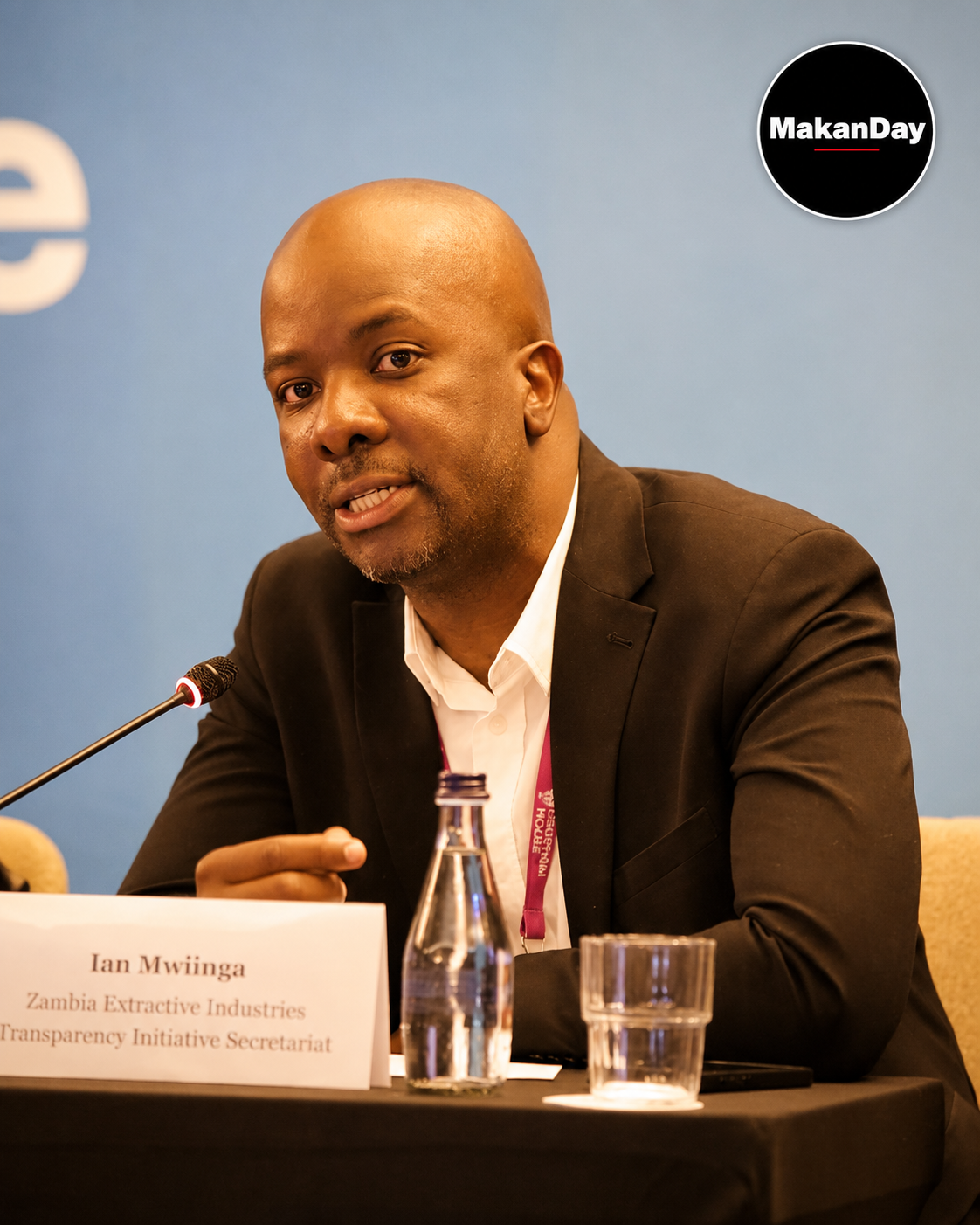
“The community must be able to say … how is this money used?” says Zambia Extractive Industries Transparency Initiative (ZEITI) National Coordinator Ian Mwiinga. Across six Zambian councils, more than K238.5 million in property rates has been reported in 2026. In Solwezi alone, Kansanshi reported K95.3 million — even as residents grapple with inadequate market facilities, water and other essential public services, By Linda Soko Tembo reports.
When mining companies pay millions of kwachas directly to local councils, Mwiinga says people living in those communities should be asking where the money goes.
“The community must be able to say, wait a minute, company X paid two million. How is this money used?” said Mwiinga.
Speaking during an interview for the Ministry of Mines and Minerals Development podcast on August 26, Mwiinga said citizens should increasingly be asking not only how much copper and other minerals Zambia produces, but how much mining companies pay, how much government receives, where the money goes and whether communities where extraction takes place see tangible benefits.
“These amounts are not small,” he said.
New ZEITI data obtained by MakanDay shows just how large they can be. Across six councils in three provinces, more than K238.5 million in property rates was reported for the 2025 reporting period.
Solwezi Municipal Council accounted for the largest amount, with K95.3 million reported by Kansanshi Mining Plc. Kalulushi District Council reported K90.6 million, China Nonferrous Metal Mining (Group) Company Limited (CNMC) reported K35.3 million for Luanshya District Council, while Lubambe Mine reported K15.8 million for Chililabombwe Council.
Siavonga Town Council reported K1.4 million and Kafue Town Council K160,739.
Solwezi and Kalulushi alone accounted for K185.8 million, or about 78%, of all the property rates reported across the six councils.
The data combines figures self-reported by councils with company-side disclosures. Kalulushi, Siavonga and Kafue reported their own figures, while the amounts for Solwezi, Luanshya and Chililabombwe were reported by Kansanshi, CNMC and Lubambe respectively.
For communities, however, knowing that a mine paid is only the beginning. The harder question is what happens after the money reaches the local authority.
The K95 million question in Solwezi
That question is particularly striking in Solwezi, the centre of one of Zambia’s most important copper-producing regions. Kansanshi reported K95.3 million in property rates to Solwezi Council in 2025 — about 40 percent of the entire amount reported across the six councils covered by the ZEITI data.
Yet MakanDay’s reporting in Solwezi has repeatedly documented pressure on some of the most essential public services used by residents.
At Kyawama Market, more than 2,000 traders were operating without running water or drainage and with only four toilets and two bathing rooms when MakanDay investigated conditions there late last year.
For traders such as Bridget Chinzahu, who had worked at Kyawama for about two decades, the shortcomings were part of everyday life.
“We have over 2,000 traders depending on this place every day,” Chinzahu told MakanDay. “We need urgent government action.”
The council had promised something better. A groundbreaking ceremony for a modern Kyawama Market was held in January 2024, but almost two years later construction of the main market had still not begun.
The planned development, including a temporary trading site, was estimated to cost about K53.5 million and was expected to provide more than 2,000 trading shelters, 60 permanent shops, mobile-money booths, running water and proper sanitation.
The council said the project would be financed from locally generated revenue. Now put the cost of that project alongside the latest ZEITI figure.
MakanDay sent Solwezi Council a right-of-reply request on August 31, asking it to confirm the K95.3 million reported by Kansanshi, explain how the money was accounted for and spent, and provide an update on the Kyawama Market project. The council acknowledged the query but said it would respond when the Town Clerk returns from an assignment in about a week.
The K95.3 million Kansanshi reported in property rates to Solwezi Council in 2026 is almost 1.8 times the estimated K53.5 million cost of the Kyawama development.
That does not mean Kansanshi’s property rates were earmarked for Kyawama Market. Nor does the comparison establish that the council has misused the money. But it illustrates the scale of mining-related revenue flowing directly to a local authority against the infrastructure needs visible in the same city.

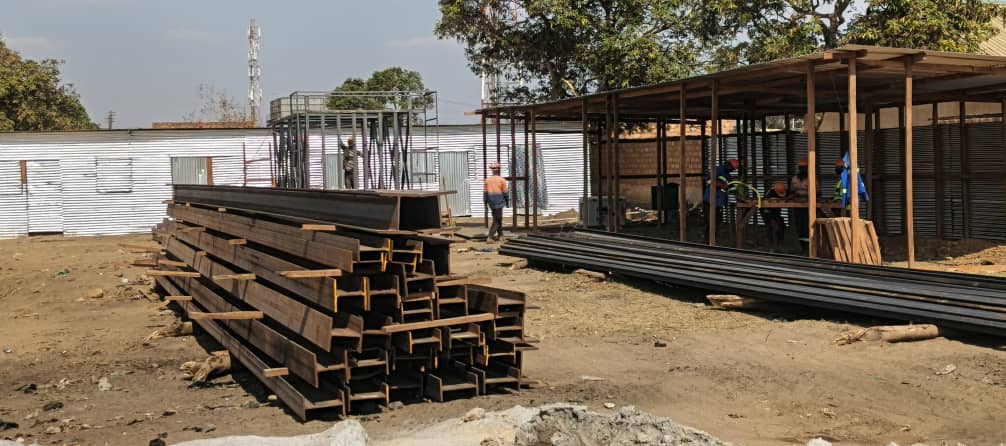
And the problem extends beyond the market. In an earlier investigation, MakanDay documented residents in parts of Solwezi struggling for access to clean water. In Kimakolwe, some families depended on boreholes for drinking water and shallow wells for washing — a snapshot of a longstanding contradiction in North-Western Province: mining investment accelerated population and economic growth while infrastructure and essential services struggled to keep pace.
‘These amounts are not small’
During his interview, Mwiinga illustrated the significance of local mining revenue with the example of an unnamed council that received about K70 million in business fees and property rates in a single year — roughly twice the Constituency Development Fund allocation at the time.
He did not identify the council, but a MakanDay review of ZEITI reports found that Kansanshi was reported to have paid K72.79 million in annual business fees and property rates to Solwezi Municipal Council in 2023. The figure is not directly comparable with the K95.3 million reported for 2026, which relates specifically to property rates, but both demonstrate the scale of mining-related revenues flowing directly to local authorities.
ZEITI collects and compares information on what mining companies say they have paid and what government institutions say they have received. For Mwiinga, disclosure is only the starting point. The figures must also withstand scrutiny.
Do the figures add up?
ZEITI compares what mining companies report paying with what government institutions report receiving.
“ZEITI is a global standard aimed at promoting transparency and accountability in the extractive sector. We go to the companies and say, how much money did you pay to Zambia Revenue Authority (ZRA), for example, in a particular year?” Mwiinga said.
ZEITI then approaches ZRA to establish how much it received from the same company. The figures do not always match.
“When you find the numbers are actually different, that’s when we now bring this information to the attention of various authorities in the ecosystem,” Mwiinga said.
He said discrepancies can arise from issues including mineral grades, tax filing, record keeping and transfer pricing.
Mwiinga stressed that ZEITI does not conduct audits, describing its work instead as a “diagnostic tool” that can flag areas requiring further scrutiny. Its findings can be used by institutions including the Ministry of Mines, ZRA, Financial Intelligence Centre, Patents and Companies Registration Agency, Bank of Zambia, Ministry of Finance and Office of the Auditor General.
In some cases, he said, the Office of the Auditor General has used ZEITI information to conduct risk-based audits.
Beyond the Treasury
Once minerals are sold, mining revenue moves through several channels.
Mwiinga explained that mineral royalties are among the first payments made to government because they are charged on gross revenue.
Mining companies also have financial obligations that include servicing loans used to finance their operations and making payments to shareholders.
Corporate income tax is paid when a company makes a profit. Zambia Consolidated Copper Mines Investments Holdings Plc (ZCCM-IH) also receives dividends, price participation fees and royalties under specific agreements with mining companies. But following mining money only as far as the national treasury provides an incomplete picture.
Mining happens in communities where people live, farm, trade and depend on roads, water, sanitation and other public infrastructure. Mwiinga said communities therefore need to see tangible benefits from mining activities taking place in their areas.
Failure to demonstrate those benefits could ultimately threaten a mining company’s “social licence to operate”.
For a trader at Kyawama, mining’s contribution is not measured only in tonnes of copper produced or millions of kwacha paid to government. It can also be measured in whether there is running water at the market, adequate toilets, drainage and a safe place to trade.
For families in communities such as Kimakolwe, it can be as basic as whether clean water is available close to home.
Across just six councils, more than K238.5 million in property rates was reported in 2026. In Solwezi alone, Kansanshi reported K95.3 million.

Discover more from MAKANDAY
Subscribe to get the latest posts sent to your email.


