

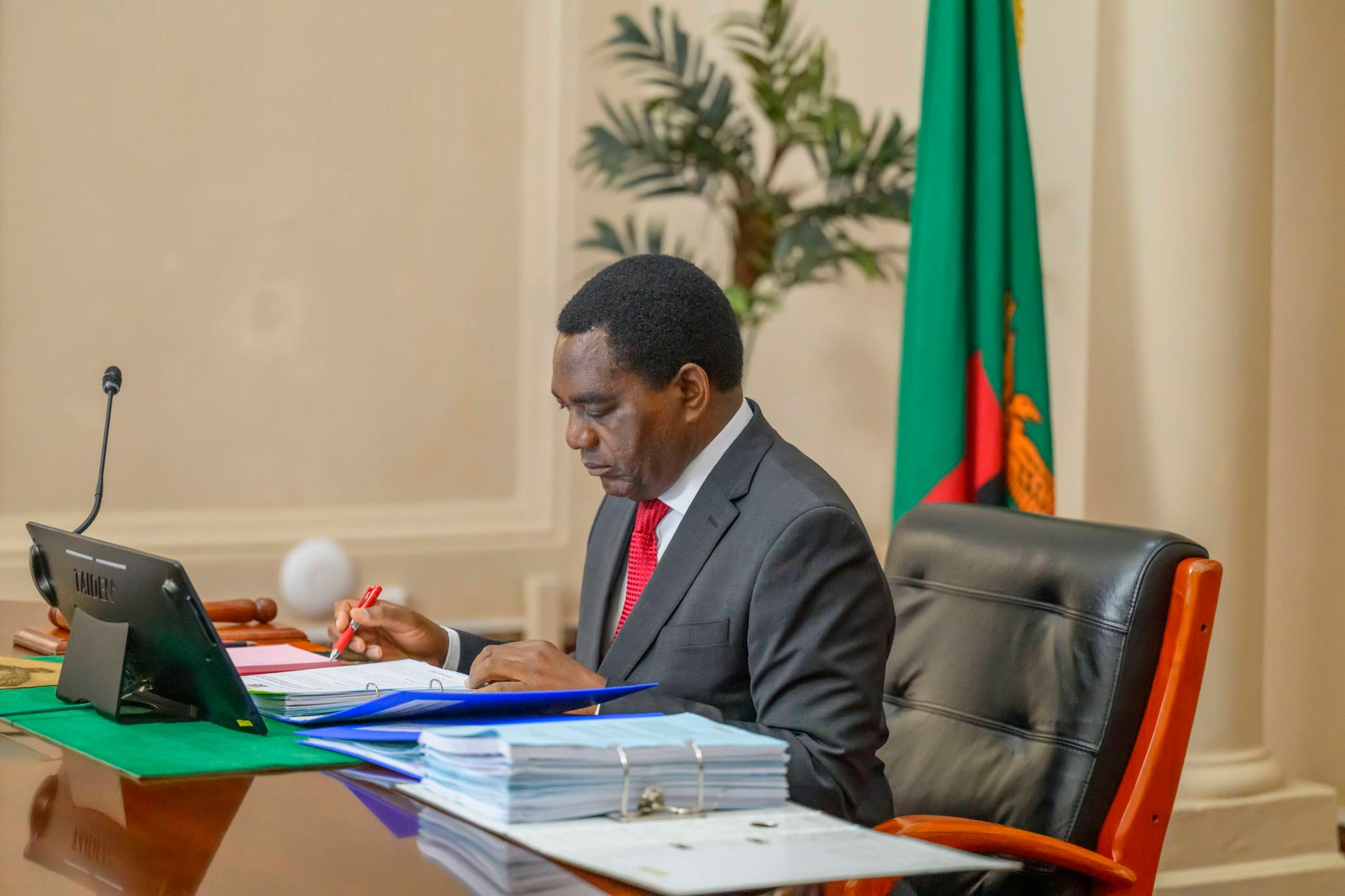
As President Hakainde Hichilema dissolves Parliament today, Zambia closes one political chapter and prepares to elect what could become the largest and most closely watched legislature in the country’s history.
When the national assembly closes, many Zambians will not remember it for great laws, transformative debates, or bold oversight. They will remember the empty benches, suspended MPs, rushed legislation, and growing frustration over whether parliament still reflects the people’s priorities.
The next parliament will likely be larger, more expensive, and politically more contested than any before it. One of the most significant electoral changes ahead of the 2026 elections is the creation of 70 new constituencies, increasing the number of elected Members of Parliament from 156 to 226.
The new electoral system now combines the first-past-the-post electoral model with 40 proportional representation seats reserved for women, youths and persons with disabilities. Added to this are up to eight presidential nominees, further reshaping the final parliamentary balance.
When the speaker and vice president are included, Zambia’s next parliament could have close to 280 people sitting in the national assembly — making it the largest legislature in the country’s history.
But the debate around the new electoral map has also exposed deeper concerns about unequal representation and whether some votes may now carry more political weight than others depending on geography.
The Electoral Commission of Zambia defended the exercise, citing population growth and the need to improve representation. But the process has drawn criticism over limited consultation and lack of transparency.
The National Democratic Institute (NDI) described the reform as having “mixed implications”—bringing representation closer to citizens on one hand, while raising concerns about cost and fairness on the other.
The real question after August 13 will not simply be who wins. It will be whether the next group of MPs understands what ordinary Zambians now expect from leadership.
And the signs are clear.
Across the country, citizens increasingly appear less interested in political slogans and more concerned about competence, accountability, and results.
They want leaders who spend less time fighting in parliament and more time fixing broken hospitals, incomplete Constituency Development Fund projects, youth unemployment, water shortages, rising food prices, and collapsing local infrastructure.
For many voters, parliament has gradually become associated with privilege rather than public service. MPs continue to receive significant salaries and allowances in a country where many young people remain unemployed and public services struggle.
Publicly available parliamentary data shows that MPs receive salaries, allowances, and multiple benefits tied to committee sittings and parliamentary operations.
But citizens are increasingly asking a difficult question: what exactly has parliament delivered in return?
That frustration may shape the 2026 vote more than political parties realise.
The next parliament is also likely to be far more fragmented and tense.
Delimitation has created dozens of new constituencies, opening space for new alliances, independent candidates, and unpredictable contests. Even if one party secures a majority, governing may become more politically fragile because expectations are now much higher.
At the same time, Zambia is entering an era where public trust in institutions is under strain. Debates around constitutional reforms, electoral fairness, and the concentration of political power have left many citizens uneasy. The danger after August 13 is not simply political conflict. It is public disillusionment.
If the next parliament continues to behave like a battlefield for political survival rather than a platform for national problem-solving, citizens may disengage even further from democratic processes altogether.
But there is also an opportunity. The next parliament could become one of the most important in Zambia’s democratic history if leaders choose humility over arrogance and service over entitlement. Citizens want MPs who attend parliament consistently, debate seriously, consult communities honestly, and explain how public money is being used. They want fewer scandals and more solutions.
Young people, especially, are watching closely. Many first-time voters are entering this election cycle carrying economic frustration, but also high expectations. They are digitally connected, politically aware, and increasingly impatient with leadership that appears disconnected from everyday struggles.
After August 13, the celebration rallies will end quickly. What will remain are the realities of governance.
Zambians are not simply voting for politicians. They are voting for whether parliament can once again become a place where national problems are confronted honestly, competently, and in the public interest.
The next MPs will inherit more seats, more power, and more public scrutiny than ever before. The question is whether they are prepared for that responsibility.
Image Source | Hakainde Hichilema’s Facebook Page


Discover more from MAKANDAY
Subscribe to get the latest posts sent to your email.


