

By Clara Chisenga | MakanDay
A coalition of civil society organisations has raised concern over what it describes as a rushed legislative process in Parliament ahead of the dissolution of the National Assembly on May 15 2026, warning that the speed and volume of Bills being processed risk undermining democratic accountability, public participation and constitutional governance.
In a joint statement issued on May 6, civil society groups said more than 70 Bills had reportedly been introduced for consideration between January and now, with Standing Orders allegedly suspended to accelerate their passage through Parliament.
The organisations warned that while Parliament has authority to regulate its own procedures, the current pace of law-making raises “constitutional, democratic, and governance concerns.”
“Law-making is not a procedural formality,” the statement reads. “It is one of the core functions of Parliament and must be undertaken in a manner that allows for meaningful public participation, proper scrutiny, and informed deliberation.”
At the centre of the concern is Article 89 of the Constitution, which obliges the National Assembly to facilitate public involvement in the legislative process. According to the statement, meaningful participation requires sufficient time for citizens, civil society organisations, professional bodies and affected stakeholders to access proposed laws, analyse their implications and submit informed recommendations.
The organisations argue that processing dozens of Bills within compressed timelines makes effective participation practically impossible, even where formal consultation mechanisms remain technically open.
The statement further warns that Parliament risks weakening its own constitutional role as a deliberative and oversight institution.
“Members of Parliament are not merely expected to approve Bills,” the statement says. “They are constitutionally expected to interrogate them, assess their consistency with the Constitution and Zambia’s democratic principles, evaluate their policy and financial implications, and consider their long-term impact on governance, rights, and public administration.”
Civil society groups say compressing consideration of more than 70 Bills into the final days before dissolution diminishes the quality of scrutiny and weakens Parliament’s ability to effectively discharge its broader constitutional mandate.
The concerns are particularly significant because some of the Bills reportedly touch on constitutional rights, electoral processes, public accountability systems and democratic governance frameworks.
The statement warns that laws passed through rushed processes often result in poor drafting, constitutional inconsistencies, implementation challenges and avoidable litigation.
“In democratic constitutional systems, process is not separate from substance,” the organisations stated. “A flawed legislative process frequently produces flawed law.”
The coalition also questioned the suspension of Standing Orders to speed up passage of legislation, arguing that such measures should remain exceptional and reserved for genuine emergencies rather than becoming tools for bypassing scrutiny and public engagement.
At the same time, the organisations acknowledged that certain pieces of legislation linked to the administration of the forthcoming general elections may reasonably require prioritisation before Parliament dissolves. These include the Electoral Process Amendment Bill, the Public Gatherings Bill and aspects of the Local Government legislative framework.
However, they stressed that even election-related legislation must still comply with constitutional standards of transparency, meaningful participation and parliamentary scrutiny.
The statement further clarified that support previously expressed by some civil society organisations for certain Bills was conditional on amendments and recommendations submitted during stakeholder consultations being incorporated into the final legislation.
The organisations warned that such support should not be interpreted as unconditional endorsement of laws enacted without key safeguards and protections proposed during public consultations.
The coalition has since called on the National Assembly and the Executive to reconsider both the volume and pace of legislation currently being processed and to prioritise only laws considered strictly necessary before dissolution.
“Laws that will govern the Zambian people long after the dissolution of Parliament must not be enacted through processes that deny citizens a meaningful opportunity to participate in their making,” the statement reads.
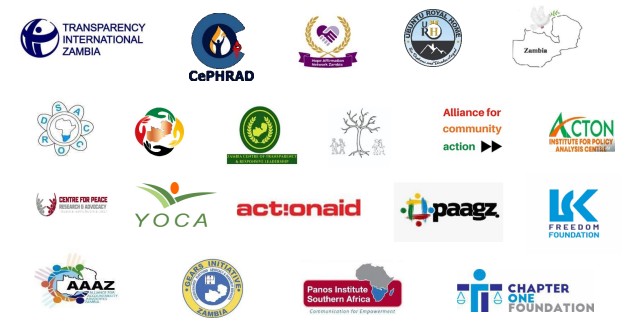
The statement signed by Chapter One Foundation was backed by a broad coalition of civil society organisations, including Transparency International Zambia, Centre for Protection of Human Rights and Advancement of Democracy (CePHRAD Zambia), Hope Affirmation Network Zambia, Ubuntu Royal Homes, DSC Zambia, Zambia Centre for Transparency and Responsive Leadership. Others are Alliance for Community Action, ActionAid Zambia, People’s Action for Accountability and Good Governance in Zambia (PAAG Zambia), The Freedom Foundation, Alliance for Accountable Governance Zambia, Governance Elections Advocacy Research Services (Gears Zambia), and Panos Institute Southern Africa, among others.
Clara Chisenga is a journalist from Radio Icengelo in Kitwe. She is currently undertaking a three-month internship at MakanDay after earning third place in the 2025 MakanDay Awards for Investigative Journalism.


Discover more from MAKANDAY
Subscribe to get the latest posts sent to your email.


