

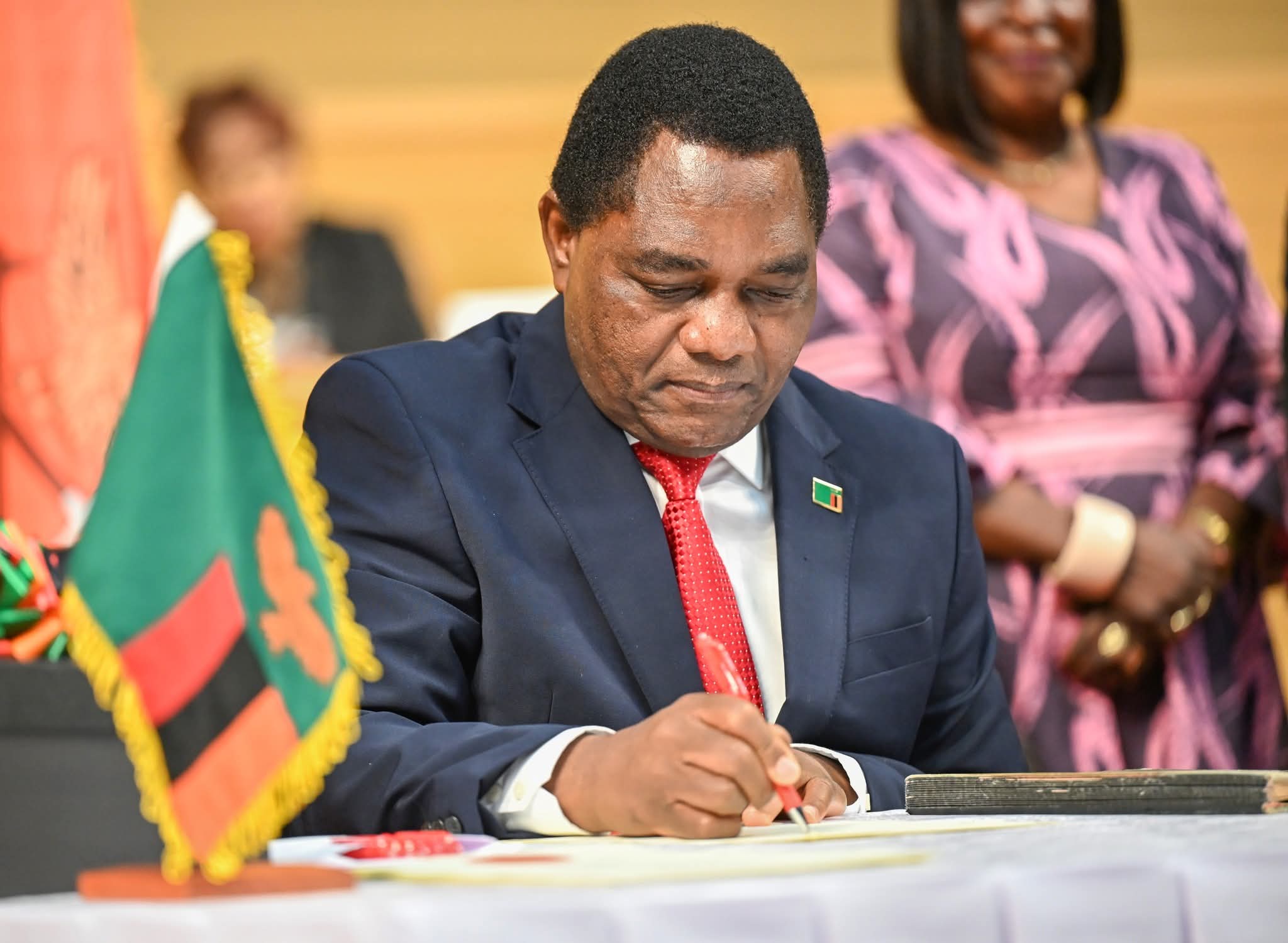
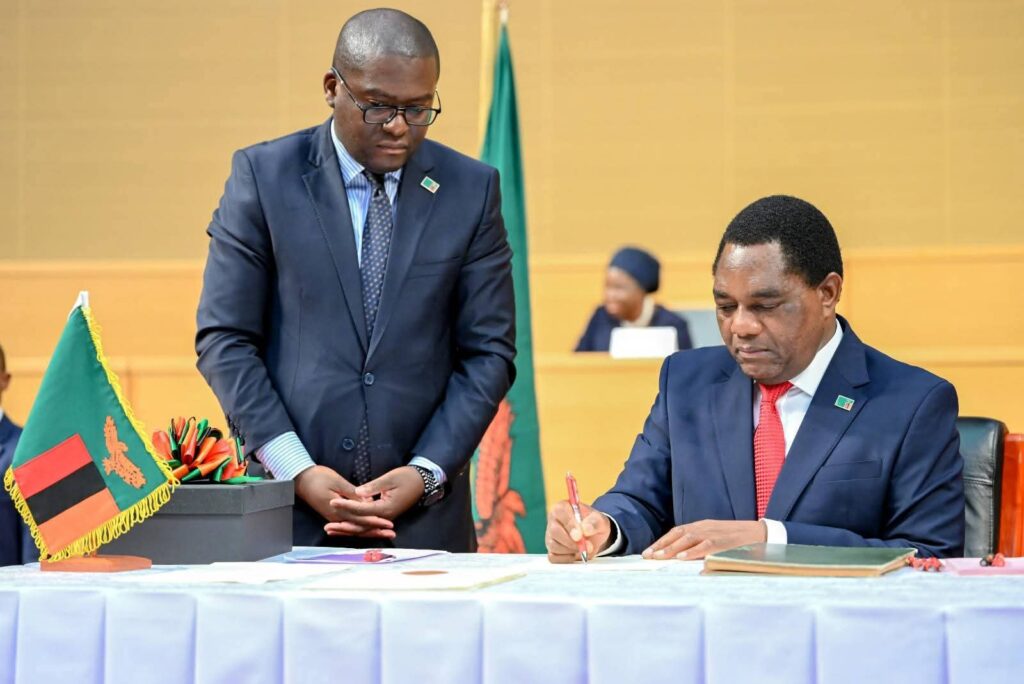
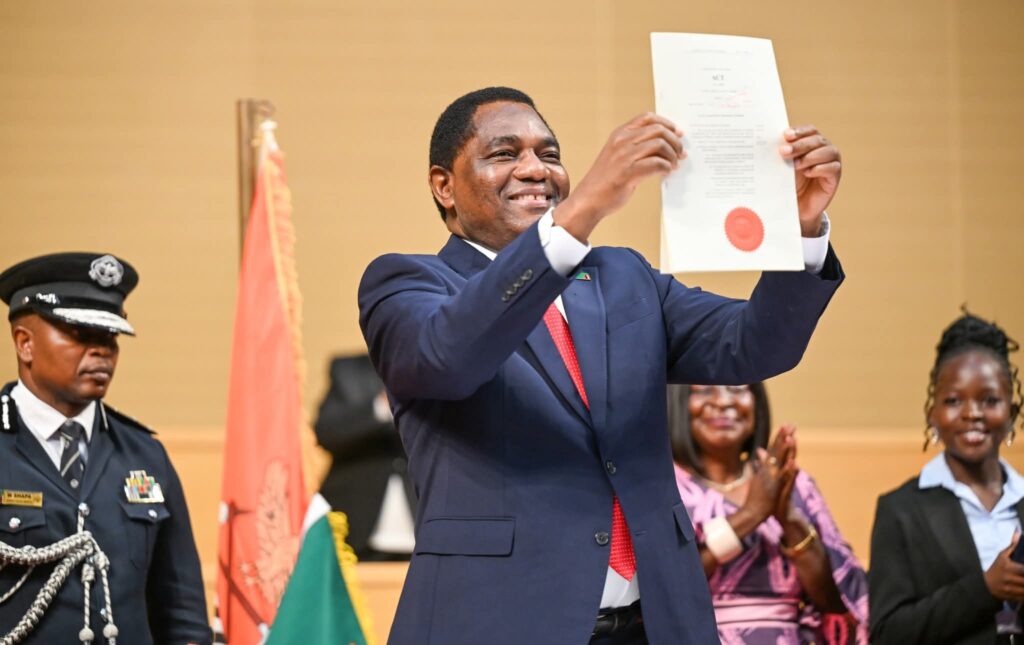
At exactly 11:30 hours on Thursday, 18 December 2025, at the Mulungushi International Conference Centre, President Hakainde Hichilema assented to Bill Number Seven, one of the most contentious constitutional amendment bills Zambia has seen in recent years.
Just three days earlier, on Monday, 15 December, the national assembly approved the amendment, to among other changes, expand the number of lawmakers from 156 to 226 holding constituency-based seats. The changes also introduce 40 proportional representation seats for youth, women, and persons with disabilities, and passed with more than 130 national assembly votes.
Supporters argue that the reform strengthens democracy by broadening representation. Critics, however, warn that it alters the balance of power by increasing presidential influence, and weakening local accountability.
At face value, Bill Seven seeks to heal a longstanding problem. Zambia’s national assembly has never adequately reflected the country’s demographic realities. Women, young people, and persons with disabilities remain underrepresented in decision-making spaces that shape national priorities. Proportional representation appears to offer a corrective, a faster route to inclusion than waiting for political parties to reform candidate selection on their own.
But constitutions are not merely symbolic documents. They are systems of power, accountability, and incentives. And it is within this deeper structure that Bill Seven raises difficult questions.
By expanding parliament by more than 100 seats, some of them filled through party lists rather than direct constituency elections, the amendment fundamentally reshapes political accountability. Lawmakers who owe their positions to party leadership are more likely to be loyal upward than accountable downward to voters. This weakens the already fragile link between citizens and those who represent them.
There is also the question of cost that remains largely unanswered. A larger parliament means higher spending on salaries, allowances, offices, and administrative support, at a time when Zambia continues to face fiscal pressure, strained public services, and competing development priorities. Without a transparent and credible justification, the expansion risks reinforcing public suspicion that political reforms benefit political elites more than ordinary citizens.
The critical question lies in how seats under the proportional representation system will be allocated.
Under the Constitution of Zambia (Amendment) Act, 2025, seats provided for under the proportional representation electoral system—referred to in Article 47, under clause 4, the seats under proportional representation shall be distributed after a general election by the Electoral Commission, in proportion to the total number of valid votes received by a presidential candidate.
By tying the allocation of proportional representation seats to presidential vote totals, the system inherently advantages the ruling party of the day, whose candidate typically commands greater national visibility, resources, and incumbency power. This structural bias, rather than the principle of inclusion itself, is what demands closer public scrutiny.
Perhaps most troubling is how the amendment was passed. Constitutional change requires broad public trust, extensive consultation, and consensus across political and social divides. Bill Seven instead unfolded in a climate of sharp contestation, with many Zambians feeling that the Constitution was amended for them, but not with them.
As we reported, in Eastern Province for example, there were instances where citizens were allegedly paid to support amendments that aligned with the executive’s position. These reports raise serious questions about the credibility of the consultation process.
What remains unanswered is why there was such intense focus on increasing the number of MPs, rather than on strengthening Zambia’s institutions to effectively check the excesses of power.
Inclusion is not a luxury in a democracy, it is a requirement. But inclusion without accountability is a fragile foundation. Bill Number Seven may succeed in expanding representation on paper, yet still weaken democratic practice if it concentrates power, dilutes voter oversight, and distances lawmakers from the people they are meant to serve.
The real test of this amendment will not be how many seats are added to parliament, but whether citizens emerge with stronger influence over governance, or find themselves further removed from it. In a democracy, growth should deepen accountability, not trade it away.
Zambia’s limited progress cannot be explained by the number of Members of Parliament alone. In many cases, it is from weak accountability, self-interest, and leadership that prioritises personal or political gain over the public good. That, rather than the size of parliament, remains one of Zambia’s most pressing governance challenges.
Photo Credit | The President's Facebook Page





Discover more from MAKANDAY
Subscribe to get the latest posts sent to your email.


