

By Ennety Munshya
For generations, animal skins have formed part of the ceremonial regalia worn during some of Zambia’s traditional ceremonies, carrying symbols of status, power and cultural identity.
But the use of genuine leopard skins has also created a conservation challenge, with demand for the distinctive spotted fur linked to the killing and illegal trade of the animals.
Now, a study of a programme replacing genuine leopard skins with synthetic alternatives suggests the intervention has coincided with a sharp decline in authentic fur ownership among ceremonial users — alongside reduced detections of leopard poaching and an increase in estimated leopard density in the study landscape.


The study, published in Conservation Biology, examined the Furs for Life programme, led by wild cat conservation organisation Panthera in collaboration with Zambia’s Department of National Parks and Wildlife, traditional leaders and other stakeholders, including Wild Crime Prevention (WCP).
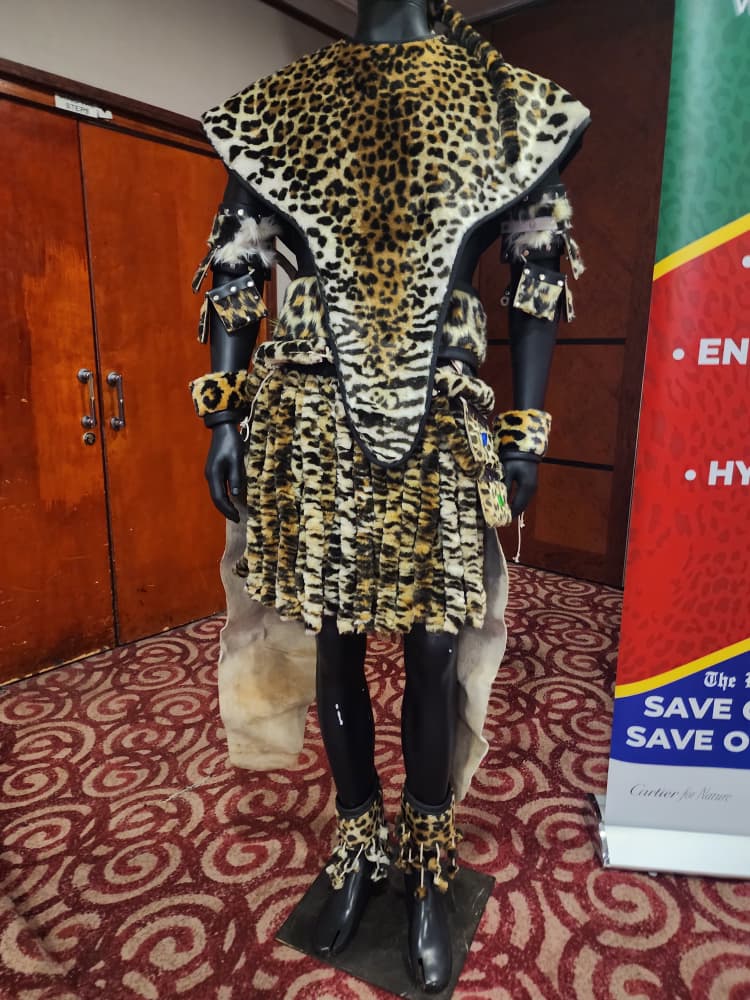
The programme distributes synthetic garments known as Heritage Furs, designed to resemble genuine wild-cat skins while allowing traditional regalia to retain its cultural appearance without requiring more animals to be killed.
Presenting the study at the Taj Pamodzi Hotel in Lusaka on September 30, 2026, Panthera said the intervention had achieved high levels of adoption among communities where wild-cat skins have historically been used as ceremonial attire.
Researchers examined the programme using questionnaires, law-enforcement and court records, camera-trap monitoring and interviews with stakeholders.
One focus of the research was the use of leopard fur among paddlers associated with the Kuomboka traditional ceremony in Western Province.
The study estimates that historical demand among ceremonial users could require about 176 authentic leopard-fur garments annually, corresponding to an estimated 44 leopards.
But researchers found that, following the introduction of synthetic alternatives, self-reported ownership of authentic leopard fur among paddlers associated with the Barotse Royal Establishment fell by 78 percent between 2020 and 2024.
Adoption of synthetic alternatives exceeded 80 percent by 2024.
The study also found that detected leopard-poaching incidents declined during the period under review, while estimated leopard density across the study landscape increased from an average of 2.7 to 3.8 animals per 100 square kilometres.
The findings raise an important question: how much of that apparent recovery can be attributed to replacing genuine skins with synthetic ones?
Researchers caution that the synthetic-fur programme was not operating in isolation.
Counter-poaching and counter-trafficking operations were also being implemented during the study period, meaning the observed changes cannot simply be attributed to synthetic fur alone.
The findings nevertheless suggest that reducing demand for genuine skins could form part of a broader strategy for protecting wild leopard populations.
Panthera says the programme is designed to address that demand while preserving the cultural significance of ceremonial regalia.
Heritage Furs have been supplied to users of traditional ceremonial attire, including communities associated with the Lozi Kuomboka ceremony and the Ngoni Ncwala ceremony.
Traditional leaders have also been involved in promoting the synthetic alternatives.
Speaking during the Lusaka event, Ncwala Organising Chairman Dumisani Tembo said the adoption of synthetic leopard skins offered a way of supporting conservation while maintaining cultural traditions.
Mr Tembo said poaching and trafficking of leopards for their skins had contributed to pressure on the animals and argued that communities needed to recognise that wildlife resources were finite.
“Wildlife is not infinite,” Mr Tembo said, stressing the need for communities to support conservation efforts.
In a separate interview with Makanday, Maswabi Lishandu, a representative of the Panthera project in Western Province, said the initiative sought to balance wildlife conservation with the preservation of culture.
“The motive of the project is conservation and preserving culture,” Mr Lishandu said.
He said demand for wild-cat skins for ceremonial attire had placed pressure on the animals and that synthetic alternatives offered a way for communities to maintain the appearance and cultural significance of their traditional garments while reducing demand for genuine skins.
The intervention also raises questions about what happens to authentic skins that are no longer being used and whether reduced ownership among participating ceremonial groups translates into a lasting reduction in the wider illegal market for leopard skins.
The study’s findings show an association between the period in which synthetic furs were increasingly adopted and several positive conservation indicators: fewer ceremonial users reporting ownership of genuine leopard fur, fewer detected poaching incidents and higher estimated leopard density.
But with law-enforcement and other conservation measures operating alongside the programme, determining how much of the apparent improvement is directly attributable to synthetic fur remains difficult.
For conservationists and traditional leaders, the longer-term test will therefore be whether communities continue to embrace synthetic alternatives, whether demand for genuine leopard skins continues to decline, and whether the gains recorded in Zambia’s wild leopard populations can be sustained without sacrificing the cultural traditions in which the regalia has long played a role.


Discover more from MAKANDAY
Subscribe to get the latest posts sent to your email.


