

By Ennety Munshya
Claim
In a video widely shared on Facebook, National Reconciliation Party for Unity and Prosperity presidential aspirant Brian Mundubile and his running mate, Makebi Zulu, claimed that President Hakainde Hichilema falsely stated during his campaign ahead of the August general election that Zambia’s gross international reserves had reached US$6.5 billion, arguing that the reserves “do not exist”.
What did MakanDay check?
MakanDay examined two questions:
- Did Zambia’s gross international reserves reach US$6.5 billion?
- Is there credible evidence supporting the reported reserve figures?
What are gross international reserves?
According to the International Monetary Fund (IMF), gross international reserves are external assets that are readily available to and controlled by a country’s monetary authorities, usually the central bank. They are used to finance international payments, stabilise the exchange rate, maintain confidence in the economy and provide a buffer against external financial shocks.
Gross international reserves are one of the key indicators economists, investors and international lenders use to assess a country’s external financial strength.
What the evidence shows
Evidence from the Bank of Zambia
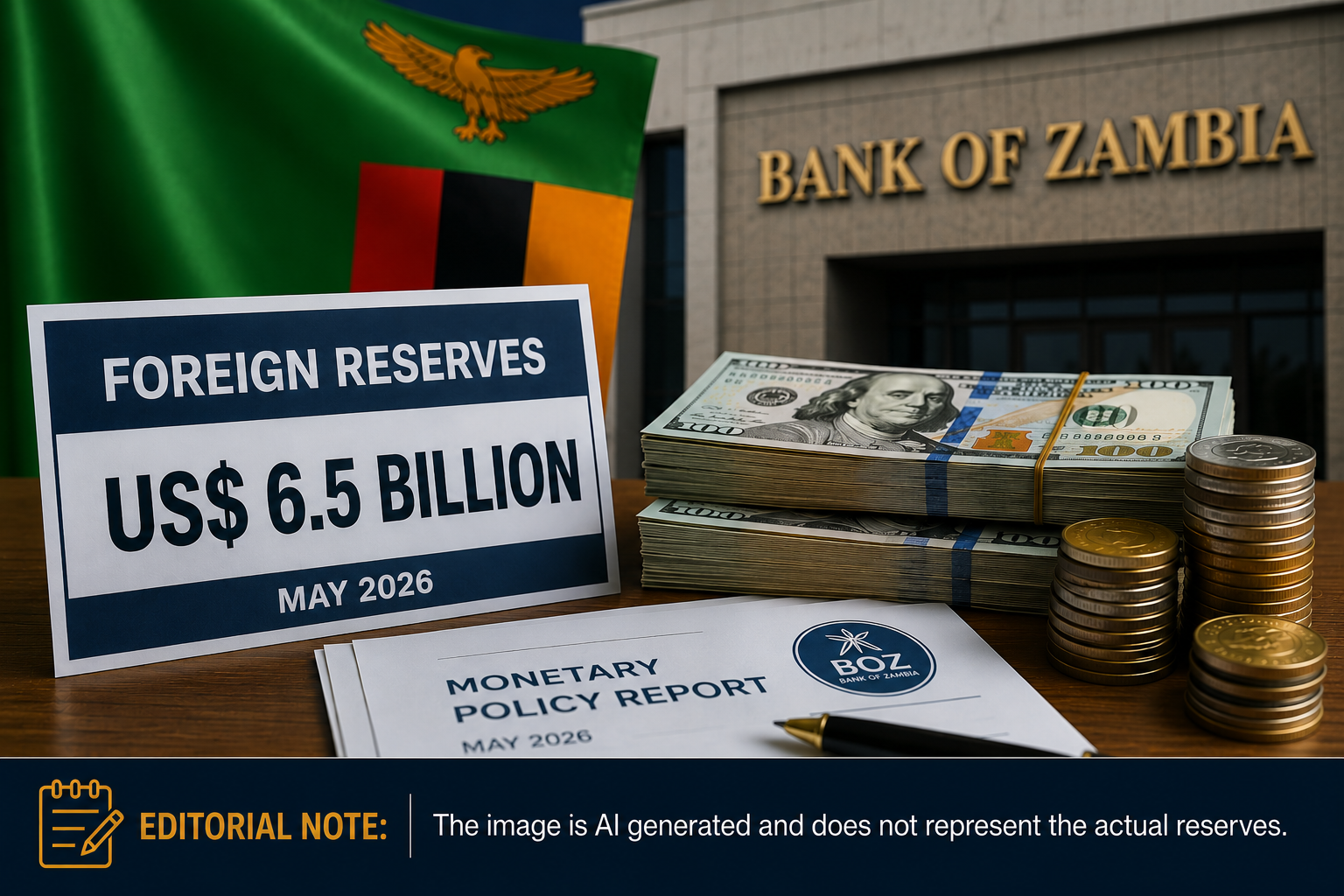
The Bank of Zambia’s May 2026 Monetary Policy Report states that favourable foreign exchange market conditions enabled the central bank to continue purchasing foreign currency during the first quarter of 2026.
According to the report, the Bank purchased US$695.8 million, comprising:
- US$289.7 million from mining taxes;
- US$378.0 million from commercial banks, largely from Government securities proceeds; and
- US$28.1 million through the Government Bond/Foreign Exchange Sales Programme.
The report states that these purchases, together with external inflows, “contributed to the sharp increase in gross international reserves to a historic high of USD6.5 billion in February”.
Additional inflows included:
- US$192.2 million from the IMF under the Extended Credit Facility;
- US$59.0 million from the World Bank Group; and
- US$43.0 million in non-tax receipts.
The Bank of Zambia further explains that although reserves reached a historic peak of US$6.5 billion in February 2026, they later declined to US$6.2 billion by the end of March 2026. Even after that decline, reserves remained approximately US$700 million higherthan the US$5.5 billion recorded at the end of December 2025.
Independent verification
The IMF independently confirmed Zambia’s strengthened reserve position following its staff mission to Zambia in May 2026.
The Fund stated:
“Gross international reserves have increased to US$6.4 billion, equivalent to 4.4 months of prospective imports of goods and services.”
Although the IMF reported US$6.4 billion, compared with the Bank of Zambia’s reported peak of US$6.5 billion, the figures relate to different reporting dates rather than conflicting data. Both institutions independently reported that Zambia’s reserves exceeded US$6 billion during the period in question.
Verdict: False
The claim that Zambia’s US$6.5 billion in gross international reserves “does not exist” is false.
Evidence from both the Bank of Zambia and the International Monetary Fund shows that Zambia’s gross international reserves reached a historic high of US$6.5 billion in February 2026 before easing to US$6.2 billion by the end of March 2026. The IMF subsequently reported reserves of US$6.4 billion following its May 2026 staff mission.
MakanDay found no publicly available evidence supporting the claim that Zambia’s reported foreign reserves were fictitious or did not exist. Instead, independent evidence from Zambia’s central bank and the IMF consistently shows that the country’s international reserves stood at approximately US$6.2 billion to US$6.5 billion during the period under review.
Explainer: What do international reserves consist of?
According to the IMF, international reserves generally comprise:
- Foreign currency assets, including deposits and highly liquid government securities;
- Gold held by the central bank;
- Special Drawing Rights (SDRs) allocated by the IMF;
- A country’s reserve position at the IMF; and
- Other qualifying liquid foreign assets.
Why are international reserves important?
International reserves help a country to:
- pay for imports and meet external debt obligations when foreign currency inflows are insufficient;
- stabilise the exchange rate through foreign exchange market intervention by the central bank;
- maintain confidence among investors and international lenders that the country can meet its international obligations; and
- cushion the economy against external shocks, including global financial crises, sudden capital outflows and sharp increases in import prices.


Discover more from MAKANDAY
Subscribe to get the latest posts sent to your email.


