

Groups say Africa has enough anti-corruption laws but lacks the political will to enforce them
By MakanDay
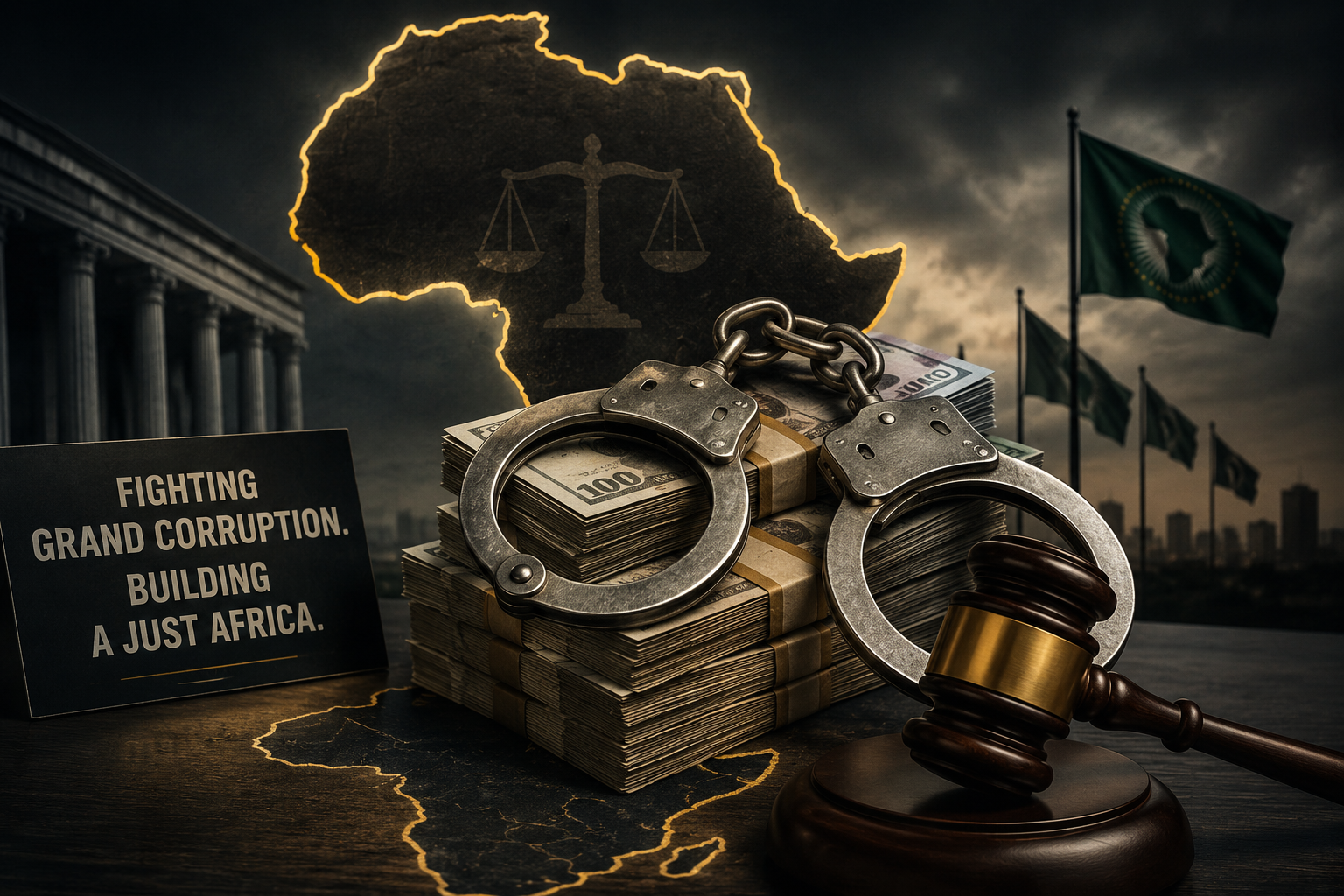
LUSAKA – African anti-corruption organisations have called on governments across the continent to shift from making anti-corruption commitments to ensuring that powerful individuals accused of corruption are investigated, prosecuted and held accountable.
Marking African Anti-Corruption Day 2026 which falls on 11 July, a coalition of civil society organisations said Africa’s greatest challenge is no longer the absence of laws or institutions but what they describe as an “enforcement gap” that allows grand corruption to flourish with impunity.
The organisations made the appeal in a joint statement issued ahead of the annual commemoration, whose African Union theme this year is “Scaling Up the Promotion of Integrity and Anti-Corruption Actions Across Africa.”
The coalition argued that while many African countries have established anti-corruption commissions, financial intelligence units, audit institutions, procurement laws and regional accountability frameworks, these measures have often failed to deliver meaningful accountability where politically connected individuals are involved.
“Africa does not lack anti-corruption commitments. The continent has laws, conventions, anti-corruption agencies, financial intelligence units, audit institutions, ombudsman offices, procurement rules and regional accountability frameworks. What remains urgent is enforcement,” the statement said.
According to the organisations, corruption continues to undermine economic development by diverting resources that could otherwise finance essential public services.
Citing estimates from the United Nations Conference on Trade and Development (UNCTAD), the statement says Africa loses approximately US$88.6 billion every year through illicit financial flows, money that could instead support education, healthcare, water infrastructure, employment and social protection.
The coalition said grand corruption differs from petty corruption because it often involves large-scale theft of public resources through sophisticated cross-border financial networks.
It warned that stolen public funds are frequently concealed through shell companies, offshore accounts, banks, luxury assets and procurement schemes, making international cooperation increasingly important in recovering illicit wealth.
Among the proposals advanced is the establishment of an International Anti-Corruption Court (IACC), which supporters argue could prosecute grand corruption cases when national justice systems are unable or unwilling to do so.
The organisations said such a court would complement rather than replace domestic institutions by acting as a court of last resort in cases where political interference prevents effective investigations or prosecutions.
The statement also urges African governments to strengthen protection for whistleblowers, investigative journalists, civil society activists and public officials who expose corruption.
“Integrity is often defended first by those who speak out,” the organisations said, arguing that whistleblowers should be protected from dismissal, intimidation, legal action and violence.
The coalition further called for greater transparency in public procurement, land administration, licensing, natural resource contracts, infrastructure projects and public finance management, saying these sectors remain particularly vulnerable to corruption.
It also urged governments to strengthen anti-money laundering measures and improve the tracing, confiscation and recovery of stolen public assets.
The organisations argued that anti-corruption efforts should ultimately be viewed as a development priority rather than simply a legal or governance issue.
They warned that Africa’s long-term development ambitions, including those contained in the African Union’s Agenda 2063, would remain difficult to achieve if public resources continued to be diverted through corruption.
The joint statement was endorsed by several African and international organisations, including Integrity Initiatives International, Good Governance Africa, Transparency Mauritius, Transparency International Initiative Madagascar, the Botswana Centre for Public Integrity, HEDA Resource Centre, the Pan African Lawyers Union and Tournons La Page.
Discover more from MAKANDAY
Subscribe to get the latest posts sent to your email.