

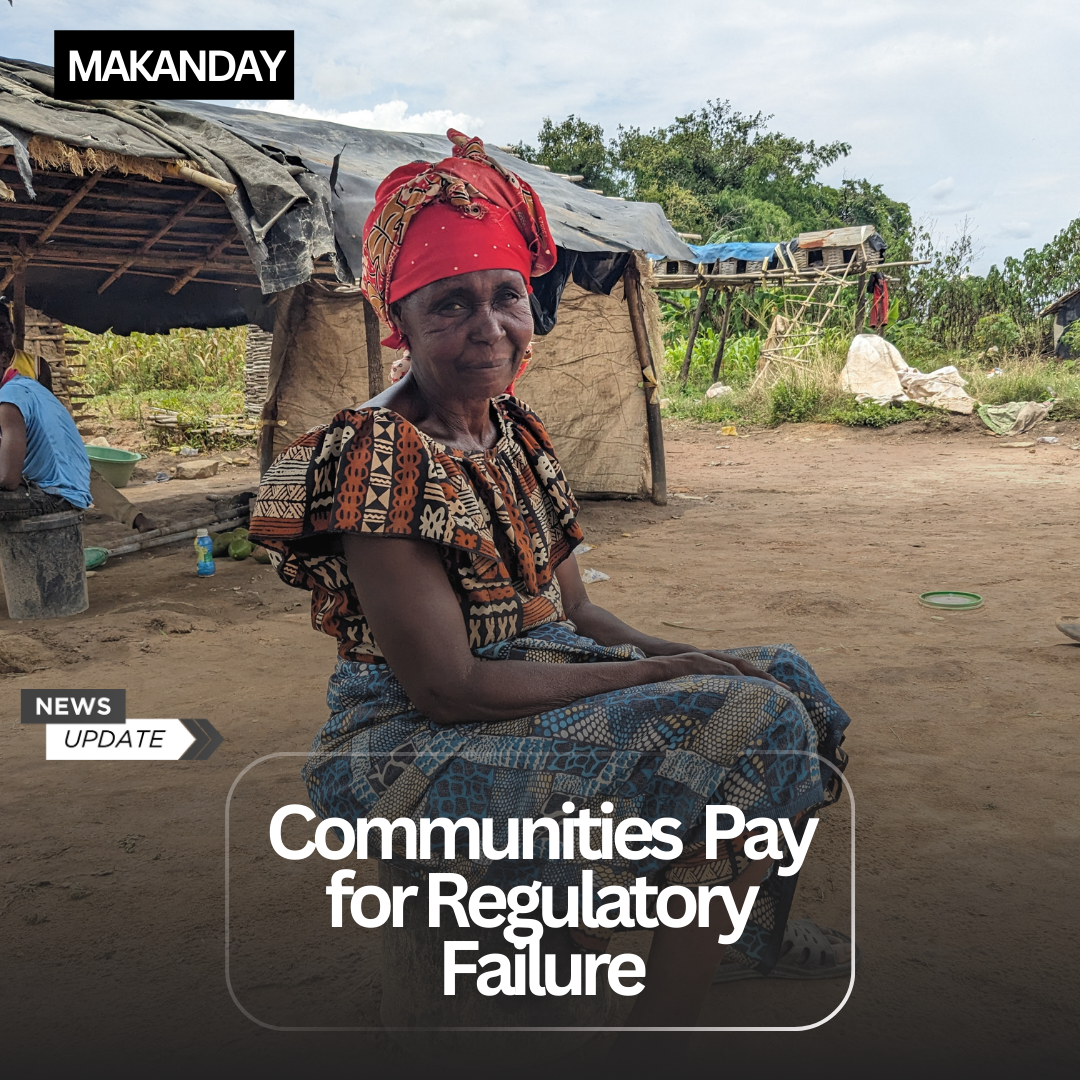
A new Environmental and Social Incident Impact Assessment shows that while rivers have partly recovered, soil contamination remains and weak enforcement continues to put communities at risk.
By MakanDay
Although the immediate environmental emergency following the tailings dam collapse at Sino-Metals, the Chinese government–owned copper mine in Kalulushi, has eased, a new official report shows that the incident exposed serious and long-standing weaknesses in mining oversight on the Copperbelt.
The assessment finds that Zambia’s environmental laws were in place, but weak enforcement, monitoring, and preparedness allowed the disaster to occur. Without sustained clean-up and accountability, the report concludes, similar incidents remain likely.
The report found that at least 158 people were directly affected by the spill, many living within areas now classified as environmentally dangerous. While some compensation was paid, the report warns that recovery remains incomplete and uneven, particularly for communities whose livelihoods depend on farming.
What Happened
On 18 February 2025, a waste storage dam operated by Sino-Metals collapsed in Kalulushi, releasing acidic mining waste into the surrounding environment. The spill flowed into Chambishi Stream, Mwambashi River, and eventually reached parts of the Kafue River, raising concerns about water safety, ecosystems, and downstream communities.
How Serious Was the Spill?
Laboratory tests found the discharged waste to be highly acidic, with extremely high levels of dissolved solids—conditions confirmed by the report to pose a significant environmental hazard, especially in areas closest to the source of the spill.
Impact on Rivers
In the weeks following the collapse, water quality in Chambishi Stream and Mwambashi River deteriorated sharply, reaching levels unsafe for human use and aquatic life.
About eight months later, monitoring showed that most water quality indicators had returned close to levels recorded before the spill. However, the report notes that these rivers were already polluted by multiple mining operations, meaning the dam failure occurred in an already stressed river system.
What About the Kafue River?
The assessment found no evidence of long-term toxic contamination in the Kafue River that could be linked solely to the Sino-Metals spill. Instead, downstream pollution was attributed to cumulative impacts from historical and ongoing mining activity, highlighting broader challenges in river basin management.
Groundwater Concerns
Most shallow wells used by nearby communities were not contaminated through groundwater movement from the collapsed dam.
However, the report identified localised groundwater pollution near other waste storage facilities, particularly TD6 and Werner’s Dam, where elevated sulphates and electrical conductivity were recorded—indicating that groundwater risks persist beyond a single site.
Soil Contamination Remains a Major Concern
One of the report’s most serious findings relates to soil pollution. Tests detected copper and cobalt concentrations exceeding international safety guidelines in several locations.
A heavily contaminated area measuring approximately 5.35 square kilometres poses long-term risks to farming, ecosystems, and livelihoods, raising concerns about land use and food safety well after river conditions improved.
Ecological Damage Has Not Fully Healed
Environmental damage remains most severe in upper Chambishi Stream, where elevated metal levels persist in sediments and vegetation.
The Mwambashi River shows partial recovery, while downstream sections of the Kafue River were largely protected by natural filtration systems such as the Lukanga Swamps.
Farms and Communities Bore the Cost
Agricultural land near the spill suffered crop destruction, stress, and contamination, with the report warning that farming should not resume normally without proper soil remediation. Crops grown in polluted soils risk absorbing heavy metals, posing dangers to food safety.
The assessment identified at least 158 people as directly affected, many of whom remain vulnerable to displacement. While compensation was paid for crop losses, the report found that these payments encouraged some residents to return to contaminated areas, complicating clean-up efforts and increasing long-term risk.
Air Quality Not a Lasting Problem
Air monitoring detected no long-term danger from acid mist or harmful gases. Odours reported immediately after the spill were short-lived and did not persist.
Governance Failures Exposed
Perhaps most damning is the report’s conclusion that the disaster occurred despite adequate environmental laws. The core failure, it finds, was weak enforcement, particularly in, tailings storage facility management, routine monitoring and inspection, and emergency preparedness.
These gaps, say the report, allowed risks to go unaddressed until the dam collapsed.
What the Report Recommends
To prevent similar disasters, the assessment calls for full environmental remediation funded under the polluter-pays principle, alongside long-term monitoring of water, soil and ecosystems. It also recommends the resettlement of people living in pollution control zones and stronger coordination among regulators, including the Zambia Environmental Management Agency, the Water Resources Management Authority, and the Mines Safety Department.
The Bigger Picture
The report makes clear that the Sino-Metals spill was not just an isolated accident, but a warning. Without sustained oversight, transparent enforcement and real accountability, mining-related environmental disasters on the Copperbelt are not a question of if, but when.


Discover more from MAKANDAY
Subscribe to get the latest posts sent to your email.


