

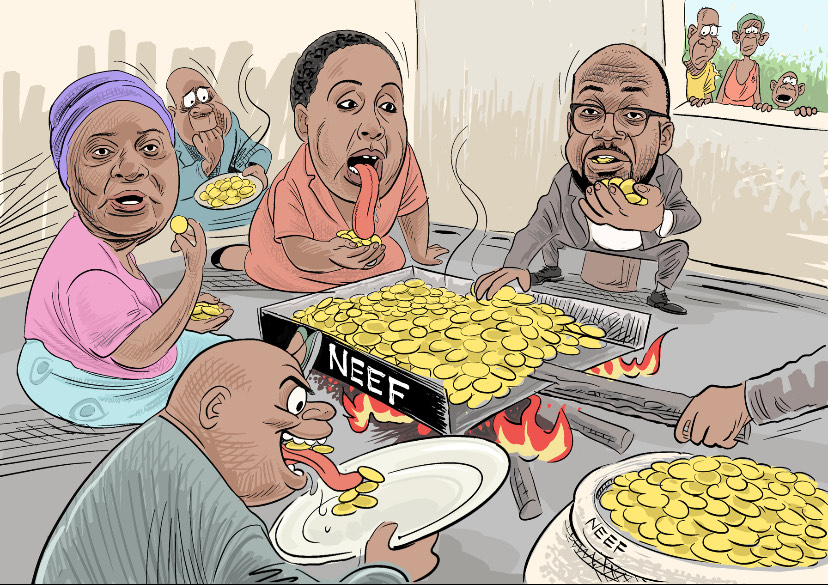
Malawi’s government’s microfinance scheme to uplift the “ultra-poor” was hijacked by the political elite. Leaked records show how the National Economic Empowerment Fund (NEEF) was captured by former President Lazarus Chakwera’s family, cabinet ministers and party cheerleaders, sidelining the communities it was designed to serve.

Golden Matonga and Julius Mbe?e
When Lazarus Chakwera’s Malawi Congress Party (MCP) administration launched the empowerment fund as a state-owned microfinance institution, it was publicly touted as a lifeline for the ultra-poor, one that would boost small business development and, ultimately, bridge the wealth gap.
Cabinet ministers, members of parliament (MPs), state house officials, and relatives of the former president were among those who secured hefty loans without required repayment, effectively turning a poverty-alleviation scheme into a grant scheme or private credit line for the politically connected.
However, despite being taxpayer-funded, evidence uncovered by the Platform for Investigative Journalism (PIJ) reveals how politicians and their relatives were not only granted priority access to the microfinance scheme, but they were also able to default on loans with impunity.
While documents also show that there was a significant uptick in loans to politically connected individuals ahead of the 2025 national and presidential election, they also show that some repayments began to trickle in after the Chakwera administration was voted out and the fund’s leadership changed hands. But the fund, which has reverted back to being called the Malawi Development Fund (MEDF), is now in trouble with a 52% default rate. While the fund’s new chief executive officer, Kayisi Sadala, described this default rate to parliament as the worst in history, findings in the PIJ investigation suggest that the huge outstanding loans granted to politicians are the nub of the problem.
Over K240 billion (USD $138 million) had been reportedly distributed to 377 460 Malawians as of December 2025. Of the total, Sadala said that K116 billion (USD$66.7 million) was disbursed in 2025 alone as the country prepared for the presidential and parliamentary elections. Most of the recovery challenges are linked to loans issued during the year.
Sadala also admitted to the committee that some loans intended to empower ordinary and underserved Malawians, including women, youth, and persons with disabilities, ended up in the hands of Cabinet ministers and other politicians. But, he said, a line is being drawn in the sand. Loan defaulters have 60 days to settle their arrears or face consequences.
Documents obtained by PIJ provide offer more disturbing details. Although these documents provide an incomplete picture, they offer a glimpse into NEEF’s lending practices. Provided by a whistleblower, two spreadsheets list a total of 396 politically exposed beneficiaries. The spreadsheets show a dramatic escalation in loan amounts following the recent election of MPs – the loan value has jumped from K50 million (USD $28,750) to K300 million (USD $172,500) per member.
While these records detail original loan amounts and outstanding balances, they lack critical data such as disbursement dates and repayment timelines. This snapshot suggests that the true scope of the ‘hijacking’ could be much larger, potentially involving more connected individuals or the use of proxies to mask the identity of the real beneficiaries.
Several of the MPs who benefited from the loans defended the disbursements when approached for comment by the PIJ. They argue that they, too, are Malawians.
The morality of politicians raiding the NEEF is brought into sharper focus when considering the salaries and benefits already available to MPs. Beyond their hefty allowances, MPs also benefit from a vehicle scheme where taxpayers foot 50% of the bill. While ordinary Malawians struggle to secure loans for a few thousand Kwacha, the government is bracing for a K34 billion (USD $19.6 million) bill to put politicians in luxury 4x4s – all while those same politicians occupy the front of the queue for poverty-alleviation loans, as evidence sourced by PIJ suggests.
Who’s who on the NEEF Files

Some senior members of the Chakwera administration benefited from the fund.
Among the beneficiaries are Rudo Chakwera, who is married to former President Lazarus Chakwera’s son Nick. She borrowed K39, 444, 337.94 (USD $22,680) and had an outstanding balance of K8, 454, 907.94 (USD $4 875) at the time we accessed the documents.
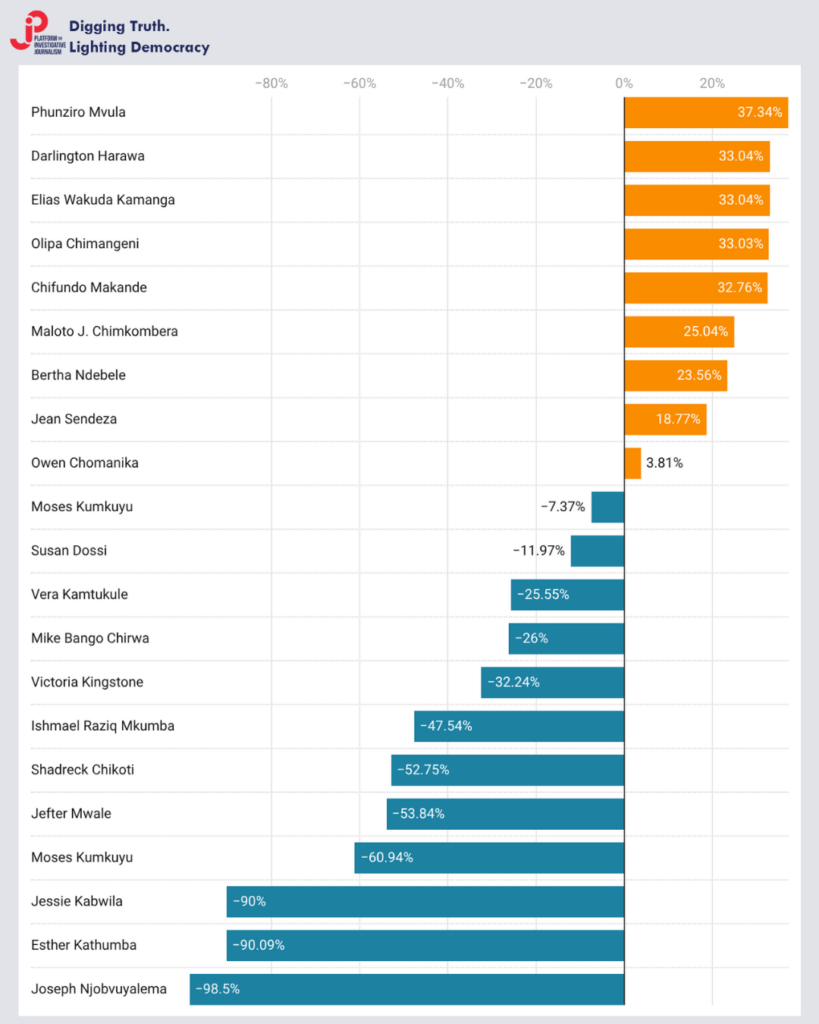
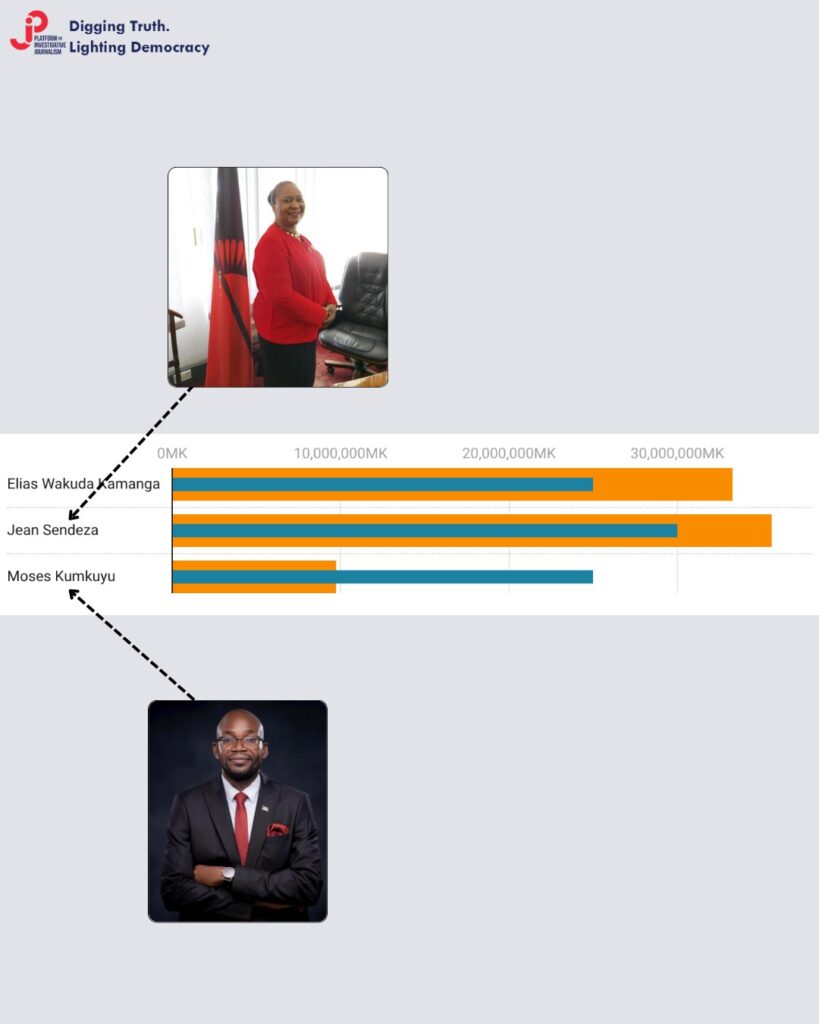
Former Deputy Minister of Defence Jean Sendeza: Records show Sendeza borrowed K30 million (USD $17,250) , but her outstanding balance has since spiked to K36 million (USD $20,700). This K6 million (USD $3,450) increase confirms a total lack of servicing, allowing interest to accumulate unchecked.
Former Minister of Local Government Owen Chomanika: Chomanika accessed K25 million USD $14,375) from the fund. At the time the whistleblower’s data was compiled, his repayment record stood at zero. While Chomanika claims to have since settled the debt, PIJ has yet to see any documentary evidence of a clearance certificate.
Former Tourism and Culture Minister Vera Kamtukule: Documents show a loan of K5,550,160 (USD $3,190) with an outstanding balance of K4,132,185 (USD $2,375). Kamtukule maintains that she has since cleared the remaining balance.
The reach of the NEEF “VIP” scheme extended deep into the rank and file of the then-ruling MCP, rewarding those with the closest ties to the leadership. Among the prominent names is party spokesperson Jessie Kabwila, who secured loans on two separate occasions.
Other prominent political names that make the list are former MCP whip in parliament, Joseph Rabson Njobvuyalema, former MP Mike Bango, MP Francis Belakanyama, MP Esther Kathumba, and MP Mark Mphezi Mtengo and even some of the representatives on opposition benches before the 2025 election osuch as lawmakers Fyness Magonjwa, Ismail Rizzq Mkumba, Olipa Chimangen, Chifundo Makande, and Orphan Shaba.
Also featured is Peter Lackson Chimangeni, a figure of high political significance who served as a key witness for President Lazarus Chakwera during the high-stakes 2019 presidential election court dispute.
In an interview with PIJ, Lackson claimed that his NEEF loan was above board.
“I have a farm in Mchinji, which I have been developing for over 6 years now. The initial application was for 110m Kwatcha (USD $63,250). The Mchinji district NEEF officer and other senior management visited the farm,” said Lackson.

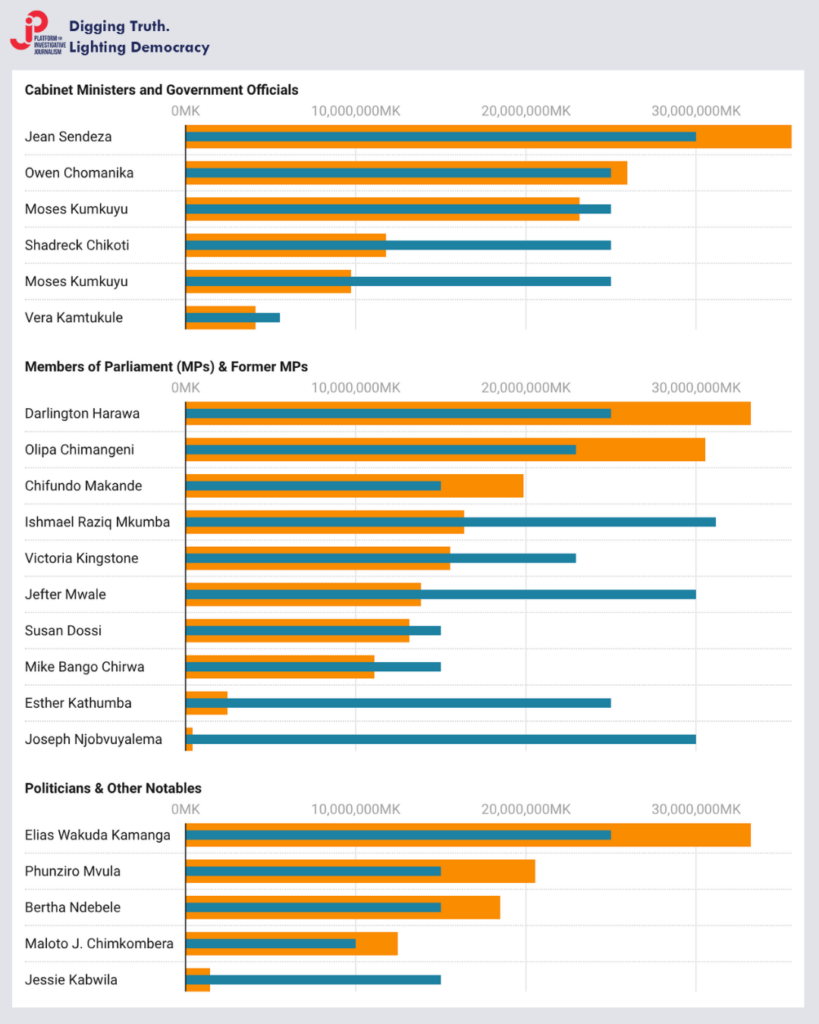
A PIJ analysis of the status of several loans for politically connected individuals.
When contacted for comment, United Democratic Front MP Ismail Rizzq Mkumba, who also benefited from the loan scheme when he was on the opposition benches, was more concerned about our source of the information than the morality question our investigation is posing.
“Are the loans not a private matter? A contract between NEEF and private persons, and the people are entitled to their privacy? Would NEEF divulge private information of their customers? I do not consent to any lending institution or any entity or person to make public my name, numbers and/or intricate details of my private life.”
He added: “I believe all Malawians have the right to obtain loans from any willing lending institution and as an MP I encourage these institutions not to discriminate against anyone.”
The Inequality Fund
Almost all the politicians in the documents contacted by PIJ confirmed receiving the loans at some stage, but presented varying accounts on the status and justification for the loans.
PIJ’s findings, however, grossly contradict not only the policies of NEEF but also the statements made by the country’s political leadership, including former president Chakwera, who touted the loan scheme as a vehicle for the marginalised youth and the poor.
“I feel the pain when I see community members, including youths, facing economic challenges. This is why we have introduced another phase of loan disbursements to benefit all Malawians without favouring anyone,” said Chakwera in July 2023 during an event celebrating NEEF disbursing K100 billion(USD $57.5 million) in three years.
For most politicians in the PIJ files, ‘economic empowerment’ began and ended at home. Despite a single instance where an official used the loan help a village cooperative, the overwhelming majority of those named in the 200-page leak prioritized securing massive loans for themselves.
Contradictions
PIJ’s findings follow questions posed by Malawi Congress Party (MCP) member and Mzimba Central legislator, Vitumbiko Mumba, to NEEF officials over the alleged provision of loans to members of parliament and cabinet ministers. The new NEEF Chief Executive Officer, Kayisa Sadala who stated that the fund is meant to support ordinary and underserved Malawians.
In interviews with PIJ, several of Mumba’s ex-cabinet MCP colleagues defended the loans, dismissing suggestions of conflict of interest or exerting undue influence on the disbursement of the loans.
Some said they had repaid the loans after the change of government. Two former ministers said they repaid the loans two weeks ago after being approached by NEEF. (PIJ could not speak to all politically exposed persons on the list).
Kunkuyu confirmed receiving the loans but said he did so while serving as a presidential adviser whose small salary justified applying for the loan.
“I took one loan. Last of last week, I sent my boys to repay the loan. I took 25 million, and I offered my house as collateral. I took the loan at the time I was state house advisor. They did not deduct the loan as I instructed them. My salary had transferred to opc. I asked NEEF about the two loans because their teams were sending different individuals.
He added: “If you look at products that NEEF offer, they demand collateral that can be as high as 200 million. Tell me which Malawian can be underserved. The position one is serving can make someone politically exposed. I was an advisor, and I was receiving 900 000 kwacha (a month),” said Kumkuyu.
Kumkuyu said, apart from personally benefiting from the loans, he also supported some cooperatives from Blantyre to access them, but when quizzed to name any such groups, the former minister fell short.
Kamtukule told PIJ she had cleared her loan two weeks ago, but was surprised when NEEF officials called her way before PIJ contacted her to request the right to reply for this story.
Kamtukule defended the distribution of the loans to Ministers, saying: “But aren’t ministers Malawians, sir? Also. Is the issue the fact that ministers were given loans or that they weren’t paying? Because I think you are mixing issues there.”
Chomanika confirmed obtaining the loans but said he cleared the loan with NEEF, while Sendeza retorted when contacted: “Are there any laws that prohibit politicians from accessing loans? This is politics, and it’s not good. If someone has something they were allegedly stealing and you say they took a loan, what kind of people are you? I will not answer that.”
Kabwila, the MCP spokesperson whose name appears twice on the spreadsheets, also sought to put spin on the disbursement, arguing that politicians also deserve to benefit from the scheme.
“I would like to confirm that I took a NEEF loan of 30 million. I got 10 then 20 million. I am using it to farm in Chitala Salima. I have paid up 10 million. I’m remaining with 20 million in debt, and I’m paying 2 million every month. I am very well aware that this is a public debt that has to be paid back in full and within the time set. I have undertaken to repay this loan in full,” said Kabwila.
She added, “This loan has enabled me to participate in our agrarian economy. I employ at least 100 people, and Asa woman in business, I’m grateful for this opportunity to empower myself and the many women I employ in Salima. This farming project has helped Salima to be food secure. I have planted maize, soya, and other legumes this year. My farming place can be visited by anyone.”
That view would put us at odds with the view of the ordinary person on the street, who says they are struggling to make ends meet and are shocked to see their elected representatives are abusing public office for self-enrichment. Those voices include Emmanuel Minyanga, an office assistant at a private law firm whose ambition to establish a start-up agri-business venture has failed to kick off due to a lack of access to capital.
“Those loans should be immediately reclaimed and rechanneled to the poor people who deserve them,” he told PIJ. “There are people in the villages who are struggling,” he added.
Civil society groups, too, reacted angrily at the PIJ findings, dismissing the reaction of the MPs as morally bankrupt and calling the disbursement an abuse of office.
“I believe it is beyond being morally correct; it is structurally irregular,” said Tuntufye Simwimba, National Programmes Coordinator for the Catholic Commission for Justice and Peace (CCJP), a nonprofit.
“We should understand that NEEF – National Economic Empowerment Fund – mission is to serve underserved Malawians, particularly women, youth, and persons with disabilities. …Members of Parliament are not undeserved, hence benefiting from the fund is irregular. The priority of the fund should be for ordinary, underserved, and economically disempowered Malawians who can benefit the most from the fund,” he added.
Centre for Social Accountability and Transparency (CSAT) Executive Director Willy Kamwandira argued that elected officials benefiting from public lending facilities such as NEEF was not merely a question of legal compliance but moral legitimacy and conflict of interest.
“NEEF was established to expand opportunity for ordinary Malawians who lack access to affordable credit, not to provide preferential access to those who already wield political power, influence policy, and control public resources,” said Kambwandira, adding: “Even if such loans are permissible, the optics and ethical implications are deeply troubling.”

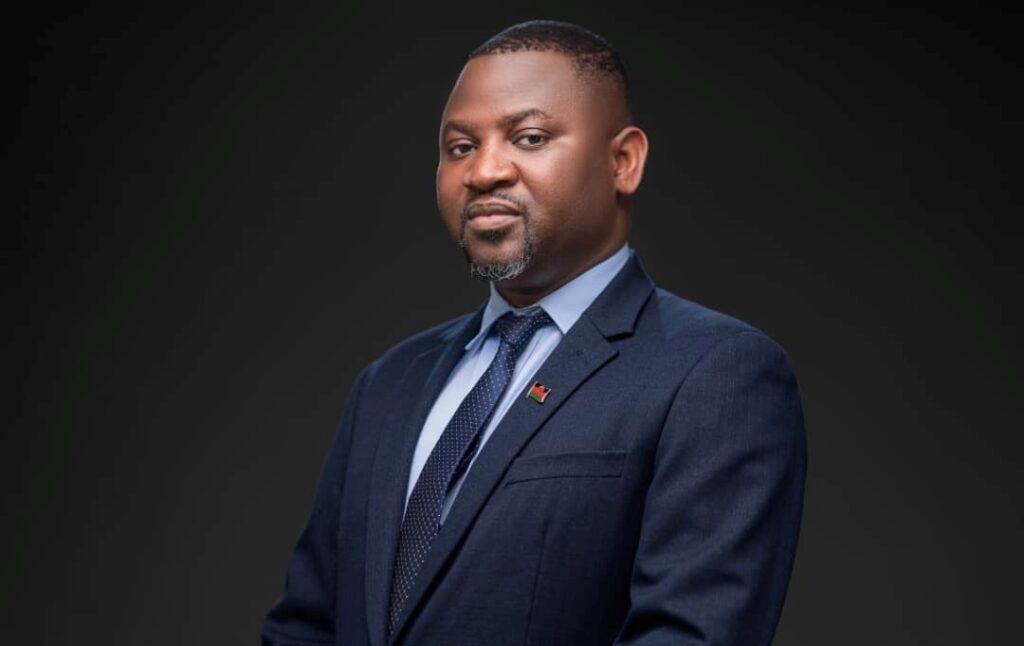
“It’s morally indefensible,” Kambwandira
According to Kamwandira, Public officials have a heightened duty to avoid situations that create perceived self-dealing or undermine public trust.
“Again, in a country where many vulnerable citizens struggle to access empowerment funds, it is morally indefensible for policymakers to position themselves as beneficiaries of the very schemes they oversee. We are also some members of the Public Accounts Committee who are also beneficiaries of NEEF loans. The revelations mean PAC has lost both moral and institutional authority, as those exercising it have a conflict of interest. We demand transparency on this matter. Let NEEF publish names of all those who benefitted from the loan facility, including those who have not repaid,” he added.
Former NEEF CEO Humphreys Mdyetseni, who was arrested last Friday and charged with abuse of office and money laundering in relation to the alleged laundering of about K11 billion between April 2024 and 2025, was not immediately available for comment. A NEEF spokesperson asked for more time to comment on the matter.
For the thousands of Malawians like Godfrey Rashid and Stafford Phiri, small-time street vendors on the streets of Blantyre, NEEF was supposed to be the great equaliser—a chance to turn a few thousand Kwacha into a sustainable future. Instead, the fund was treated as a private reserve for the very people who already hold the keys to the kingdom.
“I have heard about NEEF before, but I have never been approached regarding how I can access the loan. If I had that opportunity, I could have borrowed K50,000 to boost my business,” Phiri, a cigarette vendor from Mbayani market, told PIJ.
.
This story was syndicated by the IJ Hub on behalf of its member centre, the PIJ






Discover more from MAKANDAY
Subscribe to get the latest posts sent to your email.


