

By Ennety Munshya
An independent assessment has confirmed long-held fears that the collapse of a copper waste dam at the Chinese-owned mine, Sino-Metals Leach Zambia Limited, caused significant environmental damage across parts of the Copperbelt, flooding fields and chemically burning crops.
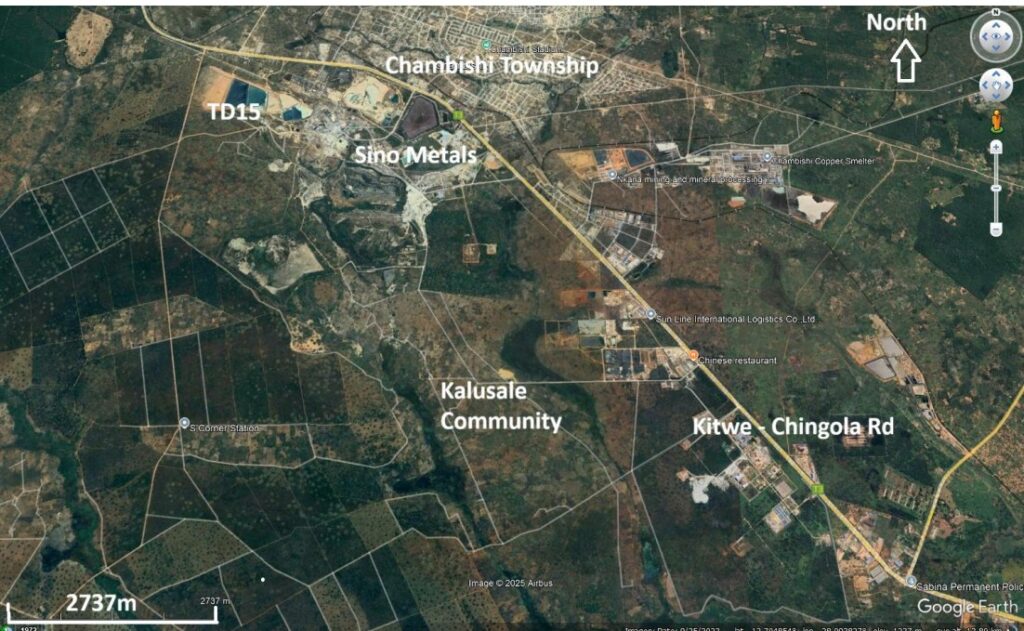
On 18 February 2025, a section of tailings dam at Sino-Metals in Kalulushi collapsed, releasing acidic waste into the surrounding environment. The waste flowed into the Chambishi Stream, merged with the Mwambashi River, and continued downstream toward the Kafue River, one of Zambia’s most important water systems.
For communities along the river, the impact was immediate. Water supplies were disrupted. Fields were flooded and crops destroyed. Livelihoods built around farming, fishing, and livestock were thrown into uncertainty.
What followed was officially described as an environmental incident.

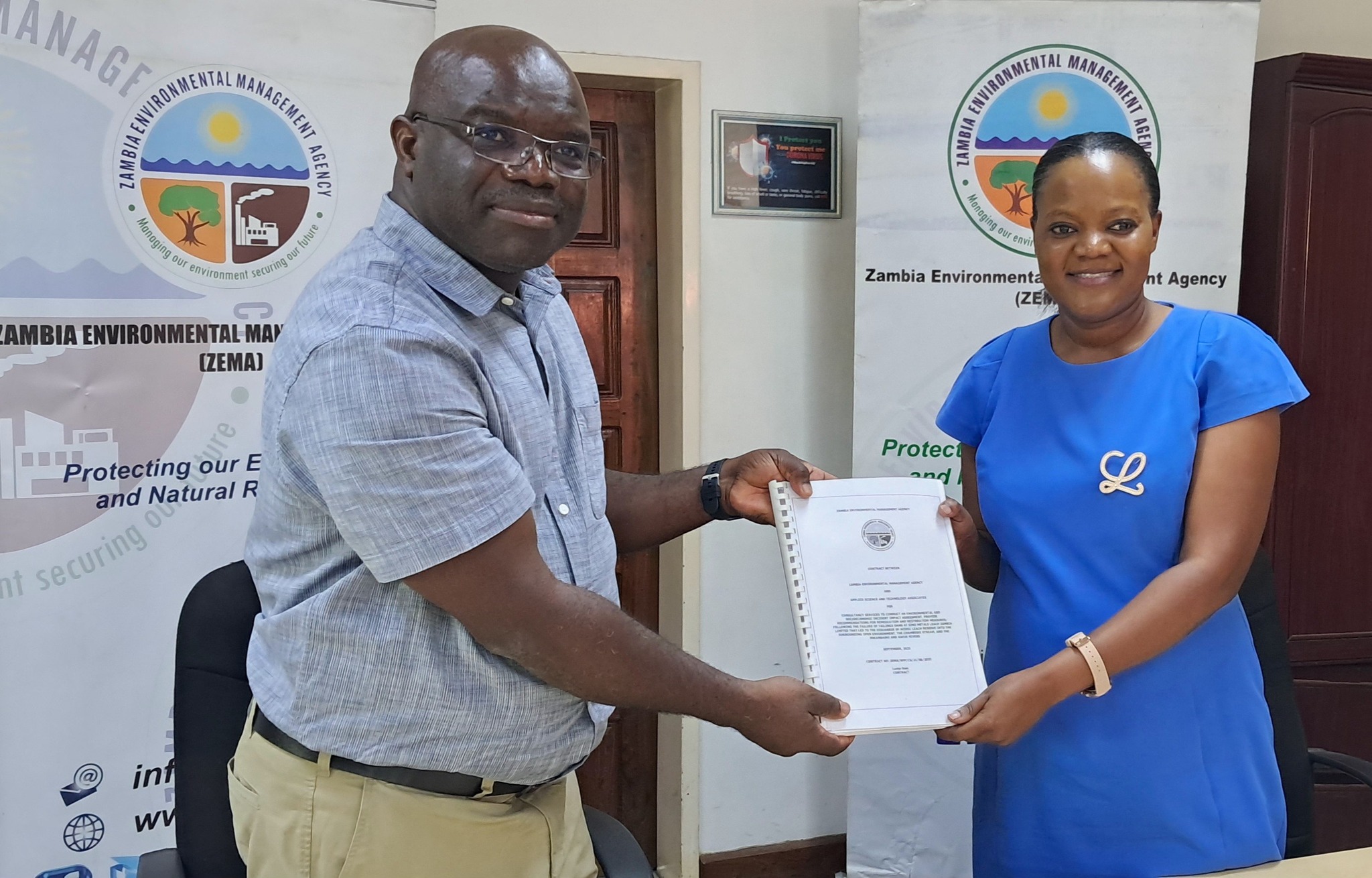
Months later, in September, the government commissioned Applied Science and Technology Associates to assess the environmental and socio-economic impact of the Sino Metals tailings dam failure.
The firm replaced Drizit, a South African company previously contracted by Sino-Metals before its engagement was terminated. At the signing ceremony, Zambia Environmental Management Agency (ZEMA) Acting Director-General Karen Banda-Etondo stressed the urgency of the assessment, while consultant Chilekwa Kampeshi said the work would be guided by science.
According to the firm’s Environmental and Social Incident Impact Assessment (ESIIA) report, the disaster was not sudden, unavoidable, or purely technical. Instead, it was the product of long-standing failures in oversight and enforcement.
Laws existed. Enforcement did not
Zambia has no shortage of environmental and mining regulations. The Environmental Management Act, the Water Resources Management Act, and mining regulations clearly place responsibility on state institutions to prevent pollution, monitor high-risk infrastructure, and protect public water sources.
According to the report, the Sino-Metals tailings dam failure occurred “within a context of adequate law on paper but weak implementation”.
Tailings storage facilities are among the most hazardous structures in mining. International best practice requires continuous monitoring, independent safety audits, emergency preparedness plans, and strong regulator oversight.
The report’s findings suggest these safeguards were either insufficient, poorly enforced, or inconsistently applied at Sino-Metals.
The result was predictable. Regulatory intervention came after the dam failed, not before warning signs were addressed.
A spill that shocked the system — briefly
The toxic waste released from the dam were highly acidic, with extreme chemical characteristics. In the short term, the spill caused sharp deterioration in water quality, leading to disruptions in municipal water supply and damage to ecosystems.
Emergency measures, including liming and operational suspension, helped stabilise water chemistry months later. The report acknowledges that by the time of later monitoring, some water quality indicators had returned closer to pre-incident levels.
But this recovery masks a deeper problem. Stabilisation was reactive, undertaken only after contamination had already occurred. The report makes clear that earlier enforcement, monitoring, and preparedness could have reduced or prevented the scale of damage altogether.
Pollution that does not disappear with headlines
While water quality showed signs of recovery, the report identifies persistent contamination in soils and river sediments, particularly in and around the Chambishi Stream.
According to the report, copper and cobalt levels in soils exceed international guideline limits. River sediments continue to act as reservoirs of pollution, capable of re-contaminating water during floods or high-flow events.
The report identifiesa core contaminated area of approximately five square kilometres, marked by elevated heavy metals in soil and associated ecological and agricultural risks.
“A core area of approximately 5.35 km² exhibits elevated heavy metals in soil, with associated ecological impairment and agronomic risks.”— Environmental and Social Incident Impact Assessment, Conclusion
This distinction matters. Water may look clean today, but contaminated soils and sediments ensure the legacy of pollution continues, silently and long after public attention fades.
Communities left inside a danger zone
The report identifies at least 158 people living within the mine’s pollution control zone, an area considered unsafe for permanent human settlement. Shallow wells in surrounding communities are deemed unsuitable for drinking. Farmers in high-impact areas face restrictions on land use unless remediation is carried out.
Yet enforcement has been inconsistent. Compensation for damaged crops was paid even to residents without legal tenure, according to the report. While intended as relief, the payments created an unintended incentive. Some farmers returned to contaminated land, increasing long-term exposure risks.
The report calls for urgent resettlement in line with national policy and international safeguards. The continued presence of families in polluted zones underscores how weak enforcement transfers environmental risk from companies and regulators to ordinary citizens.
A problem bigger than one mine
Perhaps the most damning finding is that the Sino-Metals spill is not an isolated case. The report shows that the Kafue River system is affected by cumulative pollution from multiple mining operations, past and present.
Numerous tailings dams, waste rock dumps, and industrial discharges contribute to declining water and soil quality. This means regulatory failure cannot be reduced to one company or one incident. It is systemic.
Sino-Metals did not expose a single weak link, it exposed a governance system that has struggled to regulate an entire mining corridor effectively.
Accountability after the emergency
The report invokes the polluter-pays principle, clearly stating that Sino-Metals must finance remediation, restoration, and long-term monitoring. It recommends stronger enforcement, inter-agency coordination, independent audits of tailings facilities, and early-warning systems for downstream communities and water utilities.
‘’Use the polluter pays principle and existing instruments (e.g. Environmental Protection Fund, Mines and Minerals (Environmental Protection Fund) Regulations) to ensure that Sino-Metals and other responsible parties finance agreed remediation and restoration measures.”— Environmental and Social Incident Impact Assessment, Conclusion
What the report does not document are clear consequences proportionate to the damage already done. There is no public accounting, within the report, of penalties imposed, regulatory failures addressed, or officials held responsible for lapses in oversight.
Responsibility appears dispersed across agencies, a familiar pattern in environmental disasters, where diffusion of authority results in diffusion of accountability.
Company response
In a statement issued following a public disclosure meeting convened by ZEMA on 6 January 2026, Sino-Metals said it takes the ESIIA findings and recommendations seriously and committed to continuing remedial and environmental management measures under regulatory guidance.
The company said it has maintained a proactive remediation programme since the incident and pledged to provide further updates as implementation progresses.
From paper reform to real protection
The report reads less like a conclusion and more like a warning. It demonstrates that Zambia’s environmental crisis is not rooted in a lack of knowledge, science, or law. It is rooted in enforcement inertia.
Until regulators move from reaction to prevention, from post-disaster assessments to real-time oversight, similar incidents remain inevitable. The cost will continue to be borne by communities living near mines, farmers cultivating marginal land, and citizens who depend on shared water systems.
What remains unanswered is whether enforcement will finally follow — and who will answer for the years when it did not.
Photo Credit | ZEMA Facebook page & Environmental and Social Incident Impact Assessment (ESIIA) report


Discover more from MAKANDAY
Subscribe to get the latest posts sent to your email.


