


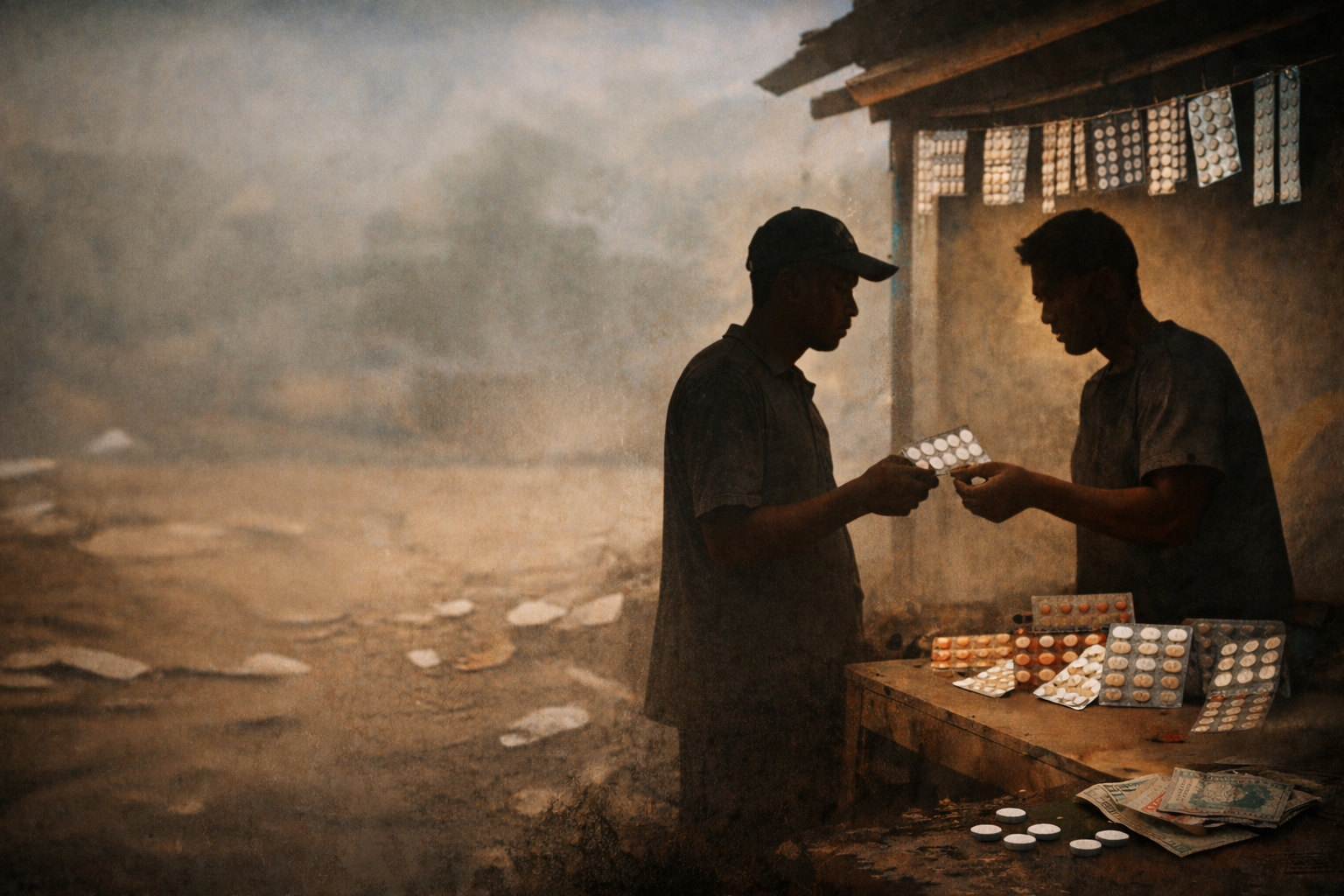
A drug meant to stabilise mental health patients is missing from hospital shelves but flooding Kasama’s streets, exposing a troubling disconnect between official assurances, regulatory oversight, and the lived reality of patients and their families.
By Angela Mtambo
When a family in Kasama returned to Kasama General Hospital to collect artane, a prescribed medication their relative, a mental health patient, relies on for daily stability, they were once again told the drug was unavailable.
It was not the first time.
For months, the family says, shortages at the government-run hospital have forced them to buy the medication from private pharmacies at their own expense. On days they cannot afford it, treatment is interrupted, with visible consequences.
“The condition worsens when the medicine stops,” a family member said. “It affects the whole household, emotionally and financially my son becomes violent, we have to tie him up and if the brothers and father are not around it’s a struggle I have to lock him up, sometimes we have to pay extra for peace to reign.”
Yet while patients struggle to access artane through the public health system, the same drug has quietly found a second life outside it.
A prescription drug, openly sold
What should be a tightly controlled medicine is now widely available on Kasama’s streets, particularly among young people.
Several youths admitted to abusing artane, saying it is easy to obtain despite being a prescription-only medicine. According to those interviewed, a single tablet sells for as little as K10, while a strip of 10 tablets goes for about K100.
Some said the drug is taken before, or mixed with, strong local brews such as kachasu, a practice medical experts warn can be extremely dangerous.
The contradiction is stark. A drug in short supply for patients is plentiful and cheap on the street.
Regulators ‘not yet certain’ how it is leaking
The Zambia Medicines Regulatory Authority (ZAMRA) says it is concerned.
Senior Public Relations Officer Ludovico Mwape confirmed that the authority is aware of the abuse of Artane and other prescription medicines, but said the medicines regulatory body has not yet established how the drug is entering the illegal market.
“This drug is supposed to be used by rightful users,” Mwape said. “We are concerned that it is being abused and sold for personal gain.”
He said investigations are ongoing and called on the public to report suspected pilferage and illegal sales.
However, ZAMRA did not explain how a prescription-only medicine can be widely sold at such low prices without detection, nor did it provide timelines or outcomes from its investigations.
Awareness without data
The Drug Enforcement Commission (DEC) has also acknowledged the growing abuse of artane, particularly among young people.
Public Relations Officer Allan Tamba said the commission has intensified sensitisation programmes in schools, churches, and communities to warn against prescription drug abuse.
“It is becoming a concerning matter, and everyone should be careful,” Tamba said.
But despite acknowledging the scale of the problem, DEC could not provide statistics on arrests, seizures, or trends related specifically to artane, raising questions about enforcement beyond public awareness campaigns.
Ministry rules out hospital pilferage
In a written response dismissing allegations of theft or diversion from public hospitals, the Ministry of Health said preliminary investigations show that while artane is being abused, it is not being stolen from health facilities. This position directly contradicts MakanDay’s findings, which traced the drug’s source to Kasama General Hospital, where officers are allegedly supplying the black market.
Ministry spokesperson Georgina Mutale Chimombo said the illegal trade is largely driven by patients who are legitimately prescribed the medication but later resell it to others. The ministry also said some individuals have been detained in connection with the illicit sale, although it did not disclose details of the cases, charges, or any convictions.
“As a Ministry, we will continue to work closely with relevant stakeholders, including the police and regulatory authorities, to conduct further investigations and put in place measures to curb this abuse,” Chimombo said.
However, the response leaves a critical question unanswered: if patient-level resale is the primary source, how is the drug entering the market in quantities large enough to flood the streets while public hospitals report shortages?
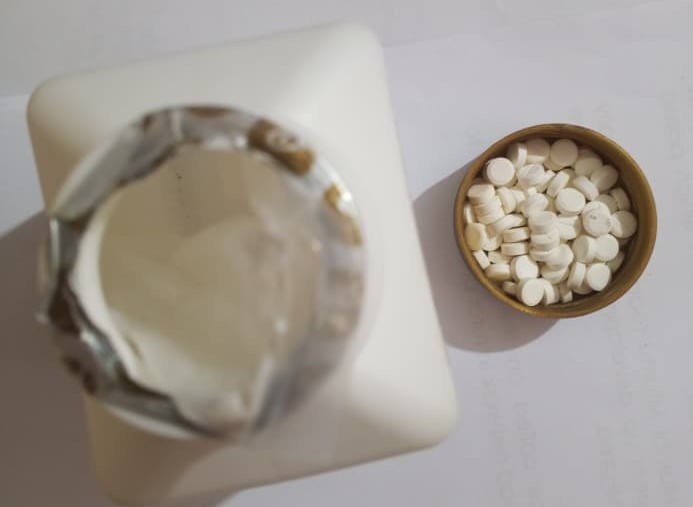
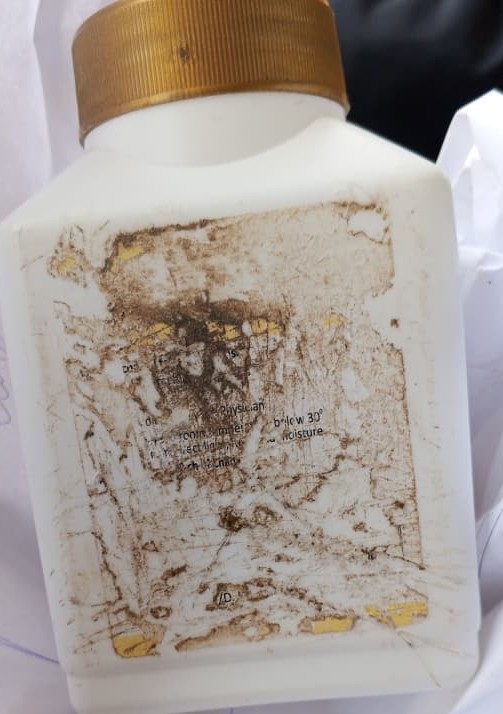
MakanDay’s investigations indicate a different supply chain. Reporters traced the drug to Kasama General Hospital and were able to purchase it directly from a street supplier, with a half-full bottle of 100 tablets selling for K500. To conceal the source, batch numbers are reportedly removed from the bottles before the drug reaches the market.
Health risks for users, and patients left behind
Medical experts warn that abusing artane, especially when combined with alcohol, carries serious health risks. These include dependence and withdrawal symptoms, memory loss and impaired concentration, severe drowsiness and confusion, worsening depression and suicidal thoughts, liver damage, as well as seizures and irregular heartbeat.
Mental health professionals also warn that sudden interruption of treatment, common during drug shortages, can trigger relapse, anxiety, aggression, and suicidal ideation.
“Continuity of treatment is critical,” Pharmaceutical Society of Zambia president Keegan Mwape said. “When medication is disrupted, patients are put at real risk.”
A system failing at both ends
As authorities investigate and sensitisation efforts continue, families say the consequences are already clear.
Those abusing the drug do so with little fear of detection. Those who genuinely need it are left scrambling, paying out of pocket or going without.
“Despite travelling from Lukulu South to Kasama General Hospital and spending over K200 to collect the medicine for my son, which is strictly issued by prescription and which I carefully keep so I don’t lose it, we still cannot get the drug from the hospital pharmacy,” one father said. “We are forced to buy it elsewhere, yet we keep hearing that it is sold freely on the streets, even without the prescription that I have.”
MakanDay has also established that illegal mining sites across the country have become another space where these drugs are widely used.
Illegal miners reportedly mix the drugs with alcohol to get high and suppress fear before entering narrow underground tunnels. Armed only with picks and shovels, they risk their lives daily while working under intoxication.
Without clearer accountability, transparent enforcement data, and tighter controls along the medicine supply chain, mental health advocates warn that Kasama’s quiet crisis could deepen, with devastating consequences for both users and patients.
Why artane should not be abused – pharmacist explains
Artane (trihexyphenidyl) is a controlled prescription medication commonly used in mental health care. It does not treat mental illness itself, but is prescribed to manage movement-related side effects caused by certain psychiatric medicines, particularly antipsychotics.
The drug works by helping rebalance chemicals in the brain that affect muscle control. Because it also affects the nervous system, Artane can influence concentration, memory, alertness, and behaviour, which is why its use is closely monitored by healthcare professionals.
Common side effects include dry mouth, dizziness, blurred vision, constipation, and difficulty focusing. When misused or taken without medical supervision, artane can cause confusion, restlessness, hallucinations, impaired judgment, and loss of self-control, increasing the risk of accidents and violence, according to pharmacist.
He warned that abusing artane, especially when mixed with alcohol or other substances, can be dangerous and life-threatening. The drug is not intended to numb fear, induce euphoria, or enhance physical endurance, and using it for these purposes can cause serious harm.
For this reason, pharmacists play a critical role in educating patients on correct dosage, safe use, possible side effects, and when to seek medical help. Artane prescriptions are typically reviewed regularly to ensure the medication is still necessary and that its benefits continue to outweigh the risks.
Health professionals stress that any use of artane outside prescribed medical guidance constitutes abuse and undermines both patient safety and public health.
Angela Mtambo is an investigative journalist based in Kasama and a former MakanDay fellow. This story was edited and fact-checked by MakanDay.

Discover more from MAKANDAY
Subscribe to get the latest posts sent to your email.