

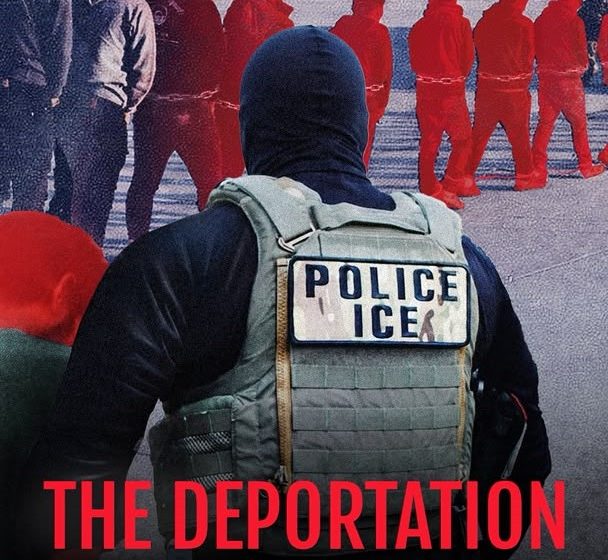
They left the United States expecting deportation. Instead, they were flown thousands of kilometres to a country they had never known — and taken to a maximum-security prison.
This investigation is part of The Deportation Project — Inside the Trump administration’s secret deals to expel people worldwide, a collaborative investigation led by Forbidden Stories involving 24 media organisations in 15 countries.
By Inhlase Reporter
The journey
When Phone Chomsavanh closes his eyes, he can still picture the moment he believed his journey was finally coming to an end.
It was July 2025. His wrists and ankles were shackled when he boarded what immigration officers told him was a deportation flight from the United States.
After nearly a decade living under an order of removal, the 45-year-old thought he was finally being sent to Laos, a country he had never really known, but one where he hoped he could begin again in a country from which his parents had once fled.
“I was happy,” he recalled in an interview from His Majesty’s Correctional Services in Matsapha.
“I thought, okay, I get a second chance at life. I can start over. I can live like a free man.”
Then he noticed something that did not make sense.
The four other men boarding the aircraft were from Vietnam, Yemen, Jamaica and Cuba.
“I’m thinking, I can’t be going to Laos. They’re not from Laos,” he said.
No one, he says, explained where they were going.
The men were loaded onto a private jet before being transferred in Djibouti to a military cargo aircraft. Phone says the shackles remained on his wrists and ankles throughout the journey.
About an hour before landing, an immigration officer handed him papers and asked him to sign.
The destination was not Laos.
It was Eswatini.
“I said, ‘That’s not my country. I’m not signing that.’”
He says the officer returned minutes later and again insisted that he sign. Phone refused.
His refusal did not change the destination.
On 16 July 2025, after nearly two days in transit, the aircraft landed at King Mswati III International Airport.
Outside waited armed security officers.
Phone remembers the aircraft’s rear ramp opening into darkness.
“It reminded me of military movies,” he said.
The men were photographed before being handed over to Eswatini authorities.
More than a year later, Phone remains inside Matsapha.
He has not been charged with an offence in Eswatini.
And he says he still does not know when he will leave.
Likewise, Roberto Mosquera del Peral stepped off the aircraft in Eswatini in July 2025, he did not know where he was.
He had been moved through a chain of American detention facilities before being placed on a flight with four other men. They were transferred through Djibouti and eventually brought to the small southern African kingdom.
For Mosquera, the journey ended at Matsapha Correctional Complex, a maximum-security prison outside Manzini.
He had not committed a crime in Eswatini. He had not been sentenced by an Eswatini court. Yet that was where the United States had sent him.

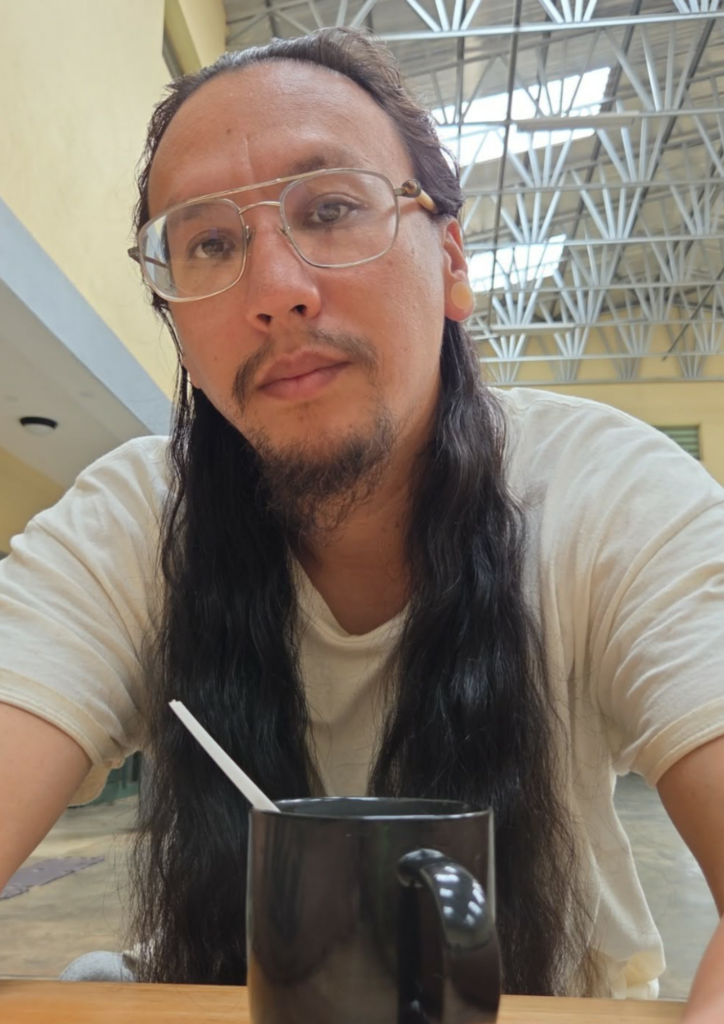
The other four men on that first flight were Kassim Saleh Wasil of Yemen, Dung Tien Nguyen of Vietnam, Phone Chomsavanh of Laos and Orville Etoria of Jamaica. Amnesty International documented their arrival on 16 July 2025 and their detention at Matsapha.
The men had something else in common: none had a known connection to Eswatini.
Their arrival marked the beginning of a new chapter in the Trump administration’s use of third-country removals-sending people out of the United States to countries that are neither their country of nationality nor, in many cases, a place they had ever visited.
For the five men, the destination was not disclosed until the journey was almost over.
Third Country Deportation Watch, a project of Human Rights First and Refugees International, records that the men on the first flight were informed they were being sent to Eswatini only as the plane was preparing to land. All five refused to sign the third-country removal notices presented to them at that point.
Then came Matsapha Maximum Prison.
From lives in America to a prison in Eswatini
The men did not arrive as ordinary prisoners convicted under Eswatini law.
Their circumstances in the United States were different from one another, and their immigration histories were complicated. Some had criminal convictions in the United States; some had already served sentences; some had lived in America for decades.
But once they reached Eswatini, their lives converged behind the walls of Matsapha.
The Guardian reported that the five were initially held in solitary confinement at the prison, citing the Eswatini government and local reporting.
Their lawyers struggled to gain access to them.
Amnesty International reported in September 2025 that lawyers seeking confidential, in-person and unmonitored access had faced obstruction from Eswatini authorities.
The confinement created an unusual legal situation.
The men were not serving Eswatini prison sentences. They had been transferred under an arrangement between two governments, yet they were being housed in one of Eswatini’s highest-security correctional facilities.
The question of what, exactly, their status was would eventually become one of the central unresolved issues surrounding the agreement.
But for the men themselves, the first problem was more immediate.
They were locked away in a country they had not chosen.
A life built in America
Phone’s story begins long before Eswatini.
He was born on Christmas Day in 1980 in a refugee camp in Thailand after his family fled Laos. He was six when they resettled in the United States.
“I don’t know much about my family history,” he said. “My parents never really talked about it.”
His family settled in California before later moving to Tennessee.
At 17, Phone was convicted of second-degree murder and sentenced as an adult. He spent 17 years in prison.
He says those years changed him.
“I found God,” he said.
“It gave me a whole different point of view on life.”
When he completed his sentence in 2015, he expected to rebuild his life.
Instead, immigration authorities took him into custody and issued a final order removing him to Laos.
But Laos would not accept him.
Released under immigration supervision, Phone was required to report periodically to Immigration and Customs Enforcement (ICE).
His permanent resident status was revoked. Without valid immigration documents, he struggled to obtain a work permit.
“I still had to make a living,” he said.
He found informal work in restaurants, landscaping and construction.
In 2022, he was arrested on marijuana-trafficking charges, which he attributes to his inability to obtain lawful employment.
After serving his sentence, he says he tried again to rebuild his life.
He moved to Florida with his girlfriend. He says he was working honestly.
Then, on 23 June 2025, officers arrived at his apartment.
“It was scary,” he recalled.
“There were ICE officers, Drug Enforcement Administration (DEA) agents, Federal Bureau of Investigation (FBI) agents. They had guns.”
He was taken to a detention facility in Orlando and later flown alone on a commercial flight to El Paso.
For weeks, he believed he would eventually be removed to Laos.
Instead, he was sent to Eswatini
Thousands of kilometres away, another man was following a remarkably similar path.
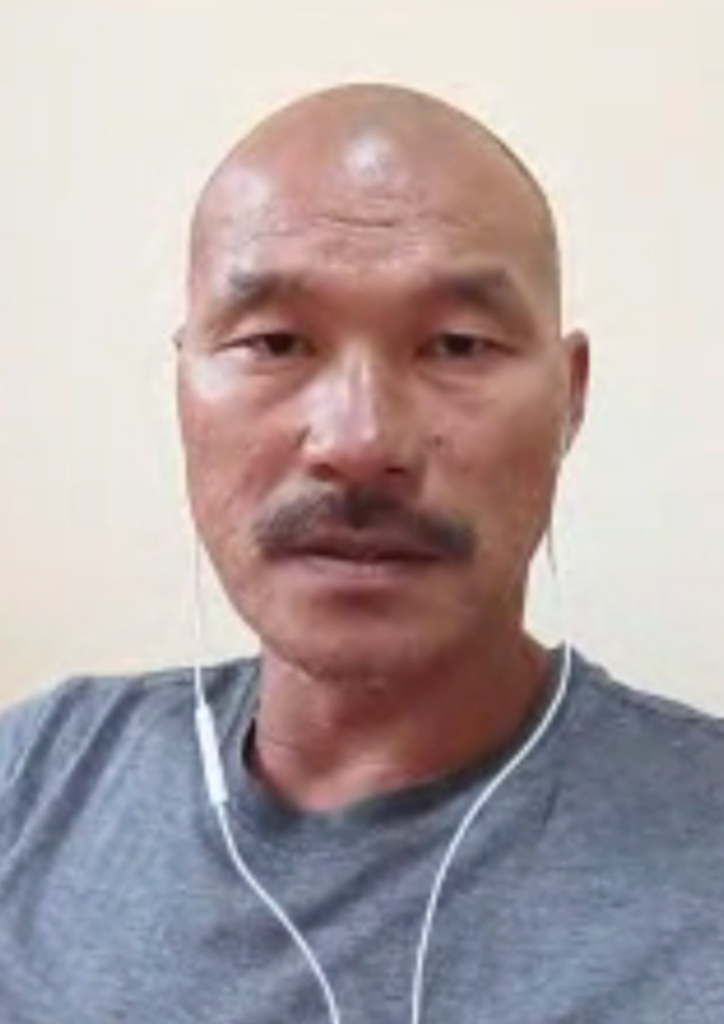
Khai Vo arrived in the United States in 1984 as an eight-year-old refugee after the Vietnam War.
He grew up in California.
As a teenager, he was convicted of attempted murder following a fight. He served approximately 13 years in prison and was released in 2007.
Like Phone, he received a final order of removal.
At the time, however, Vietnamese nationals who had arrived in the United States before 1995 were generally protected from deportation under the policy then in force between the two countries.
For the next 18 years, Khai says he reported to immigration authorities every year.
He worked.
He paid taxes.
He built a life.
“I was living like an ordinary person,” he said.
“I had a job. I paid my taxes. Every year I went to immigration. I never missed.”
On 17 March 2025, he went for what he expected to be another routine check-in.
Instead, he says officers handcuffed him immediately.
He expected deportation to Vietnam.
After months in detention in Arizona and Louisiana, he was flown to Eswatini.
“I still don’t understand why I’m here,” he said.
“Vietnam is accepting people back every month.”
“If the United States wants to send me back, send me back to Vietnam.”
Why Eswatini? That question is repeated by several of the men interviewed for this investigation.
Waiting without a release date
For many of the men, uncertainty has become harder than imprisonment itself.
A criminal sentence has an end date.
Immigration detention can have procedures and hearings. But the men in Matsapha say they have no clear countdown.
“It’s like a mental war,” Phone said.
“You wake up every day and don’t know what’s going to happen.”
The first weeks were particularly difficult.
Phone says the original five men spent days confined to their cells and had no communication with their families until early August.
When calls eventually became possible, he says they lasted about 10 minutes and were made on speakerphone using an officer’s mobile phone.
“There was no privacy,” he recalled.
“You had to choose who to call.”
Conditions later improved.
The men gained limited access to telephones, television, internet, a canteen and exercise within designated parts of the facility.
The International Organization for Migration began visiting and providing support.
But the central uncertainty remained.
“We’re still in prison,” Phone said.
“We still don’t know when we’re getting out.”
Orville’s way out
For one of the five, the stay lasted two months.
Orville Etoria had lived in the United States for decades. He was deported to Eswatini in July 2025 after serving a lengthy prison sentence in the United States.
The U.S. government had portrayed the first five deportees as people whose home countries would not accept them.
But Jamaica disputed that explanation in Etoria’s case.
Jamaican authorities subsequently helped arrange his return, and Etoria was repatriated to Jamaica on 21 September 2025.
His departure offered the first indication that the arrangement did not necessarily mean every person sent to Eswatini would remain there for the full period contemplated by the agreement.
It also exposed a contradiction at the centre of the programme.
If a person’s home country could ultimately receive him, what had the transfer to Eswatini been intended to accomplish?
For the men left behind, there was no immediate answer.
Then came more men
On 6 October 2025, another ten people arrived in Eswatini.
They included nationals of Cambodia, Chad, Cuba, Ethiopia, Haiti, the Philippines and Vietnam, according to reporting at the time. They too were taken into the Eswatini system under the U.S.-Eswatini arrangement.
The second arrival changed the scale of the experiment.
This was no longer a single group whose circumstances could be treated as an isolated diplomatic episode. Eswatini had become part of a developing American system for transferring people who could not, or were not being, returned directly to their countries of nationality.
For some of those transferred, there was another complication.
Third Country Deportation Watch records that at least three people sent to Eswatini had previously received humanitarian protection from U.S. immigration judges that prohibited their return to their countries of origin.
That protection was designed to prevent a person from being sent somewhere where they faced specified risks.
But a third-country transfer created another question:
What protection existed against what happened next?
If a person could not legally be returned to his country of nationality, could he instead be sent to Eswatini and subsequently transferred elsewhere?
That question would follow the men into Matsapha.
A year behind the walls
For Mosquera, the months passed.
In October 2025, he went on hunger strike, according to Amnesty International and subsequent reporting. The protest drew attention to his continuing detention and lack of access to counsel.
The men had become increasingly dependent on lawyers, relatives and outside organisations to communicate their circumstances to the world.
The fight to see a lawyer
Their lawyers challenged their lack of access to local counsel.
In April 2026, Eswatini’s Supreme Court confirmed that four of the original detainees had the right to consult a local lawyer. The ruling followed months of litigation over whether the men could meet their lawyer in person. The legal battle began with a relatively simple demand: that lawyers be allowed to meet their clients.
Sibusiso Nhlabatsi, who now represents six of the men, says access was initially restricted.
US-based immigration lawyer Tin Nguyen, who coordinates with Nhlabatsi, says the inability of local counsel to meet detainees in person made it difficult to represent them.
Families sometimes had to relay information between lawyers and detainees, Nguyen said.
The dispute eventually reached the courts.
The Supreme Court later confirmed that Nhlabatsi could access four of the detainees.
But even as the lawyers gained access, another question remained unresolved: what legal authority allows the men to remain inside a maximum-security correctional facility?
The decision did not resolve the larger question of why the men were being held in Matsapha.
It answered a narrower question: whether they could have meaningful access to legal representation.
By then, the first group had spent months in Eswatini and more people had arrived.
The arrivals continued
Four more men were transferred to Eswatini on 11 March 2026, according to Amnesty International and Third Country Deportation Watch. They came from Somalia, Tanzania and Sudan. Then, on 8 July, another 11 people arrived.
The July group included nationals of Angola, the Democratic Republic of Congo, Kenya, Jamaica, Cameroon, Mauritania, Belize and the Central African Republic, according to Third Country Deportation Watch.
Among them was 64-year-old Jamaican pastor Junior Alves.
His case differed sharply from the image of the dangerous criminal used by U.S. officials to describe some of the earlier deportees.
Jamaica’s Observer reported that Alves had no criminal conviction in the United States and had been allowed to remain there under protection granted under the Convention Against Torture in 2016. He had reported annually to U.S. immigration authorities before being arrested by ICE in January 2026 and eventually transferred to Eswatini.
His case raised a question that went beyond the circumstances of one man.
What happens when a person who has been protected from return to his country of nationality is instead moved to a third country?
And what happens when that third country itself becomes the place of detention?
A prison that was never supposed to be the destination
The U.S.-Eswatini agreement does not describe Matsapha as the final destination for the people being transferred.
Instead, the agreement provides for Eswatini to give third-country nationals an appropriate immigration status or other legal accommodation under Eswatini law for up to one year. It also envisages assistance from the International Organization for Migration or another service provider with further relocation within that period.
That distinction matters.
The men were not supposed to disappear into an indefinite legal void.
There was supposed to be a process.
But from inside Matsapha, the process was difficult to see.
The government’s public descriptions of the arrangement repeatedly characterised the men’s stay as temporary and linked it to eventual repatriation.
For the men, however, temporary did not necessarily mean short.
Etoria left after two months, others remained.
By August 2026, the government was announcing individual departures, including people who had been returned to their countries of nationality. In other cases, authorities said individuals had requested voluntary repatriation and that the government was engaging relevant authorities and partners.
The departures demonstrated that movement out of Eswatini was possible.
But they also left unanswered a basic question for those still inside Matsapha:
The man who filmed the prison
By August, Mosquera had spent more than a year in Matsapha.
He had obtained access to a mobile phone and used it to record images from inside the facility.
The footage later became public, showing parts of the prison and the arrival of another group of detainees.
The New York Times subsequently reported extensively on Mosquera’s life, his journey to Eswatini and his continuing detention at Matsapha.
The footage also triggered an unusual response from the Eswatini authorities.
The government announced that it would review protocols concerning the management of third-country nationals at the correctional facility. The Eswatini Observer said the footage raised questions about what the detainees were permitted to record inside a high-security prison.
The significance of the footage was not simply what it showed.
It provided a glimpse into a system that had largely remained inaccessible to the public.
The men had been transferred across continents under a government-to-government arrangement. They were held in a prison. Their legal status was disputed. Access to lawyers had been contested. Their onward movement depended on decisions made by governments and other actors.
Yet for much of the outside world, the people themselves remained largely invisible.
What the men carried with them
The first five arrived with histories that stretched across several countries and decades.
Mosquera had lived in the United States since childhood.
Etoria had spent most of his life there before being returned to Jamaica.
Others had established lives in America, served criminal sentences and then lived for years under immigration supervision.
Their individual histories are different. They should not be reduced to their criminal records or immigration cases.
Nor should the fact that some had committed serious offences in the past obscure the question that arose after they reached Eswatini:
What legal authority allowed a foreign government to confine them in a maximum-security prison after the United States had transferred them?
That question is separate from whether they had committed crimes in the United States.
It is also separate from the U.S. government’s power to remove someone from American territory.
It concerns what happened next.
The journey did not end at the airport
The story of the Eswatini deportees is therefore not simply a story about deportation.
For the men, the decisive moment came after the aircraft landed.
The United States had made the decision to remove them.
Eswatini had agreed to receive them.
But once they crossed the prison gates at Matsapha, another system took over — one whose legal basis, rules and decision-making authority were not immediately apparent.
The International Organization for Migration said in a September 2026 statement that, before agreeing to work in a receiving country, it assesses whether the government can provide essential safeguards including legal stay arrangements, freedom of movement and access to international protection. IOM also said it does not decide who is removed and does not engage in forced movements or detention.
Those safeguards provide a useful lens through which to view the experience of the men in Eswatini.
What legal status did they receive?
Were they free to move?
Who could authorise their departure?
What happened if they could not return home?
And what would happen when the one-year period contemplated by the agreement ended?These questions and more were sent to the Eswatini authorities by the consortium on 4 september 2026 however no response had been recieved by the deadline of 11 September.
For the men who entered Matsapha in July 2025 and those that followed in subsequent months, the journey that began in American detention did not end when they landed in Eswatini.
It entered a new and uncertain phase.
Of the five men deported from the United States to Eswatini on July 16, 2025 (originating from Jamaica, Cuba, Laos, Vietnam, and Yemen):
- One man has been repatriated: Orville Etoria, a Jamaican national, was repatriated to Jamaica on September 21, 2025, through assistance from the UN’s International Organization for Migration (IOM) after being detained in Eswatini for over two months.
- A year has lapsed but four of the men remain in Eswatini: the other four men—Phone Chomsavanh (Laos), Khai Vo / Dung Tien Nguyen (Vietnam), Kassim Saleh Wasil (Yemen), and Roberto Mosquera del Peral (Cuba)—remain detained at the Matsapha Correctional Complex while awaiting resolution or onward movement.
- Out of the total 32 men deported from the United States to Eswatini across five flights, 6 men have been repatriated to their home countries.
- 26 men remain at the Matsapha Correctional Complex in Eswatini awaiting resolution.
The next part examines the agreement that brought them there — the negotiations, the $5.1 million, the promise to accept up to 160 people, and the decisions made before most Eswatini citizens knew the deal existed.



Discover more from MAKANDAY
Subscribe to get the latest posts sent to your email.


