

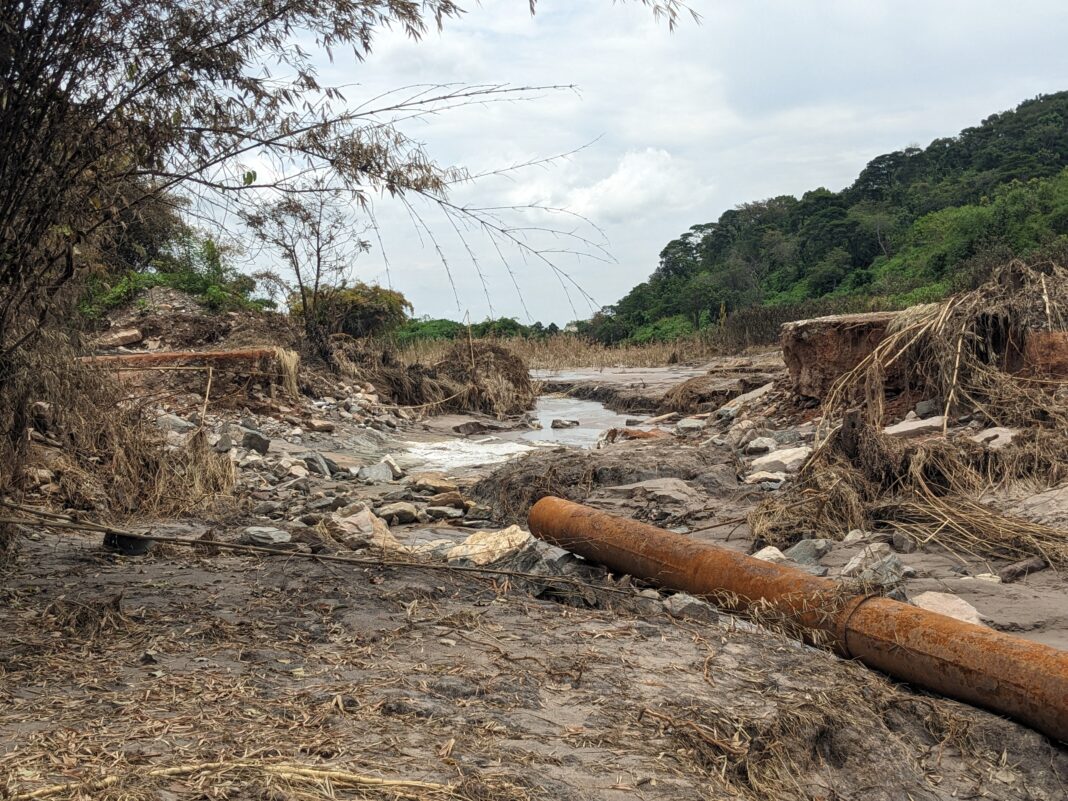
A Chinese state-owned mining company at the centre of litigation over Zambia’s 2025 toxic spill is seeking approval to almost triple the capacity of another waste storage facility.
By Charles Mafa
The Supreme Court has adjourned until November an appeal by Sino Metals Leach Zambia Limited against a High Court decision allowing a constitutional petition by 177 residents affected by the February 2025 toxic spill to proceed.
The adjournment followed an application by the State, through the Attorney General’s office, seeking more time for the parties to continue negotiations aimed at reaching an out-of-court settlement.
Sino Metals, a subsidiary of the state-owned China Nonferrous Metal Mining Group (CNMC), did not oppose the application. Its lawyers, Chibesakunda & Company, told the court they had no objection to the adjournment. The petitioners, however, opposed the State’s request.
The petitioners are represented by Malambo and Company Advocates and Lusitu Chambers.
The constitutional petition seeks to hold Sino Metals accountable for the environmental, economic and social consequences of the spill, which residents say destroyed crops, polluted water sources and disrupted their livelihoods.
The court proceedings come as Sino Metals seeks regulatory approval to increase the capacity of another waste storage facility at its Chambishi operations from about 1.84 million to 5.48 million cubic metres — almost three times its current capacity.
A three-member panel of Supreme Court judges — Deputy Chief Justice Michael Musonda, Justice Fulgency Mwenya Chisanga and Justice Roydah Mwanakulya Chinungi Kaoma — suspended proceedings for more than two hours while meeting the lawyers in chambers. When the court reconvened, the judges adjourned the case.
On 3 June, a three-member panel of the Supreme Court — Deputy Chief Justice Michael Musonda, Justice Nigel Mutuna and Justice Fulgency Mwenya Chisanga — sitting in Kabwe, Central Province, held that the Government, as custodian of the public interest, should be heard before the appeal could proceed because the issues raised extended beyond the parties directly involved.
The Supreme Court subsequently allowed the Government to join the case as an intervener on 18 August in Lusaka. The court emphasised the State’s role in representing the public interest, including the interests of citizens affected by the spill.
The Supreme Court proceedings centre on an appeal by Sino Metals against a High Court decision allowing a constitutional petition filed by 177 affected residents to proceed. The petition also names NFC Africa Mining Plc, within whose mining area the tailings dams were located, as a respondent.
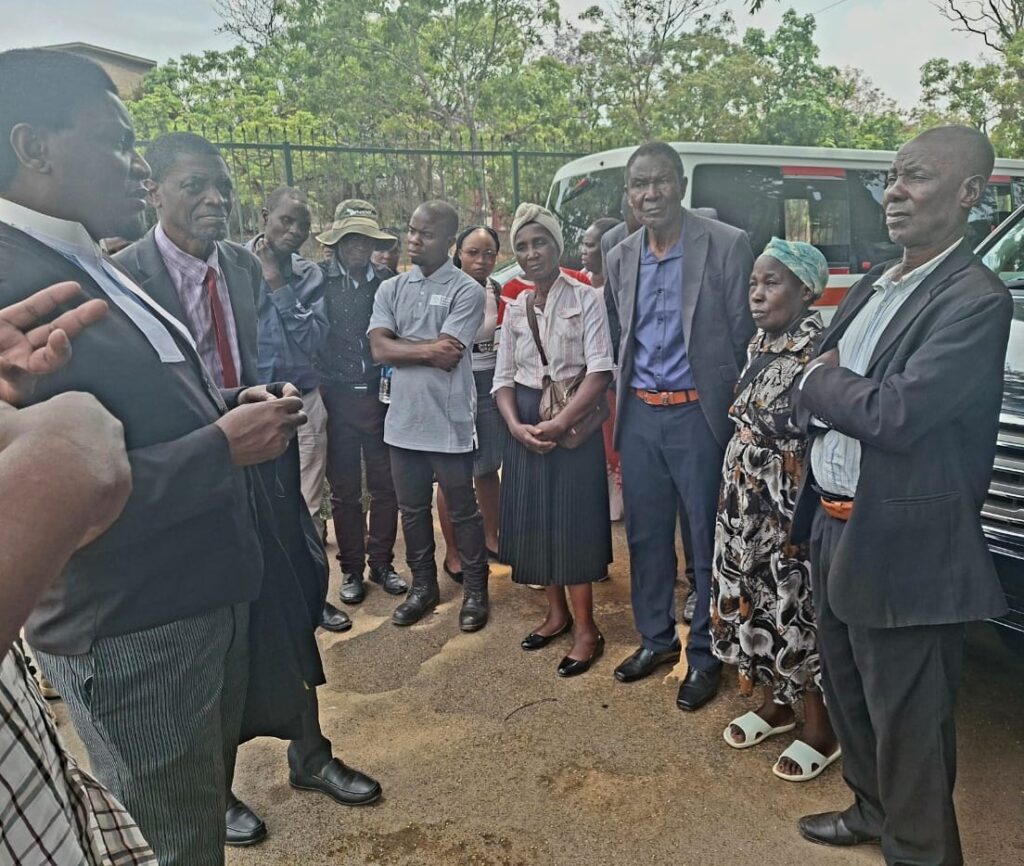
A sizeable group of the 177 petitioners, including old women from Kalusale community in Kalulushi district near the mining city of Kitwe on Zambia’s Copperbelt, attended the latest proceedings. Their appearance in court came slightly more than a year after the toxic waste spill devastated farms, contaminated water sources and disrupted livelihoods in their community.

Sino Metals and NFC Africa Mining are mining companies operating in Chambishi, Kalulushi District. Sino Metals’ operations — including an open-pit mine, concentrator plant and tailings storage dams — are located within NFC Africa Mining’s surface rights area and plant boundary.
At the centre of the dispute is the February 2025 collapse of multiple mining waste dams, which released large quantities of acidic and toxic waste into the nearby Chambishi Stream, Mwambashi River and the wider Kafue River system.
Environmental experts and affected communities have described the spill as one of Zambia’s most serious mining-related environmental disasters in recent decades.
The court proceedings come as Sino Metals seeks regulatory approval to substantially expand an existing tailings storage facility at its Chambishi operations.
The Zambia Environmental Management Agency (ZEMA) is reviewing an Environmental and Social Impact Assessment submitted by the company for the proposed expansion of its existing TD15G tailings storage facility.
TD15G is not the same facility that failed in February 2025, triggering the toxic waste spill now at the centre of the litigation. In a statement to parliament following the disaster, the government identified the failed facility as TD15F. ZEMA’s environmental documentation, meanwhile, shows that TD15G was constructed between May 2023 and December 2024 and became operational in January 2026.
Sino Metals is proposing to expand TD15G’s storage capacity from about 1.84 million cubic metres to 5.48 million cubic metres — almost three times its existing capacity. The facility’s footprint would increase from about 13 hectares to 47 hectares, equivalent to an expansion from 0.13 to 0.47 square kilometres, or roughly 66 football pitches at its proposed size.
The expanded facility, known as TD15G-1, would reach a maximum height of 22.5 metres — about the height of a seven-storey building — and have an expected lifespan of 10 years.
The proposal has drawn concern from the Zambia Environmental Justice Coalition (ZEJC), a grouping of civil society and environmental organisations that includes Transparency International Zambia, Caritas Zambia, Conservation Advocates Zambia, Zambia Alliance of Women, ActionAid, Wildlife Crime Prevention, NGO WASH Forum, BirdWatch Zambia, Publish What You Pay Zambia and Environment Africa, among others.
The coalition has called on ZEMA to withhold approval of the expansion until critical safety and environmental information is complete, publicly available and independently scrutinised.


Discover more from MAKANDAY
Subscribe to get the latest posts sent to your email.


