

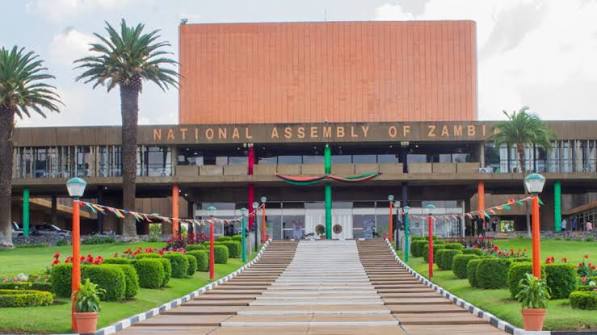
President Hakainde Hichilema is expected to officially open the First Session of the Fourteenth National Assembly on October 9, according to Clerk of the National Assembly Loveness Mayaka. He is expected to provide an outline for his government’s policy direction and priorities for 2026–2027 as he begins his ,
At full strength, the new-look national assembly is expected to comprise more than 280 members and presiding officers. These include MPs elected from constituencies, MPs elected under the new proportional representation system and up to 11 MPs nominated by the President. The assembly also includes the vice-president, the speaker and two deputy speakers.
- 226 constituency-based MPs
- 40 proportional representation MPs — 20 women, 15 youths and 5 persons with disabilities
- Up to 11 MPs nominated by the President
- The Vice-President
- The Speaker
- First and Second Deputy Speakers
The 14th national assembly succeeds the 13th national assembly, which ran from 2021 to 2026. The numbering refers to successive parliamentary terms formed after general elections, rather than the number of sessions held by Parliament.
Under the National Assembly Standing Orders, a session is a period of parliamentary business lasting no more than 12 months within the term of an assembly. It begins on the first sitting day after a general election or after the previous session has formally ended, and ends when that session is closed or parliament is dissolved.
For example, the 14th national assembly can remain in existence from 2026 to 2031, but during those five years it can have several sessions. When one session is formally ended through prorogation (formal ending), another session can subsequently begin.
This means the 14th national assembly can have several sessions during its five-year term, beginning with the first session that President Hichilema is expected to officially open on 9th October.
What is the first business of a new national assembly?
MPs are elected to speak for the people, make laws and hold the Government to account. But before they can debate Bills, question ministers or move motions, Zambia’s newly elected national assembly must first choose who will preside over the house.
When the expanded national assembly meets for the first time on October 2, MPs will elect the speaker, first deputy speaker and second deputy speaker.
Under the national assembly standing orders, the speaker must, within 30 days after a general election, publish a notice in the government gazette setting the date for the first sitting of the new assembly. Before that sitting, MPs are required to take and subscribe the oath or affirmation of office, a process that has already been completed.
So who runs the House before there is a Speaker?
When MPs assemble for the first sitting, the Clerk of the national assembly reads the gazette notice convening the house. At this point, there is no elected speaker to preside over proceedings. The Clerk therefore takes charge.
The Clerk presides over the election of the new presiding officers and determines questions that arise before and during those elections.
And there is an important restriction: until a speaker is elected, the national assembly cannot transact any other business.
That means no bills, motions, questions to ministers or other ordinary parliamentary business can take precedence over choosing the speaker.
How is the speaker elected?
MPs elect the speaker by simple majority through the secret ballot. Unlike the second deputy speaker, the speaker is not chosen from among sitting MPs.
Candidates for speaker may be submitted by the President and by political parties holding seats in the national. The candidates must be qualified to be elected as MPs but cannot themselves be serving MPs.
Once MPs have elected the speaker, they proceed to elect the first and second deputy speakers.
There is another safeguard built into this arrangement: the two deputy speakers must be of different genders and cannot belong to the same political party.
The first deputy speaker is elected from candidates selected by political parties represented in the assembly and is not an MP. The second deputy speaker is elected from among the MPs themselves.
Only after parliament has dealt with its presiding officers can the new assembly move towards its wider legislative, representative and oversight work.
So while election day determines who gets into parliament, the first sitting determines who will preside over it.
Will Hichilema nominate Nelly Mutti for another term as Speaker?
HOUSE BUSINESS is MakanDay Weekly’s window into Zambia’s natiionla assembly — following the questions MPs ask, the laws they debate, the answers ministers give and, where the record allows, how your MP votes. We cut through parliamentary language to explain what happened, why it matters and what it means for you.


Discover more from MAKANDAY
Subscribe to get the latest posts sent to your email.


