

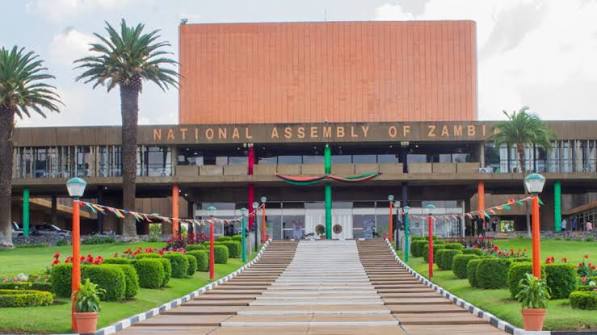
As President Hakainde Hichilema opens the 14th National Assembly on Friday, 9 October, MakanDay explains the parliamentary titles, rules and procedures citizens will encounter as their representatives get down to business.
By MakanDay Editor
When President Hakainde Hichilema officially opens the First Session of Zambia’s 14th National Assembly on Friday, 9 October 2026, attention will turn to his address outlining the government’s priorities for the coming year.
But once the ceremony is over, the real business of parliament begins: debating proposed laws, questioning ministers, examining public expenditure and holding the government to account.
As these proceedings unfold, Zambians following parliament on television, radio or online will hear unfamiliar terms: backbencher, Government Chief Whip, Opposition Whip, party whip, motion, division and committee stage, among others.
What do these words mean? Who holds these positions? And why should ordinary citizens care?
In our previous House Business explainer, MakanDay explained terms such as session, sitting, meeting, order paper, motion, point of order and hansard.
This week, we go further, looking at the people who organise parliamentary business, the rules MPs must follow and the procedures through which decisions are made.
Backbencher: An MP who is not a minister
The term backbencher may sound as though it refers to an MP who sits at the back of parliament or holds a less important position.
But Zambia’s National Assembly Standing Orders, give it a specific meaning.
A backbencher is simply an MP who is not a cabinet minister.
Backbenchers can belong to the ruling party, an opposition party or be independent MPs.
They play an important role in parliamentary scrutiny because they can question ministers, introduce motions, participate in committees and propose legislation.
Why it matters: Your MP does not need to be a minister to raise concerns about poor roads, shortages of medicines or the use of public funds. In fact, ministers do not ask parliamentary questions; their role is to explain and defend government policies and respond to questions from backbenchers. Backbenchers therefore play a critical role in raising citizens’ concerns and holding the government accountable.
Government Chief Whip: The ruling party’s organiser in parliament.
The Government Chief Whip is appointed by the party in government from among its MPs.
The word whip may sound harsh, but the role is primarily about organising MPs and maintaining party discipline during parliamentary business.
Under Standing Orders 47 and 48, the Government Chief Whip ensures that ruling-party MPs attend sittings, participate in proceedings and are present when important votes are taken.
The Chief Whip also coordinates parliamentary business with the Leader of the Opposition and other party whips.
Why it matters: When parliament is voting on an important Bill, the Government Chief Whip helps ensure that enough ruling-party MPs are present to participate. The role can therefore be significant in determining whether parliamentary business proceeds smoothly.
Opposition Chief Whip: Is that the official title?
Citizens may hear politicians and commentators refer to an Opposition Chief Whip.
However, Zambia’s 2024 Standing Orders use the formal title Party Whip or Opposition Whip.
Under Standing Order 50, an opposition political party with at least 10 MPs must appoint a Party Whip and a Deputy Party Whip.
These officials organise their party’s MPs, encourage attendance, communicate parliamentary business and coordinate with other whips.
The Standing Orders do not establish a separate office formally called Opposition Chief Whip.
Why it matters: Opposition MPs also need to be organised to participate effectively in debates, committee work and voting. Their party whips help coordinate that participation.
Party Whip: Keeping MPs organised
A Party Whip is an MP appointed by a political party to organise and maintain discipline among its members in the House.
The whip helps ensure that MPs know when they are expected to attend, what business is coming before Parliament and when votes may take place.
A Deputy Party Whip assists and performs the whip’s duties when the whip is absent.
Why it matters: Political parties may announce positions on proposed laws, but those positions do not automatically translate into parliamentary votes. MPs must participate in the actual proceedings.
Leader of Government Business: The link between Government and Parliament
Under Article 74(1) of the Constitution and Standing Order 42, the Vice-President serves as Leader of Government Business in the National Assembly.
The role includes explaining and defending Government policy, ensuring Government Bills are introduced, coordinating responses to parliamentary questions and facilitating accountability between the executive and parliament.
The Leader of Government Business also answers questions during the Vice-President’s Question Time.
Why it matters: This office helps connect decisions made by Government with the parliamentary processes through which those decisions are explained, questioned and scrutinised.
Leader of the Opposition: Who speaks for the largest opposition party?
The Leader of the Opposition is elected by the opposition party holding the largest number of seats in the National Assembly.
Under Standing Orders 45 and 46, the office-holder liaises with parliamentary leaders, examines Government policy and proposes alternatives during debate.
The Leader of the Opposition also assists in maintaining discipline in the House.
Why it matters: The office provides an organised channel through which alternative policy positions can be presented and Government proposals scrutinised.
Speaker: The person who keeps order
The Speaker presides over parliamentary proceedings, interprets the rules and maintains order.
Under Standing Order 35, the Speaker and other presiding officers must act fairly and impartially when carrying out their duties.
An MP cannot simply stand up and speak whenever they wish. The presiding officer must first recognise the member.
The Speaker may also rule on procedural disputes and take action when members breach parliamentary rules.
Why it matters: Parliament brings together people with competing political views. The Speaker’s responsibility is to ensure that debates take place according to agreed rules, regardless of which party an MP belongs to.
Clerk of the National Assembly: The procedural adviser
The Clerk is the principal adviser to the House, its presiding officers and MPs on parliamentary procedure, practice and privileges.
The Clerk also oversees the preparation and circulation of parliamentary documents, the custody of records and the production of Hansard.
Unlike MPs, the Clerk is a parliamentary official rather than an elected political representative.
Why it matters: Parliamentary decisions must follow established procedures. The Clerk helps ensure the House has the documents, advice and records needed to conduct its business.
Motion: A proposal for Parliament to decide
A motion is a proposed resolution asking the National Assembly to take a position or make a decision on a particular matter.
For example, an MP might propose that Government take measures to address a shortage of health workers or improve access to clean water.
When an MP moves a motion, the member formally presents the proposal for consideration.
Depending on the applicable rules, the motion may be debated, amended, approved or rejected.
A Private Member’s Motion is introduced by a backbencher rather than a minister.
Why it matters: Motions allow MPs to bring issues before the House and seek parliamentary decisions. But passing a motion does not necessarily mean that the Government has already implemented the proposed action.
Seconding a motion: Supporting its consideration
When an MP seconds a motion, the member formally supports its being placed before the House for consideration.
Seconding does not necessarily mean the MP agrees with every argument made in support of the proposal.
Standing Order 94 provides for motions to be seconded, subject to the applicable exceptions.
Why it matters: Citizens should distinguish between an MP helping a motion proceed and an MP ultimately voting for it.
Amendment: Changing what has been proposed
An amendment is a proposed change to a motion or Bill.
For example, MPs considering a proposal about education funding might seek to change its wording, scope or specific provisions.
Amendments allow Parliament to consider alternatives rather than simply accepting or rejecting every proposal in its original form.
Why it matters: The final version of a law or resolution may differ significantly from what was first introduced. Citizens should pay attention to what changes during debate.
Division: When MPs’ votes are formally counted
Parliament sometimes decides questions through a voice vote, with members indicating whether they support or oppose a proposal.
But where a decision is challenged and a division is called, members’ votes are formally recorded through the prescribed voting procedure.
The Standing Orders provide for electronic and roll-call voting.
Why it matters: Divisions can provide evidence of how MPs voted on particular issues. This helps citizens compare what their representatives say publicly with their actions in Parliament.
Quorum: The minimum number needed for business
A quorum is the minimum number of members required for the House to conduct business.
If the required number is not present, parliamentary proceedings may be interrupted in accordance with the Standing Orders.
The Government Chief Whip has an explicit responsibility to help ensure a quorum is maintained.
Why it matters: An MP’s attendance is not merely ceremonial. Insufficient attendance can affect Parliament’s ability to conduct business.
Bill: A proposed law, not yet an Act
A Bill is a proposed law placed before Parliament for consideration.
It may be introduced by a minister or, where permitted, a backbencher.
A Bill generally passes through several stages, including First Reading, Second Reading, Committee Stage, Report Stage and Third Reading.
During these stages, MPs have opportunities to examine, debate and propose changes to its provisions.
A Bill does not become an Act merely because it has been introduced or debated. The required legislative procedures, including presidential assent where applicable, must be completed.
Why it matters: A proposal to change taxes, education policy or another area of public life is not automatically law simply because a minister announces it in Parliament.
Committee Stage: Examining the details
During the Committee Stage of a Bill, its provisions are examined in detail and amendments may be considered.
This is different from the work of parliamentary committees that investigate policy matters, examine expenditure and scrutinise Government activities.
Committees can invite witnesses, receive submissions and prepare reports for the House.
Why it matters: Some important changes to legislation happen during detailed consideration rather than during the most widely reported parliamentary speeches.
Point of Order: When an MP says the rules have been broken
A point of order is raised when an MP believes a parliamentary rule, procedure or privilege has been breached.
It is not simply an opportunity to disagree with another member’s political argument.
The presiding officer determines how the matter should be handled under the Standing Orders.
Why it matters: A point of order concerns the rules governing parliamentary proceedings. Citizens should distinguish procedural objections from political disagreements.
Tabling a document: Formally placing information before Parliament
When an MP or minister tables a document, it means the document has been formally presented to the House.
Documents may include Government reports, committee reports and other materials permitted under the Standing Orders.
Why it matters: Tabled documents can provide evidence behind parliamentary debates. They may also help journalists and citizens assess whether Government claims are supported by official records.
Adjournment: Parliament stops sitting
When the House adjourns, its sitting comes to an end or business is suspended until the next appointed time. This does not necessarily mean the parliamentary session has ended.
Adjournment sine die means the House adjourns without fixing the date of its next sitting.
Why it matters: Citizens should not confuse the end of a day’s sitting with the end of a parliamentary session or the dissolution of Parliament.
Motion of Thanks: What happens after the President’s address?
When President Hichilema delivers his address at the ceremonial opening, MPs are required to listen in silence under Standing Order 21.
The President’s speech will outline the Government’s policy direction, but the House does not debate the address while it is being delivered.
Afterwards, a Motion of Thanks on the President’s Address is moved by an MP nominated by the Government Chief Whip.
Under Standing Order 18, the debate lasts 10 sitting days unless the House Business Committee determines otherwise.
This provides MPs with an opportunity to respond to the President’s policy pronouncements.
Why it matters: Citizens should follow not only what the President promises, but also how their MPs respond. Do they question the proposals? Raise constituency concerns? Suggest alternatives? Or offer general support without examining the details?
Parliament belongs to the people
The language of parliament may seem complicated, but the decisions taken there have consequences far beyond the Chamber.
A debate about health funding can affect whether a clinic has medicines. A question about roads can draw attention to neglected infrastructure. A Bill can change the laws governing businesses, workers and families.
Understanding parliamentary terms is therefore more than learning political vocabulary. It helps citizens follow who is speaking, what is being proposed, which rules apply and whether their representatives are fulfilling their responsibilities.
As the 14th National Assembly begins its work, MakanDay’s HOUSE BUSINESS will continue examining the questions MPs ask, the laws they debate, the answers ministers give and, where records permit, how individual MPs vote.


Discover more from MAKANDAY
Subscribe to get the latest posts sent to your email.


