

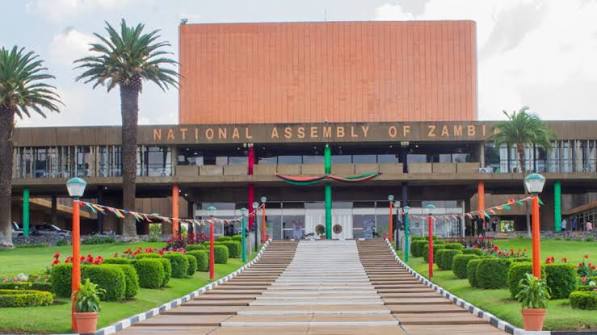
Five MPs have entered Zambia’s new National Assembly through presidential nomination rather than election. Three are now Cabinet ministers. House Business looks at what that means and what to watch as they begin work in parliament.
By MakanDay
This week President Hakainde Hichilema nominated five people to serve as Members of Parliament – Professor Roma Chilengi, Dr Gilbert Siame, Mulambo Haimbe, Mubita Anakoka and Noel Nkhoma.
None of the five represents a constituency through these nominations. Instead, they enter parliament through a constitutional power that allows the President to nominate MPs.
Three have already moved from presidential nomination into another powerful institution – Cabinet.
Chilengi has been appointed Minister of Health, Siame Minister of Green Economy and Environment, and Haimbe Minister of Foreign Affairs and International Cooperation.
The President has separately appointed Situmbeko Musokotwane, the elected MP for Liuwa, who has retained his position as Minister of Finance and National Planning — a portfolio he held during the UPND’s first five years in government.
Parliament is where MPs make laws, question ministers, scrutinise government spending and put the Executive’s decisions and promises on the public record. Understanding the institution also means understanding who gets to sit in it — and how they got there.
Unlike an elected constituency MP, a nominated MP does not enter the National Assembly after winning the votes of people in a particular geographical constituency. The Constitution instead gives the President the power to nominate up to 11 MPs for specified purposes.
That raises an important question for citizens following parliament: what are nominated MPs there to contribute?
And with three of the five going directly into cabinet, there is another question: what does their appointment tell us about the relationship between Parliament and the Executive?
From nomination to Cabinet
The appointments of Chilengi, Siame and Haimbe add another dimension to their entry into Parliament.
Their nomination made them MPs before they were appointed ministers, illustrating one way in which Zambia’s constitutional system connects the legislature and the executive.
Cabinet ministers are not separate from parliament. They sit in the national assembly and are required to account for government business there.
They answer MPs’ questions, explain government policy and bring government legislation before the house. They can also be called upon to account for decisions and expenditure within their ministries.
That scrutiny will matter as the new administration begins implementing its agenda.
After appointing the ministers, President Hichilema set out what he expects from his renewed administration. He said every ministry should become an engine of the government’s Grow Zambia agenda, driving investment, production and job creation, strengthening public services and translating economic growth into improved livelihoods.
Following the first cabinet meeting, he also said cabinet should deliver jobs, revenue for the Treasury and business opportunities across the country. Those are commitments from the executive. Parliament is one of the places where their implementation can be examined.
When ministers appear before the national assembly, MPs have an opportunity to interrogate what government says it is doing. Parliamentary questions, ministerial statements, committee proceedings and debates create a public record of what was asked, what was answered and what commitments were made.


Discover more from MAKANDAY
Subscribe to get the latest posts sent to your email.


