

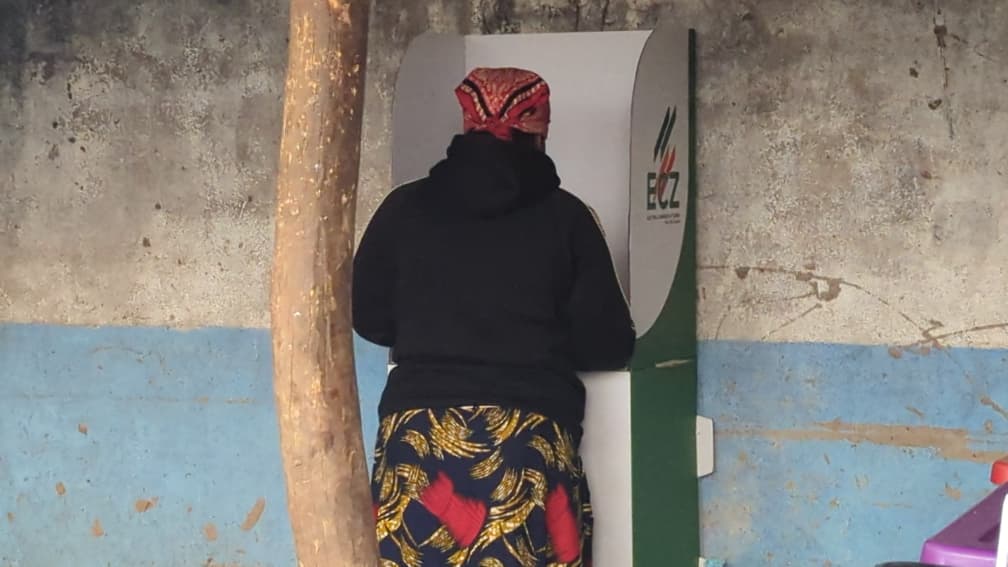
Our management of rising population, an increased jobs drought, high demand for social amenities and service delivery, will be the key to our increasingly fragile peace, writes John Mukela
A week has passed since the Electoral Commission of Zambia announced the UPND’s Hakainde Hichilema as the Presidential winner of the recently concluded elections, beating the NRPUP’s Brian Mundubile.
The day after polling day on August 13, someone commented: “Yesterday looked peaceful, but wait for when they start counting…”
For a long time since I can remember, we have been sold the “story” that Zambia is a pissyful country.
Nothing to do with piss or pissing, just about us Zambians being incredibly nice, calm and polite. You could even throw in being humble if you wanted.
Against the electoral skirmishes witnessed after August 13, we have been told that whatever has happened, “it’s not like Zambians,” because we are a peaceful people.
But just how exactly does this peaceful Zambia stand up to close scrutiny?
The illusion of calm on election day was on full display, but only just, because the following afternoon, August 14, travelling from east to west, Great East Road was a sea of calm tranquility, until you approached Kabwe round-about, when suddenly, all hell broke loose.
The sea of people trooping out of town crammed every little space, all of them in a terrific rush to wherever they were heading.
Cars were jammed, traffic at a standstill. Drivers were attempting to u-turn, right in the middle of the narrow lanes, afraid to venturefurther through the throng of pedestrians and vehicles.
Along all of the four main highway arteries out of the city’s downtown, it was the human equivalent of the seasonal wildebeest migration in the Liuwa National Park or the Serengeti – wild, energetic and do or die.
The stampede was triggered by NRPUP Presidential candidate Mundubile’s announcement that PVT results compiled from polling stations and totaling centres indicated that he was leading Hichilema.
In the aftermath of August 13, so much has occurred with the two main contending political parties at each others’ throat.
Most alarming is the government’s allegation of a terrorist threat and the disruption of an insurgency gathering at the Mundubile residence, resulting in the fatal shooting of ex-cabinet minister and Mundubile confidante, Mutotwe Kafwaya.
There are too many unanswered questions surrounding this sad incident, and the government version of what took place has been openly challenged by the Mundubile team.
Sensing the deteriorating situation, Patrick Kangwa, Secretary to the Cabinet, saw it fit to address the nation, urging “peace, unity and stability.”
“Government has observed with concern, that the heightened vitriol and trolling that is being exchanged between the two sides of the political divide is unhealthy. In our call to preserve the peace, unity and stability of our country, we must ensure it stops,” Kangwa said.
He condemned “in the strongest possible terms”, the “inappropriate behaviour that is slowly emerging, because it goes against our Christian values,” and negates the unity and stability that should be passed on to future generations.
Peace comes up tops in discussions about Zambia during elections, and this year was no exception.
Politicians sing the peace song all the time. Church pastors proclaim it every Sunday. The media blows the peace trumpet at any given opportunity.
Christian values, and Zambia’s declaration as a Christian nation is another staple of Zambia’s profile. Zambia, the Christian “nayshan!”
But, scratch a little at that peace image, or that Christian pose, and doubt creeps in.
In reality, is the peace for which Zambia is applauded, an illusion, a concoction?
Because during elections, there is always an unspoken but palpable underlying fear that things could escalate and blow up, and there have been several occasions when things almost did.
Miraculously, Zambia has been spared that fate, so far, I suspect not because Zambians are intrinsically peaceful, but more because we have just been lucky.
Unscrupulous leaders who understand this know that it takes very little to woo or sway a gullible crowd, voters, or youths with political messaging that incites and creates a riotous frenzy, lawlessness and chaos.
And if it serves a political end, forget how selfish the motive, why not?
Already, as noted by Patrick Kangwa, social media is fast becoming a dangerous problem, with misinformation and disinformation spiraling out of control, and desperate political actors riding it.
Zambia, the peaceful nation, should not be swallowed blindly as a guaranteed given, because Zambian elections have every possibility to regress into contested battlefields with far worse repercussions than we have so far witnessed.
Moreover, our under-development and widespread nationwide poverty, affecting urban and rural communities alike, guarantees that “peace” will become less tenable if living standards are not sufficiently improved.
Furthermore, we cannot rule out the likelihood of an increased escalation of poverty and under-development, fueled by an AI-powered technological race in the advanced states of the “first world,” leaving us moribund, despite our abundant natural wealth, at the bottom of the global economic pie – perpetual hewers of wood and drawers of water.
While politics is important, more important is Zambia’s economic production and reproduction, which in turn contribute towards Zambia’s overall development.
Voters care most about their personal financial well-being and standard of living above all other political debates. “It’s the economy, stupid!”
Our population explosion in the coming decades, projected by the Zambia Statistical Agency to reach 40 million by 2047, will strain the economic cake, further undermining our cherished peace, if government and its politicians fail to match this increased population with economic stability.
2047 may seem far, but it’s a mere 20 years, and it is astonishing to imagine that a baby born today will be celebrating only their 74th birthday by the turn of this century in the year 2100, when Zambia’s population is projected to peak at 65 million.
At the slow rate we have progressed since 1964, how possible can we satisfy the demands of 65 million people, while continuing to remain peaceful?
Obviously, what is materially possible in the United States or Sweden cannot easily be replicated in countries where the forces of production are far less developed.
The degree to which science and technology are mainstreamed in society is very important for countries like ours, where survival is still largely pre-scientific, for example, within small-scale agriculture.
But how ready are we for this societal shift?
A cursory glance at our readiness gives little comfort.
For one, our current education system needs a complete overhaul for it to match the demands of a rapidly evolving modern economy.
At the apex of our educational system, for example, there is a glaring void in research and development in our universities.
We all know that university R&D acts as a primary engine for national progress by driving economic growth, fostering technological innovation, building a skilled workforce, and solving critical social challenges.
In Sweden for instance, Stockholm University treats PhD positions as paid employment rather than traditional study-only scholarships, with science PhD candidates receiving fully funded four-year fixed-term contracts with a monthly salary (averaging 31,000 to 34,000 Swedish Kroner), social benefits, and no tuition fees.
On top of that, full living costs, research facility access, and medical/social benefits are covered directly by the university.
A wide range of research areas are open, such as environmental and Earth Sciences, Physics and Mathematics, Molecular Biosciences and Chemistry, Robotics, to name a few.
Economists point out for example that to absorb millions of young workers over the next decades, the focus must shift from basic headcount to value-added industries like manufacturing, technology, and mining diversification.
A transition from government to private sector as our growth engine is key in order to buck the trend where every election cycle unravels power mercenaries of all manner and shape, with some this August, “ready to die and ready to kill” because government is the goose with the golden eggs.
Zambia needs to move away from this “get into government by hook or by crook” mindset.
Our management of rising population, an increased jobs drought especially among the increasingly vocal and social media addicted youth, high demand for social amenities and service delivery, will be the key to our increasingly fragile peace.

Discover more from MAKANDAY
Subscribe to get the latest posts sent to your email.


