

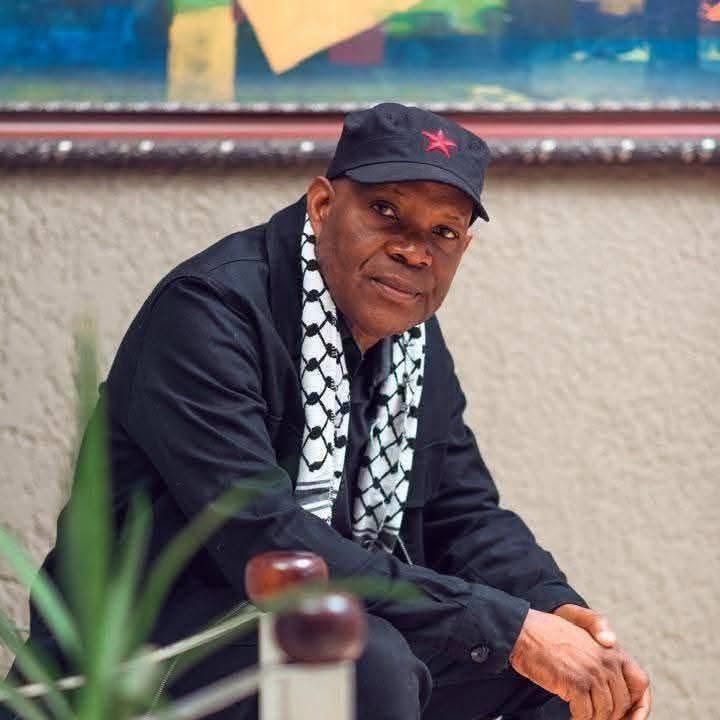
Dr O’Brien Kaaba rejects claims that his criticism of Sishuwa amounts to defending government overreach, arguing that academic freedom demands independent judgment, not blind solidarity or automatic opposition to those in power.
I did not foresee that my short Facebook comment on the lack of local academic solidarity with Sishuwa would generate such public interest and vigorous national debate.
The article has attracted as much praise as criticism. While I am grateful to those who reacted to it with approval, it is those with divergent views who compel us to think through our perspectives and reconsider them.
Here I am not concerned about some Sishuwa Sishuwa phantoms like Ketis who specialise in mudslinging without any substance. Of interest to me is the reply to my article penned by our well-respected citizen and uncle to Sishuwa Sishuwa, that is, Dr Fred M’membe. His courtesy is admirable. I reply, not to belittle him but to advance our mutual academic calling of deliberation, open discourse and engagement.
A close look at Dr M’membe’s response is that he is not engaging with what I actually wrote, but uses my article as an embroidery tent to launch a generalised attack on the excesses of both the PF and UPND governments. From this perspective, he assumes I am presenting lack of local academic support for Sishuwa to imply support for the alleged excesses of government. As a result, he argues that I am rationalising tyranny.
This is a perfect example of a strawman fallacy, whereby one refutes an argument different from the one actually under consideration. I made it clear in my article that I had no information on what actuated government action against Sishuwa as follows: “This is not to argue that the action by government to revoke his passport is justified. I don’t have sufficient information of the basis on which the government acted and would not like to make assumptions for or against.” My position remains the same, that I do not know what the government based its decision on and would not like to speculate.
Dr M’membe argues further that by separating the rogue scholar from the objective scholar, I fail to defend the academic standards and therefore provide intellectual cover for regime overreach. He concludes that the silence of local academics is symptomatic of political compromise and fear. This reasoning is fallacious and falls into the trap of the excluded middle fallacy, that is, the argument presents only two false possibilities. Either one is supporting Sishuwa and condemns government or one is compromised and supports tyranny. This is a defective and false either-or dichotomy typical of an excluded middle fallacy. Just because water is not cold, for example, does not make it hot, or just because it is not morning does not automatically make it night. There is a spectrum of other options.
The argument by Dr M’membe assumes that in the current context, there is only one way of exercising academic freedom: to oppose government. Academic freedom, therefore, should be oppositional, regardless of the circumstances.
As I argued, academic freedom is not unlimited and does not necessarily mean being antagonistic. In his treatise of a public intellectual Richard Posner [(Richard A Posner, Public Intellectual: A Study of Decline (Harvard University Press, 2001)] argues that being a public intellectual does not entail that “there [is] any necessary virtue in an oppositional stance; it depends on what one is opposing”. Otherwise, he argues, simply opposing without convincing reasons renders one into an unthinking automaton.
The role of the public intellectual, therefore, does not entail blind kowtowing to either government or the opposition. Both have to present their credentials for assessment and intellectual interrogation. It should not be automatic either way. This obviously extends to scrutiny of each other as academics.
There should be no blind loyalty, and, therefore, those who do not agree with Sishuwa’s excesses are within their rights. The role of a public intellectual is not blind support but, as Michael Foucault beautifully stated, to “question over and over again what is postulated as self-evident, to disturb people’s mental habits, the way they do and think things, to dissipate what is familiar and accepted, to re-examine rules and institutions.” Intellectuals should not be immune from criticism by their peers. Not siding with another academic when he goes rogue is a proper intellectual exercise that should be celebrated and not demonised.
The author teaches law at the University of Zambia
Photo Credit: Dr M’membe’s Facebook Page


Discover more from MAKANDAY
Subscribe to get the latest posts sent to your email.


