


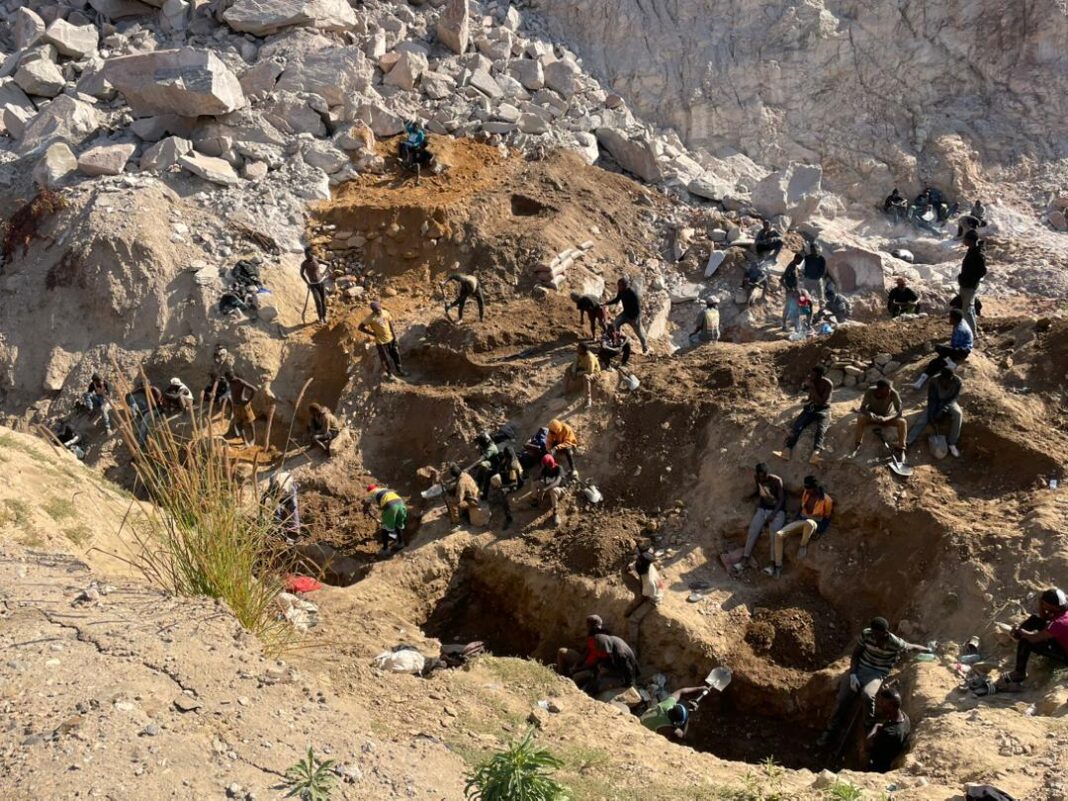
A year after MakanDay exposed child labour, deaths and the interests surrounding illegal copper mining in Zambia, BBC Media Action, the BBC’s international charity, has republished the investigation, bringing the story to a wider audience.
By MakanDay Editor
In August 2025, MakanDay Centre for Investigative Journalism published “Blood on the Copper,” a two-part investigation into the dangerous and often hidden world of illegal copper mining in Zambia.
A year later, the investigation is receiving renewed attention after BBC Media Action republished the story, taking MakanDay’s reporting to a wider audience.
The original investigation took MakanDay journalists into mining communities on the Copperbelt, where children and young men were risking their lives in dangerous pits for as little as K100 a day.
Children underground
In Part I, “Blood on the Copper: Child Miners Risk Death in Zambia’s Copper Pits,” MakanDay documented how children as young as 14 were being drawn into illegal mining.
The investigation followed the death of 21-year-old Paul Chishimba and two boys, aged 14 and 16, after a pit collapsed at Sensele Mine in Chingola.
MakanDay also traced the body of another young miner to the Nchanga North Mine Hospital mortuary. His friends were unsure even of his correct name, and his body remained unclaimed.
During the investigation, police rescued 38 children from Sensele Mine, some of whom had reportedly been recruited from outside the area to work in illegal mines.
But the story went beyond the children entering the pits.
MakanDay examined the network around illegal mining — including businessmen, political interests and weaknesses in state enforcement that allowed the illicit economy to thrive.
Following the copper
Part II, “Blood on the Copper: The Zambian Minister, the Mysterious Businesswoman and Illegal Mining,” followed the investigation further up the chain.
Rather than treating illegal mining simply as a story about desperate young people entering abandoned or restricted pits, MakanDay examined the people and interests benefiting from the minerals coming out of those pits.
Together, the two stories asked a larger question: who really benefits from Zambia’s illegal copper economy, while young and vulnerable miners carry the greatest risks?
The BBC Media Action republication gives that investigation another life — and another audience.
For MakanDay, it is also a reminder of why independent investigative journalism matters: reporting produced in Zambia, by Zambian journalists, can expose issues of national importance and travel far beyond the communities where those stories begin.
From the MakanDay Archive:
Part I: Blood on the Copper: Child Miners Risk Death in Zambia’s Copper Pits
Part II: Blood on the Copper: The Zambian Minister, the Mysterious Businesswoman and Illegal Mining
The two-part investigation was originally published by MakanDay Centre for Investigative Journalism in August 2025 and republished by BBC Media Action in 2026.

Discover more from MAKANDAY
Subscribe to get the latest posts sent to your email.