

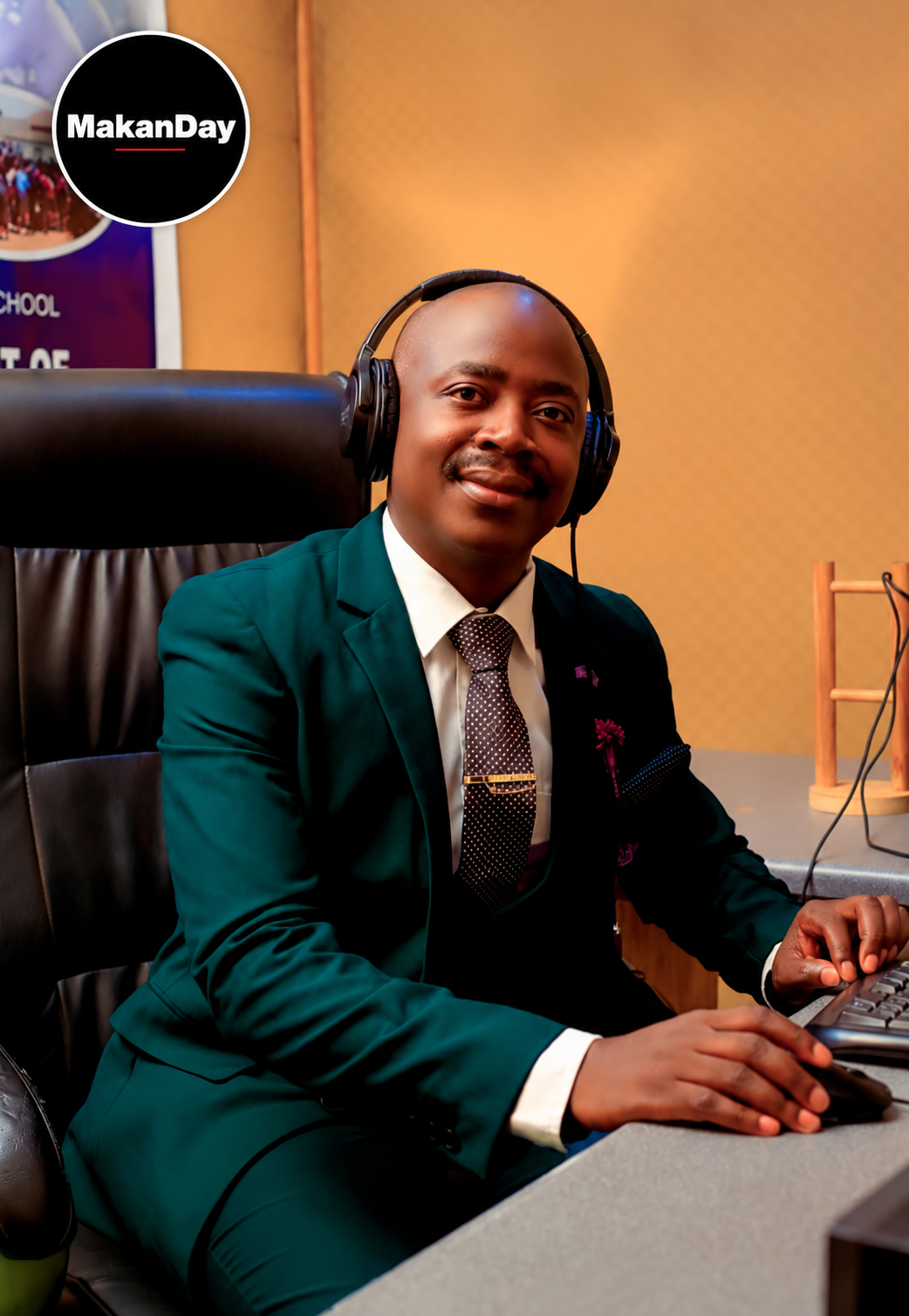
At 31, former journalist Evans Lubelenga takes office as mayor of Solwezi, promising to champion better basic services and greater transparency in a mining town where wealth coexists with persistent development challenges. He speaks to Linda Soko Tembo about his priorities and the task ahead.
Lubelenga does not have to look far to see the scale of the job he has taken on.
Across Solwezi, the new mayor will find many of the problems he encountered while working as a journalist — poor roads, inadequate water supply, unemployment and communities questioning why the wealth generated around them has not produced better public services.
Only his position has changed.
“Journalism taught me to see the real pain of people. For years, I asked why there was no development in Solwezi, but I felt the answers were not enough. Therefore, I decided to stand for the mayor’s office and not just report on issues affecting my community,” he said.
Elected as an independent, Lubelenga has moved from questioning public officials to an office where residents will increasingly expect answers from him.
But the powers of that office have limits. Under Zambia’s Local Government Act, the mayor heads the council, presides over its meetings, promotes public participation and oversees implementation of council decisions and resolutions. Many of Lubelenga’s promises will therefore require council decisions, implementation by the council administration or action by other public institutions.
A mining town with basic problems
Lubelenga takes office in a municipality whose fortunes are closely connected to mining.
Kansanshi Mining Plc, 80 percent owned by Canada-based First Quantum Minerals (FQM) and 20 percent by ZCCM-IH, reported paying K95.3 million in property rates to Solwezi Municipal Council during the 2025 reporting period — the largest payment identified in MakanDay’s recent examination of mining rates paid directly to six local authorities.
Council financial statements examined by MakanDay show how heavily Solwezi’s property-rate collections have depended on mining.
In 2021, the council collected K63.98 million in mining rates, compared with K3.5 million from industrial and commercial properties and K1.24 million from residential properties. Mining accounted for about 93 percent of the K68.7 million collected across those categories.
In 2022, the pattern continued, with K53.99 million collected from mining rates compared with K3.79 million from industrial and commercial properties and K1.20 million from residential properties.
The figures do not show that mining revenue has been misspent, nor that the council has enough money to meet the demands created by Solwezi’s rapid growth. But they raise an important question for the new mayor and council: how can the resources available to the municipality be translated into services residents can see?
MakanDay has previously documented more than 2,000 traders at Kyawama Market operating without running water or drainage and sharing just four toilets and two bathing rooms. A K53.5 million modern market project, whose groundbreaking ceremony was held in January 2024, had still not progressed to construction of the main market almost two years later.
MakanDay has also documented residents in communities such as Kimakolwe struggling to access clean water. Lubelenga says such conditions helped drive him into public office.
“If people visited Solwezi, I would proudly show them the mines and the hardworking people of Solwezi,” he said. “But I would be ashamed to show them a dusty central business district without water, young people engaging in illicit activities because of a lack of jobs, and old schools that cannot accommodate the growing population.”
Roads, water and opportunities
Lubelenga identifies roads, water and opportunities for young people as his immediate priorities. He says he will push for improved roads and drainage and better access to reliable water for households, schools, health facilities and businesses.
He also proposes a “Mayor’s Skills Initiative”, aimed at creating skills and employment opportunities for more than 10,000 young people. The programme, he says, would equip young people and women with practical skills and help connect them with employment opportunities, particularly in mining and other sectors. It is one of his most specific commitments — and therefore one of the easiest to measure.
But the mayor cannot establish and finance such a programme simply by announcing it. How it will be funded, who will implement it, when it will begin and what will count towards the 10,000 target remain important questions.
Making mining wealth work for Solwezi
Lubelenga believes Solwezi has not received a fair return from the mineral wealth extracted from the area. But the challenge extends beyond persuading mining companies to spend more through corporate social responsibility programmes.
Research examined by MakanDay suggests Solwezi has historically struggled to broaden its municipal revenue base as the town expanded around mining.
Social anthropologist Professor Rita Kesselring, who studied Solwezi and observed the council’s planning department, describes a local authority struggling to keep pace with rapid mining-driven urban growth. Her research suggests development expanded faster than the council’s ability to capture properties within its revenue system.
That matters because the same growth increased demand for roads, drainage, sanitation, markets and other services.
Lubelenga says he wants the council’s relationship with mining companies to combine partnership, regulation and advocacy. He wants their corporate social responsibility programmes better aligned with council priorities, particularly roads, water and youth employment. He also says cooperation should not prevent the council from speaking out when residents’ interests are threatened.
On environmental concerns, Lubelenga says he would initially engage a mining company if it were found to be polluting a water source or harming a community, and make the matter public if the problem persisted.
His ability to advocate for residents should, however, be distinguished from the statutory enforcement powers of environmental and other regulatory authorities. Lubelenga acknowledges the broader limits of council authority.
“The council must remain accountable and honest about what it can and cannot deliver,” he said. “Where issues fall outside the council’s authority, I will lobby the central government through the relevant channels.”
His performance will therefore depend not only on whether problems are solved, but on what proposals he champions, how the council responds and how effectively its decisions are implemented.
From journalist to public official
Lubelenga says journalism shaped his approach to leadership, particularly the importance of listening.
“I am a servant of the people, and I will never work in isolation,” he said. “I intend to work with people with massive experience, including traditional leaders and other stakeholders.”
He describes himself as a mayor for all residents, regardless of political affiliation. But perhaps the clearest test of his journalism background will be his attitude towards information now that he is on the other side of journalists’ questions.
“Once a journalist, always a journalist,” he said.
Lubelenga promises to push for information about council activities to be accessible to residents and journalists and to communicate regularly through the media.
“The council belongs to the people and should therefore not operate with secrets,” he said.
Promoting public participation in local governance is, in fact, one of the functions assigned to the mayor under the Local Government Act.
The land question
Lubelenga also wants residents to hold him accountable for improving access to land ownership.
“Only a small percentage of Solwezi residents have access to land ownership,” he said. “I want to help more residents secure ownership of the properties where they have lived for many years.”
But land administration involves legal processes and institutions beyond the mayor acting alone. The test will therefore be what measures Lubelenga can champion within the council, what the local authority can lawfully implement and what requires action by other authorities.
From questions to answers
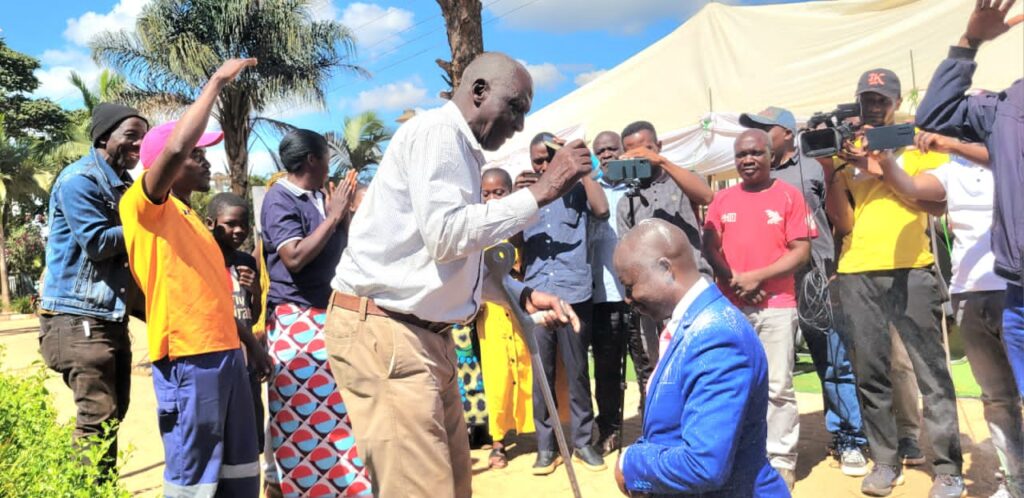
Lubelenga begins his tenure with ambitious commitments – better roads and drainage, improved water supply, opportunities for more than 10,000 young people, greater access to land ownership and a more transparent council.
He does not have unilateral authority to deliver them all.
But residents can ask what proposals he championed, what decisions the council made, whether those decisions were implemented and how openly the council accounted for the results.
Lubelenga says he welcomes that scrutiny and is willing for journalists to return during and at the end of his tenure to assess his record.
As a journalist, he could ask why Solwezi’s mineral wealth had not translated into better conditions for its residents.
As mayor, he cannot provide every answer himself. But residents can now judge what he does with the powers he has.

Discover more from MAKANDAY
Subscribe to get the latest posts sent to your email.