

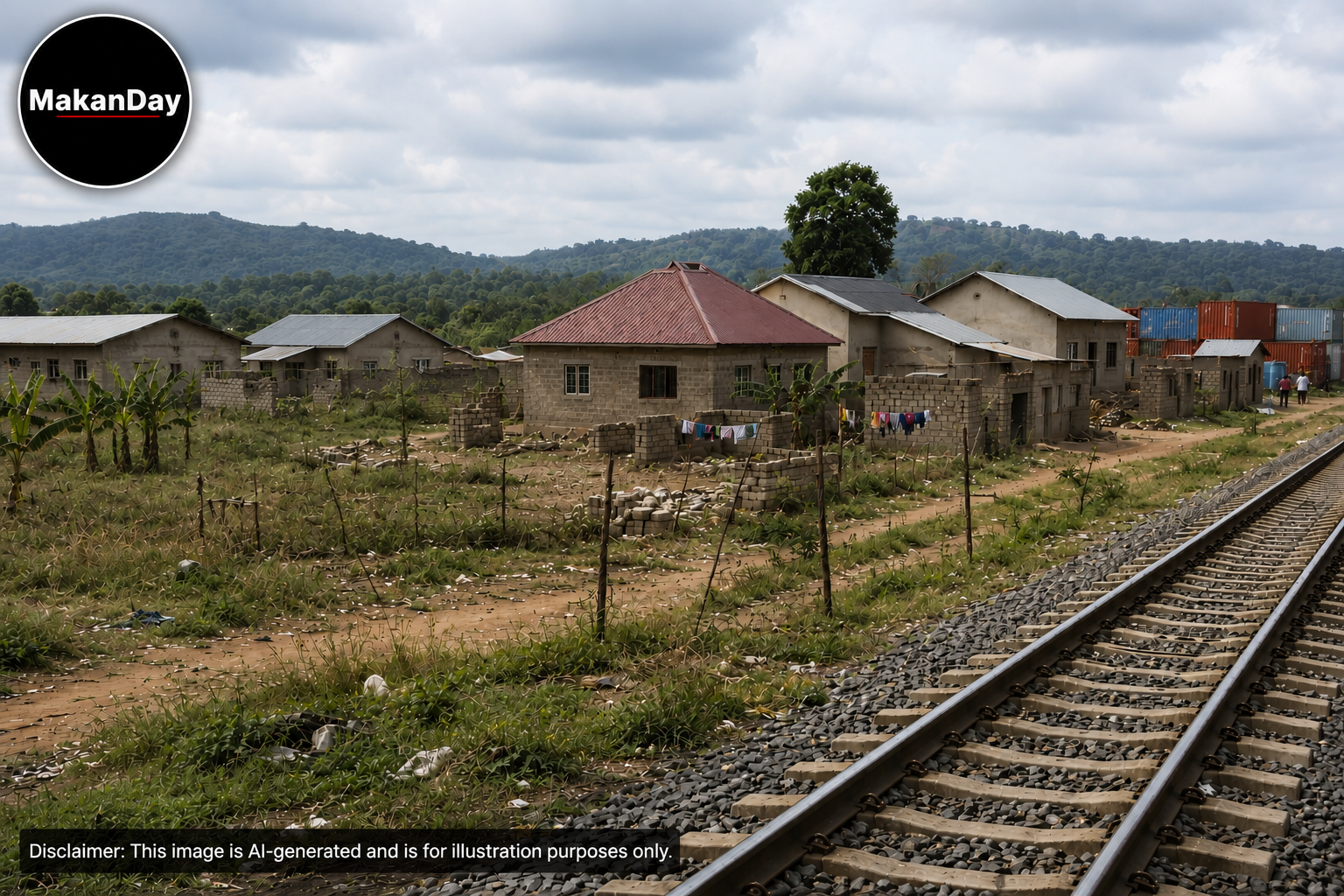
How illegal settlements are swallowing strategic TAZARA land in Kapiri Mposhi
By Precious Mwambula | Kapiri Mposhi
What was once reserved for railway expansion is now dotted with houses.
Inside the Kapiri Dry Port site in Northpark area in Kapiri Mposhi, structures have quietly emerged on land belonging to the Tanzania-Zambia Railway Authority (TAZARA), despite years of warnings, stop orders, and eviction notices.
The land, considered strategic for future railway and trade logistics development, is now at the centre of a growing battle involving land governance failures, weak enforcement, and unanswered questions over who allowed construction on protected railway property.
According to TAZARA Managing Director and Chief Executive Officer Bruno Chingag’andu, the encroachment at the Kapiri Dry Port site was formally detected in 2010. But the broader problem along the railway corridor dates back to the 1990s.
Of the 12 hectares, land equivalent to nearly 17 football pitches out together, originally reserved for the dry port project, approximately eight hectares have already been affected by illegal occupation.
TAZARA says at least six structures have been identified within the restricted zone.
But investigations by ZI FM suggest the problem may be larger than isolated illegal structures.
At the site, some of the houses appear occupied only by caretakers, while neighbours say the actual owners do not live in Kapiri Mposhi — raising questions about whether the land is being held for speculation or by individuals with political or financial influence.
Under the TAZARA Act of 1995, a 50-metre reserve exists on either side of the railway line where construction is prohibited.
Despite this legal restriction, construction activities continued even after stop orders were issued.
“Those occupying the land were instructed to cease developments, but some ignored the directives,” Chingag’andu said in responses made available to ZI FM through TAZARA Head of Public Relations Conrad Simuchile.
The authority says it has since escalated enforcement by issuing formal eviction notices and engaging local leadership.
Some occupants have reportedly agreed to vacate the land, although full compliance remains uncertain.
Yet the bigger question remains unanswered: who allocated or facilitated access to the land in the first place?
That question becomes more critical given that the Ministry of Lands and Natural Resources has confirmed that the area is officially reserved for railway use.
Ministry Principal Public Relations Officer Delphine Hampande told ZI FM that land allocation is managed either by the Ministry of Lands or local authorities.
She said the ministry operates an online verification system intended to prevent illegal allocations.
However, Hampande confirmed that no ministry official has been investigated or disciplined in relation to the encroachment.
Meanwhile, efforts to obtain answers from the planning department at Kapiri Mposhi Town Council proved unsuccessful despite repeated press queries and follow-ups seeking clarification on whether the council approved or was aware of the developments.
That silence leaves critical questions unanswered.
If the land is protected railway property, how were structures allowed to emerge over several years without intervention from local planning authorities?
And if no allocation was officially made, who sold or occupied the land?
In February this year, TAZARA Regional Manager Kambani Ndhlovu disclosed the encroachment during a tour of the railway station by Central Province Permanent Secretary Dr Milner Mwanakampwe and Permanent Secretary for Transport and Logistics Frederick Mwalusaka.
The two officials urged TAZARA management to engage the residents occupying the land.
But the situation highlights a deeper national problem — the growing pressure on public land and the apparent inability of institutions to prevent encroachment even on strategic infrastructure corridors.
Rail experts warn that settlements near railway lines pose serious safety risks.
Structures built too close to tracks increase the danger of fatalities in the event of derailments or rail accidents.
The encroachment also threatens future expansion plans at the Kapiri Dry Port, a project viewed as important to regional trade and cargo movement between Zambia and neighbouring countries.
Internally, TAZARA now says it is working to improve land protection systems, including boundary demarcation, enhanced security, and closer coordination with local authorities. But after decades of encroachment, questions remain over whether enforcement is already too late.
This story was produced through the MakanDay Centre for Investigative Journalism’s community journalism network, amplifying local voices and holding public institutions accountable.
#MakanDayInvestigates #FollowTheMoney #Kapiri Mposhi #Zambia


Discover more from MAKANDAY
Subscribe to get the latest posts sent to your email.


