

Successive governments have failed to address longstanding electoral weaknesses, with a new European Union report revealing that only one of 22 recommendations made after the 2021 elections had been fully implemented ahead of the August 2026 polls.
By MakanDay Editor
For at least 25 years, European Union election observers have repeatedly warned Zambia about the misuse of state resources, political interference in public media, unequal campaign conditions and the lack of transparency in political party financing. More recently, the spread of disinformation on social media has emerged as another concern, raising questions about the integrity of political debate and voters’ access to reliable information.
Yet, despite successive changes of government and three different political parties holding power during this period, many of the same concerns continue to appear in election observation reports, raising questions about successive administrations’ commitment to meaningful electoral reforms.
An analysis by MakanDay of four EU Election Observation Mission (EU EOM) final reports covering the 2011, 2016, 2021 and 2026 general elections reveals that recommendations intended to strengthen Zambia’s democracy have repeatedly gone unimplemented.
The findings cut across three governing parties: the Movement for Multi-party Democracy (MMD), Patriotic Front (PF) and United Party for National Development (UPND).
The latest EU report, released on 3 November 2026, provides particularly revealing evidence of the limited progress.
Of the 22 recommendations made following the 2021 elections won by the UPND, only one had been fully implemented by 2026, while four were partially implemented.
The report also found that several longstanding recommendations, including laws regulating political party financing and measures to ensure equal campaign opportunities, remained outstanding.
The same problems, different governments
In 2011, when the MMD governed Zambia under President Rupiah Banda, EU observers reported that the use of state resources and the overlap between official presidential duties and election campaigning created an uneven playing field.
The mission also found that state-owned television and radio stations unduly favoured the ruling MMD, limiting voters’ access to balanced political information.
Five years later, under President Edgar Lungu’s PF administration, the EU again documented systematic bias in state media, restrictions on opposition campaigning and concerns about the use of state resources.
The 2016 mission issued 33 recommendations intended to address weaknesses in the electoral process.
However, when EU observers returned for the 2021 elections, they found that only seven of those recommendations had been fully or partially implemented.
The 2021 report again identified the selective application of the Public Order Act, the misuse of state resources and the lack of legislation regulating political party financing.
Following the UPND’s victory in 2021, expectations of electoral reforms were renewed.
But the EU’s assessment of the August 2026 elections indicates that several of the same problems persisted under President Hakainde Hichilema’s administration.
The mission reported that the campaign was characterised by police bias, restrictions on opposition activities and the misuse of state resources, which contributed to unequal conditions for political contestants.
It also raised concerns about the Electoral Commission of Zambia’s decision to introduce a presidential campaign calendar that restricted opposition candidates but exempted the incumbent president and vice-president.
State media: the ruling party’s advantage
One of the clearest patterns across the four reports is the failure of successive governments to ensure balanced election coverage by state-owned media.
In 2011, the EU found that state broadcasters favoured the MMD.
In 2016 and 2021, the same concern emerged under the PF.
In 2026, EU media monitoring found that the ruling UPND received 96.2% of monitored political airtime on ZNBC television and 90.5% on ZNBC radio.
The figures suggest that changes in political leadership have not fundamentally altered the relationship between the governing party and the public broadcaster.
For voters, the consequences are significant, election observers say. A public broadcaster that overwhelmingly favours one political party limits opportunities for citizens to hear competing political views and make informed choices.
The EU has repeatedly recommended transforming ZNBC into a genuine public service broadcaster with editorial independence from government. That recommendation remains outstanding.
Disinformation: A growing threat to electoral integrity
Beyond the longstanding problem of political bias in state-owned media, the EU’s 2026 Election Observation Mission identified the spread of false information and attempts to discredit political opponents on social media as additional concerns affecting Zambia’s electoral environment.
The report found that social media platforms had become important campaign tools, allowing candidates to reach voters directly, particularly those without the financial resources to organise large rallies or pay for broadcast advertising.
However, these platforms also provided opportunities for the circulation of false claims and misleading political narratives.
Although EU observers documented numerous false claims during the campaign, they found no evidence of a coordinated and structured disinformation effort.
The mission also reported that inflammatory ethnic and violent language was relatively limited during the campaign but increased immediately after the elections.
At the same time, the EU raised concerns that restrictive cyber laws were contributing to self-censorship, potentially discouraging citizens from participating freely in political discussions online.
The report acknowledged the work of the iVerify fact-checking platform, describing its efforts to debunk false claims as consistent and professional.
It further recommended that responsibility for identifying speech-related offences and countering disinformation should rest outside the security sector.
The findings point to an emerging challenge for Zambia’s democracy: protecting voters from misleading political information while ensuring that measures intended to combat disinformation do not become instruments for restricting legitimate criticism and freedom of expression.
Who pays for political campaigns?
Another unresolved issue is the absence of comprehensive legislation regulating political party and campaign financing.
As far back as 2011, the EU recommended laws requiring greater transparency in political donations and campaign expenditure. The issue resurfaced in the 2016 and 2021 reports.
In 2026, the EU again found that constitutionally mandated legislation on political parties and political financing had not been enacted.
Without effective disclosure and independent oversight, voters have limited information about who finances political campaigns, how much parties spend and whether public resources are being diverted for partisan purposes.
The absence of such regulation also disadvantages smaller political parties and candidates who lack access to substantial financial resources.
The cost of ignoring recommendations
The EU’s latest findings raise questions about what happens to election observation recommendations once international observers leave Zambia.
Following the 2016 elections, the EU made 33 recommendations. By 2021, only seven had been fully or partially implemented.
After the 2021 elections, the mission issued another 22 recommendations, including six priorities.
By the time Zambians voted in August 2026, only one recommendation had been fully implemented. The Access to Information Act has been enacted.
The EU acknowledged other reforms, including the repeal of criminal defamation of the president in 2022. However, it warned that the benefits of some changes had been limited by other restrictive legislation and practices.
In its 2026 report, the mission noted that earlier EU election observation reports dating back to 2001 had repeatedly recommended reforms addressing unequal campaign conditions, the Public Order Act, political financing, state media independence and women’s political participation.
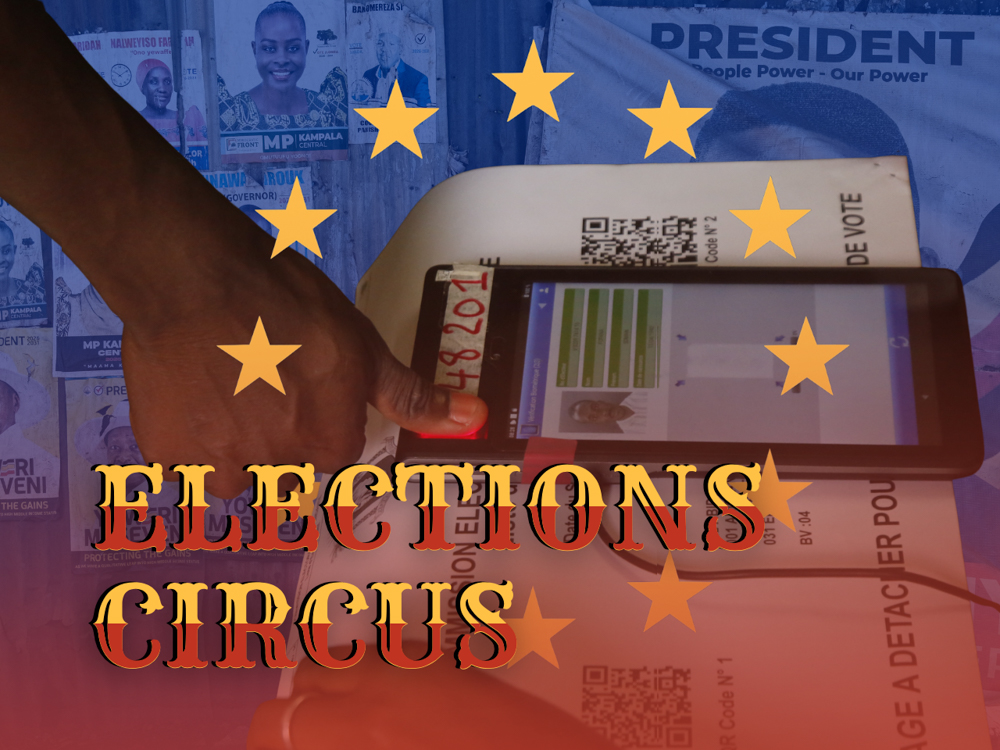
The findings reinforce questions raised in MakanDay’s earlier investigation, Elections Circus, published in May 2026 as part of a collaborative investigation into European funding for elections in five African countries.
That investigation questioned the effectiveness of international electoral assistance where longstanding recommendations remain unimplemented.
It reported that substantial election-support funding had been directed towards state institutions, including training and other programmes, while grassroots pro-democracy organisations received comparatively limited support.
The latest EU report adds another dimension to those concerns: despite years of observation, technical assistance and reform recommendations, several fundamental weaknesses remain.
New concerns over results and electoral justice
Beyond the recurring problems, the 2026 report identified serious concerns about the handling of election results and post-election developments.
The EU reported that the Electoral Commission of Zambia’s six-hour nationwide suspension of counting and announcement of results on 14 August was insufficiently explained.
Observers subsequently documented procedural irregularities and reduced transparency during results tabulation.
The mission also raised concerns about the absence of publicly available, comprehensive polling-station-level results.
Another significant finding concerned the closure of courts between 24 and 26 August, which restricted access to judicial processes during the constitutionally prescribed period for filing presidential election petitions.
Despite these concerns, the EU acknowledged that polling day was generally calm, electoral preparations were largely professional and voters had a competitive choice of candidates.
The mission issued 13 recommendations, including eight priority reforms covering electoral transparency, equal campaign conditions, media independence, freedom of expression, observer access and electoral justice.
A quarter-century of warnings
The recurring findings suggest that Zambia’s electoral challenges extend beyond the political party occupying State House.
The same institutional weaknesses have been documented under different administrations, even as governing parties and opposition leaders exchange positions.
For ordinary voters, the unresolved issues affect whether competing candidates have equal opportunities to campaign, whether citizens receive balanced information and whether election results can be independently scrutinised.
The latest EU report therefore raises a fundamental question about electoral accountability.
After at least 25 years of election observation and repeated recommendations, what will it take for Zambia’s political leaders to implement reforms that have remained outstanding across successive governments?
Discover more from MAKANDAY
Subscribe to get the latest posts sent to your email.