

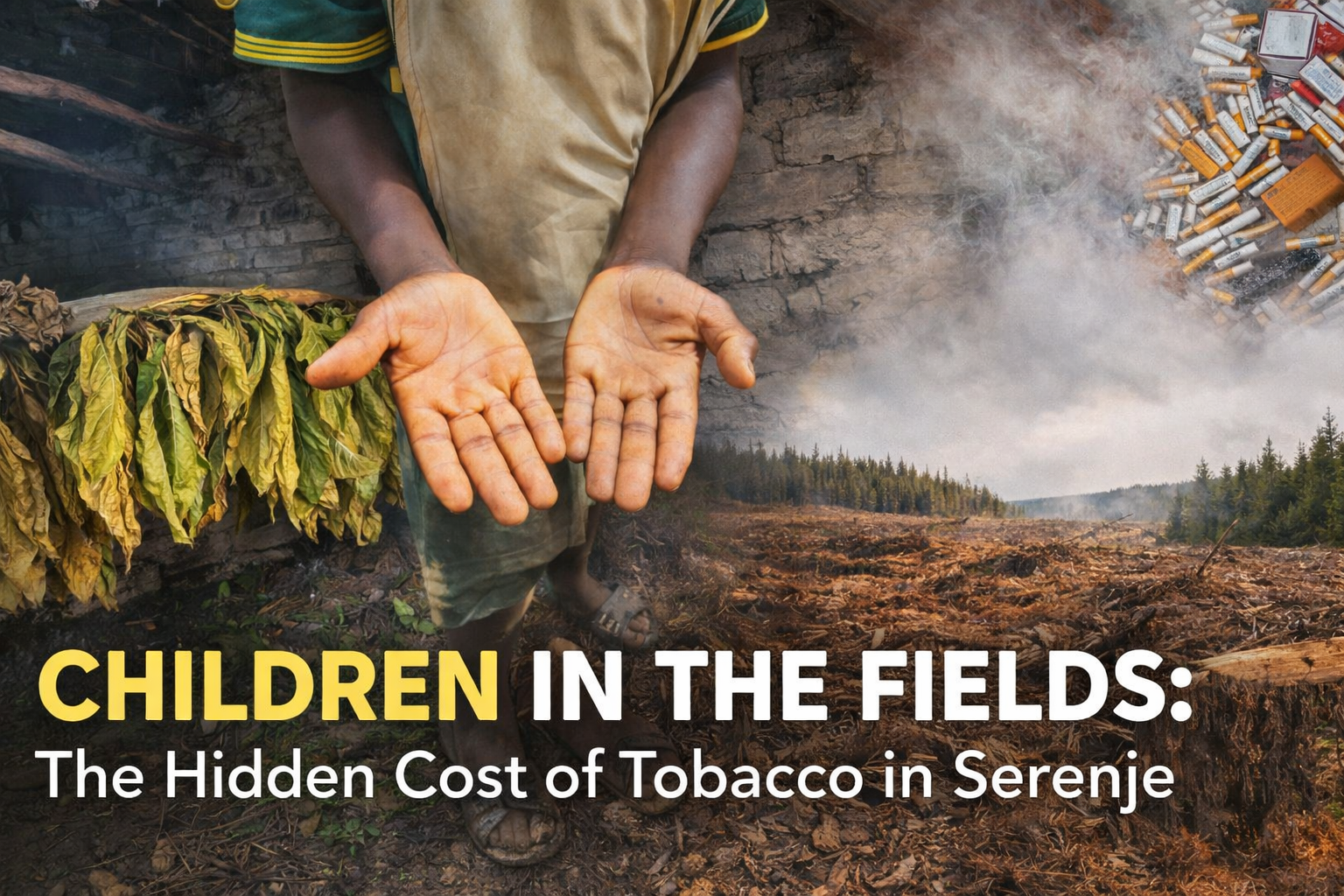
A livelihood for some. A childhood lost for others.
By Ennety Munshya
Just after sunrise in Mankanda village in Serenje, central Zambia, 14-year-old Peter* lifts a bundle of wet tobacco leaves onto his shoulder. The leaves are heavy, still cold from the morning dew. He steadies himself, then walks toward a dark, low-roofed barn where they will be hung to dry. He does this every day.
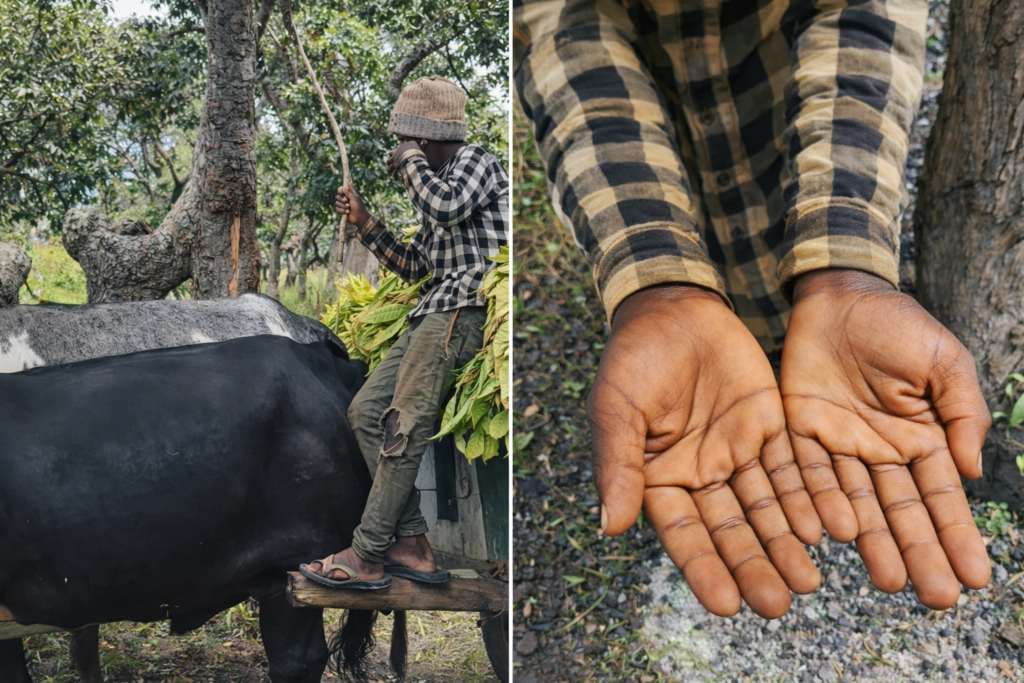
He used to wear a school uniform, but now remembers it faintly. Grade seven was the last time he sat in a classroom. Today, his hands are stained a yellowish-brown, the colour of the crop that has replaced his childhood.
“I wasn’t like this before,” he says quietly, turning his palms upward. “The leaves change your hands.”
Around him, the farm is already alive. Ox-carts arrive from the fields. Men and women sort leaves into piles. Boys his age move quickly between them, lifting, carrying, tying, stacking. No one here calls it unusual. They call it work.

A childhood absorbed into the fields
In Serenje district, tobacco is steadily reshaping rural life. For many families, it offers something rare: cash. In places where income is uncertain and options are limited, the crop has become a lifeline. But that lifeline runs through children like Peter.
Children are part of the system. They harvest, carry, sort, and prepare tobacco alongside adults, often for long hours under demanding conditions. Some, like Peter, have stopped going to school altogether.
Locally, this is often described as “helping at home.” But the law draws a much sharper line. Zambia’s Employment Code Act prohibits hazardous labour for anyone under 18, and international conventions classify such work as among the worst forms of child labour. Yet it continues in the open.
The quiet risks children carry
For Peter, the risks are not abstract. Handling wet tobacco exposes workers to nicotine that can be absorbed through the skin, a condition sometimes called green tobacco sickness. It can cause dizziness, nausea, and long-term health problems, particularly for children.
The risks extend beyond nicotine exposure to heavy loads, sharp tools and chemical handling, often over long hours that replace time meant for school and rest.
Agriculture accounts for about 70 percent of child labour globally and more than 90 percent in Zambia, according to the International Labour Organisation. In Serenje, those numbers are visible in the fields.
A system built on pressure
Tobacco farming is labour-intensive at nearly every stage, from planting to harvesting to curing. Farmers do not deny that children are working. Many say they cannot manage without them.
“Tobacco has a lot of work,” one farmer explains. “During harvesting, you need many hands.”
Those hands are often the cheapest available. Piecework can pay as little as K1 per bundle prepared for curing. For struggling households, every contribution matters.
Farmers operate under contract arrangements with large companies, receiving inputs such as fertiliser and seedlings on credit. When the crop is sold, these costs are deducted, leaving farmers with an uncertain balance, especially as companies control grading and pricing.
“If they say your tobacco is low grade, you lose,” one farmer says. “You cannot argue.”
MakanDay found that this system steadily tightens the pressure. Debt accumulates, margins shrink, and labour demands increase. In that strain, children are drawn into the workforce.
The land is also changing
Beneath Peter’s feet, the soil is quietly weakening. Tobacco is a demanding crop, stripping nutrients from the ground and leaving fields less fertile with each cycle. Farmers respond by applying more fertiliser or by moving to new land.
In Serenje, both patterns are visible. Fields that once produced strong yields begin to fail. New areas are cleared and trees fall. What begins as farming gradually turns into expansion.
Forests feeding the barns

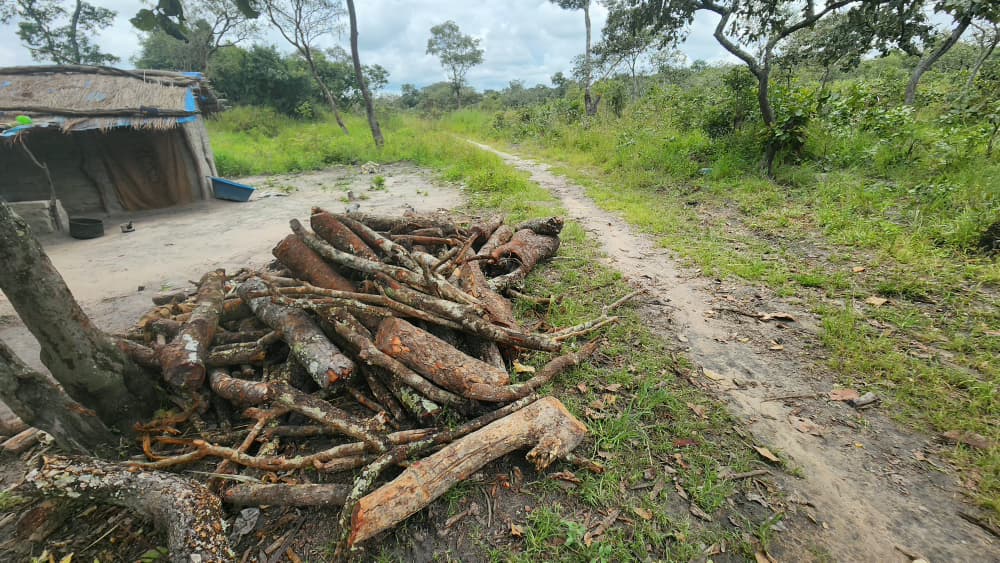
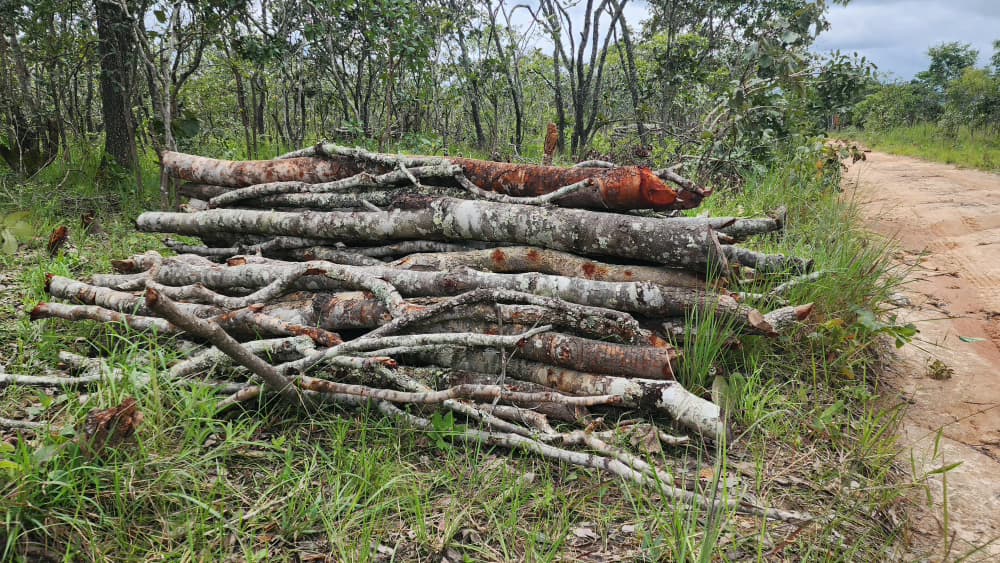
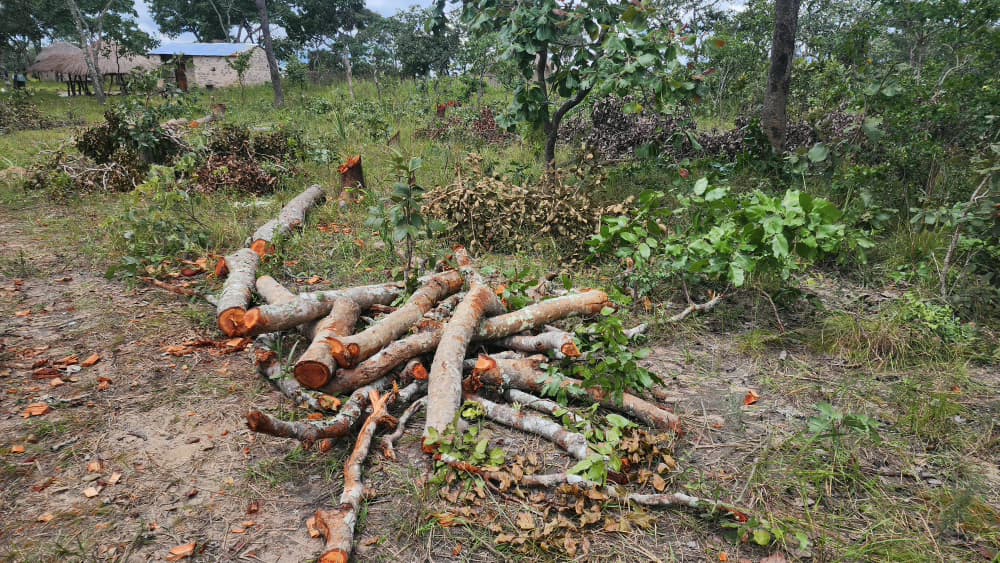
Not far from where Peter works, stacks of cut logs lie in neat piles, ready to feed curing barns where tobacco leaves are dried over several days. This process consumes large amounts of wood.
“We need a lot of firewood,” a farmer says. “We have already finished what was on our farm. Now we buy.”
Across the district, forests are thinning. In some cases, clearing is pushing into protected areas, including parts of the Serenje National Forest.
Globally, tobacco farming has been linked to the loss of around 200,000 hectares of forest each year, according to estimates cited by the World Health Organisation.
Promises that do not take root
While the Tobacco Act No. 10 of 2022 places responsibility on regulators and industry to promote sustainable production, MakanDay found little evidence of meaningful reforestation. Seedling distribution programmes exist, but survival rates are low and monitoring is limited. In practice, trees are being cut faster than they are replaced.
The Tobacco Board of Zambia (TBZ) says growers are required to comply with regulations on child labour, afforestation and curing practices, and that inspections are conducted. According to Corporate Affairs and Communications Manager Lee Haamunji, inspections are conducted and non-compliance is addressed under the provisions of the law. But the situation on the ground suggests a gap between policy and practice.
A global chain, local impact
Tobacco production in Serenje is tied to a network of multinational and local companies, including Japan Tobacco International (JTI) and other global tobacco leaf merchants with roots in the United States.
These companies are not just buyers. They are part of a global commodity chain that links smallholder farmers in places like Serenje to multinational cigarette manufacturers through a structured, contract-driven system.
“It is possible to do it on your own, but it is very hard to sell your tobacco as an independent farmer,” one farmer said.
In response to a press query, JTI Zambia said it has systems in place to prevent child labour and promote sustainable production through its agricultural labour practices and Achieving Reduction of Child Labour in Support of Education (ARISE) programme. The company added that it works with the Ministry of Labour and Social Security to conduct inspections and raise awareness of labour laws.
An agricultural extension officer, who requested anonymity, said that while some companies distribute tree seedlings to farmers, many are either not planted or fail to survive, limiting their impact.
The Ministry of Agriculture said it provides a policy and regulatory framework for crop production and supports farmers through extension services. Questions on child labour and environmental enforcement were referred to other ministries, which had not responded by publication.
What emerges is a pattern of fragmented responsibility, with institutions slow or overstretched even as children remain in the fields and forest loss continues.
At district level, the Department of Forestry acknowledges the scale of deforestation but cites limited capacity to respond. The district agricultural office confirmed increased tree cutting and said it is not currently implementing afforestation programmes with tobacco companies operating in Serenje. It is encouraging farmers to plant species such as Faidherbia albida and moringa to help restore depleted soils.
Who carries the cost?

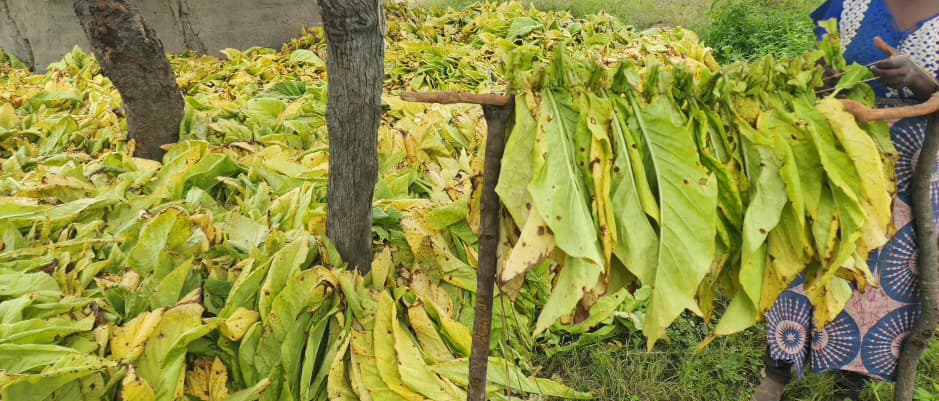
Tobacco links Serenje to global markets. Zambia earned over US$193 million from tobacco exports in 2021, according to United Nations trade data, as the crop moves far beyond the district where it is grown. But the consequences remain concentrated at source.
In Mankanda, Peter lifts another bundle of leaves onto his shoulder and walks it to the barn, work that now defines his day. For children like him, the realities of tobacco production are not reflected in export figures, but in the demands of the fields they return to each morning.
* Name changed to protect the identity of a minor


Discover more from MAKANDAY
Subscribe to get the latest posts sent to your email.


