

By Richard Simbaya | Isoka
According to estimates by the World Wide Fund for Nature, Zambia is losing between 250,000 and 300,000 hectares of forest every year.
In Muchinga, northern Zambia, that loss may be moving faster than the numbers suggest. An investigation by ISO FM Radio in Isoka, along the Great North Road, reveals a pattern of night-time charcoal movement — raising urgent questions about licencing, enforcement, and whether authorities are keeping pace with a trade largely hidden from view.
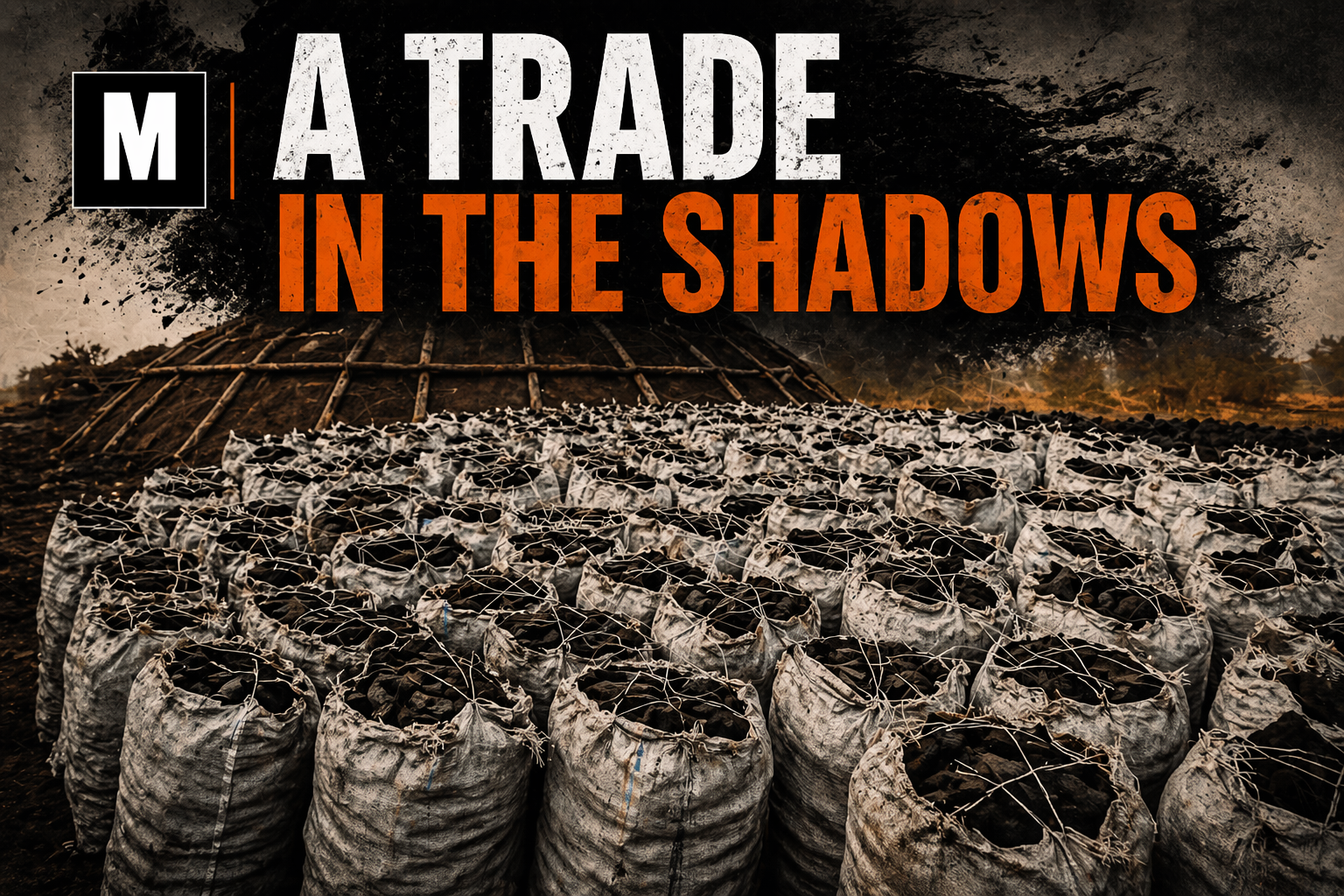
As dusk settles over Chinsali, the rhythm of the Great North Road begins to change. By 18:00 hours, trucks line the roadside between Lavushimanda, one of Zambia’s newer districts and Nakonde. Their engines idle. Men move quietly in the fading light, loading sacks of charcoal under the cover of darkness. What appears at first to be routine trade soon reveals a pattern. The movement is deliberate. Mostly at night. Largely out of sight.
Over several weeks, this investigation followed that trail.
On one evening, this reporter boarded a goods truck heading toward Nakonde. Inside, drivers spoke cautiously. Some described strategies to avoid checkpoints. Others alleged that charcoal is sometimes concealed within other cargo to evade detection.
Follow-up observations revealed Fuso trucks being loaded with charcoal sacks. During packaging, traders claimed that charcoal is occasionally mixed with other consignments. If true, this would suggest a deliberate attempt to bypass border controls.
These claims could not be independently verified. However, they raise serious concerns about the integrity of inspection systems at Zambia’s borders.
To understand where the supply begins, the investigation moved away from the highway into forested areas. The sound of axes cuts through the bush. Trees fall. Kilns burn slowly beneath earth mounds.
Peter Sichinga, a long-time charcoal producer, says he has been in the trade since the early 1990s. For him, it is a livelihood shaped by necessity. But other voices point to deeper concerns.
Another villager, Peter Mulenga, alleges that some officials provide money or protection to facilitate tree cutting for charcoal and timber. These claims remain unverified, but they suggest possible institutional weaknesses, or worse, complicity.
Further north, the trail leads to Nakonde border post, where trucks cross daily between Zambia and Tanzania. Sources indicate that charcoal sometimes makes its way across, driven by higher prices on the Tanzanian side.
If charcoal is indeed being exported, key questions arise about whether these exports are licensed and, if illegal, how they are passing through.
To seek answers, queries were submitted to the Forest Department in Isoka to establish whether charcoal exports are permitted in Muchinga, how many licences have been issued, how many inspections and seizures have been recorded, and whether authorities are aware of allegations that charcoal is being concealed within copper consignments.
Officials acknowledged enforcement challenges but denied knowledge of systematic smuggling.
“We are not aware, as a department, (that transporters conceal charcoal),” said Kennedy Banda, Senior Forestry Technologist for Isoka District. “At checkpoints, we focus on ensuring that those transporting charcoal have the required documentation.”
Further questions were directed to border authorities and other enforcement agencies, but by the time of publication, no comprehensive response had been received.
Charcoal production is driven by demand, both within Zambia and across its borders. Yet there is little publicly available data detailing how much charcoal is legally exported from Muchinga. Without transparent records of permits, inspections, and seizures, it becomes difficult to establish the scale of charcoal leaving the province, identify the individuals or networks profiting from the trade, and assess whether enforcement systems are functioning effectively.
This lack of clarity creates space for potential abuse. Forests play a critical role in regulating rainfall, protecting soil, and sustaining rural livelihoods. But along the Great North Road, the steady, largely night movement of charcoal suggests a system operating faster than oversight.
Watch the full report |

This story was produced by ISO FM and fact-checked by MakanDay Centre for Investigative Journalism.


Discover more from MAKANDAY
Subscribe to get the latest posts sent to your email.


