


How Poverty is Fueling Child Labour in Monze’s Charcoal Trade
By Emily Kuwema
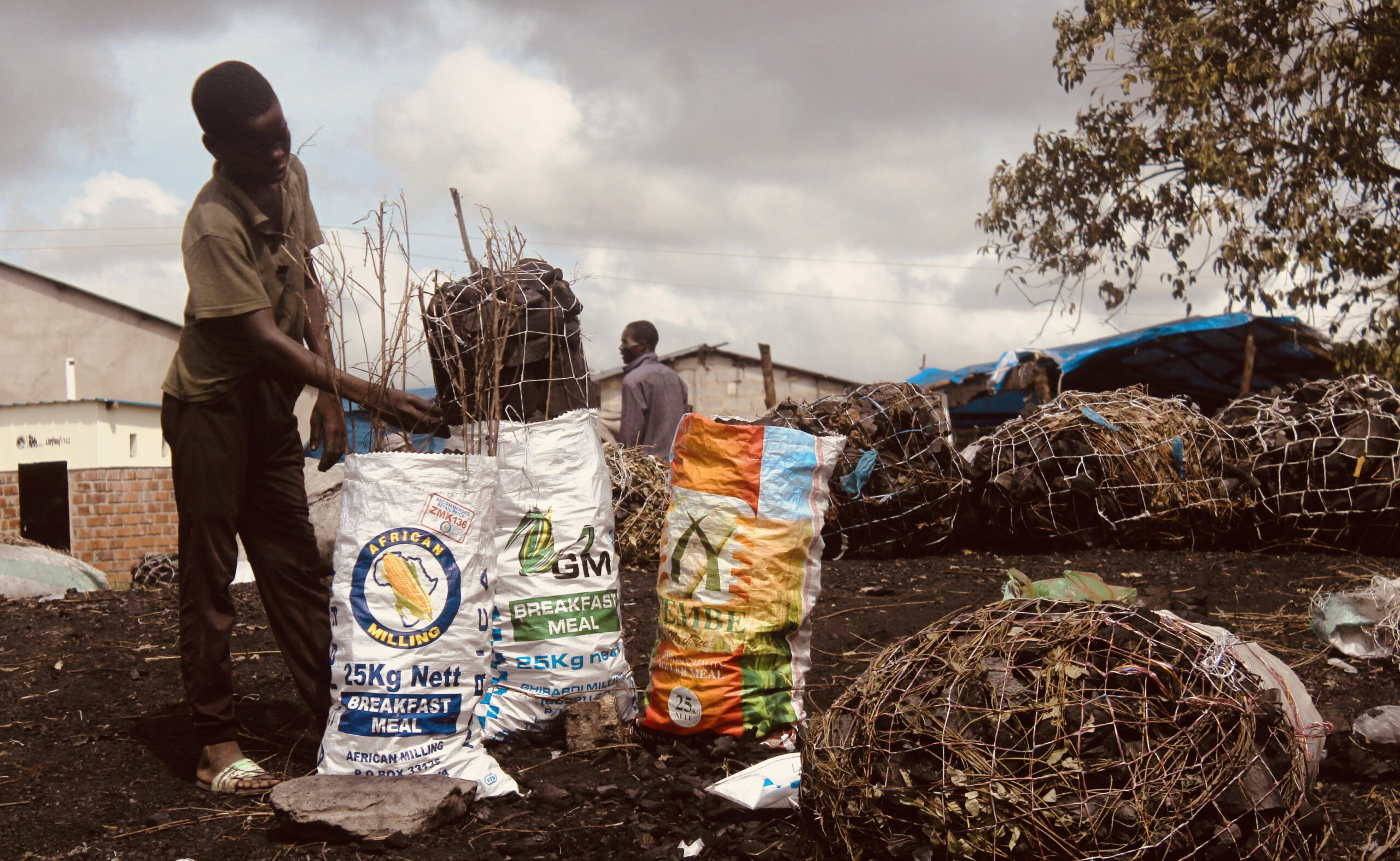
Before sunrise, 14-year-old Alfred Habwaya* disappears into the thinning woodland of Chona Chiefdom in Monze district. His school uniform lies folded in an old bag, replaced by a sack and a machete. Each morning, he joins older men and women in feeding smouldering earth kilns that turn trees into charcoal, black gold in a community running out of options.
“I wanted to stay in school, but we sleep hungry if I don’t help make charcoal,” he says, his palms blackened with soot.
Across Southern Province, hundreds of children like Habwaya have quietly joined Zambia’s booming but illegal charcoal trade. What was once a side hustle for rural families has become a full-time lifeline, one that is devastating forests, derailing education, and defying the country’s own child labour laws.
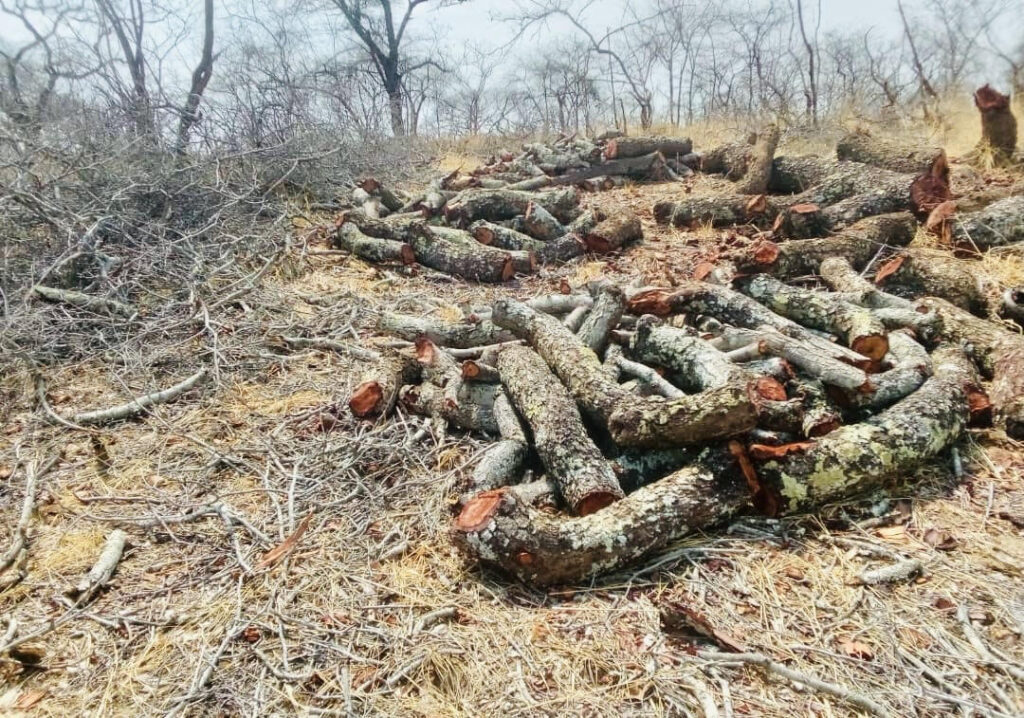
An investigation by the Times of Zambia in Chona Chiefdom reveals a growing crisis. As drought and poverty tighten their grip, children are being pulled out of classrooms to keep households alive. Despite government policies banning hazardous child labour and millions channelled through Constituency Development Fund (CDF) projects to support alternative livelihoods, little has changed.
Despite repeated government pledges to end child labour and promote sustainable energy, oversight in Monze remains weak. Local officials admit that CDF funds meant to support alternative livelihoods have not reached most rural households, while the Forestry Department says it lacks resources to monitor illegal logging and charcoal production.
The road to Chona Chiefdom is lined with scorched patches of land.
Interviews with local leaders, forestry officers, and residents reveal that charcoal production, driven by poverty and limited livelihood options, continues to expand, fuelling deforestation and rising school dropouts.
Chief Choongo of the Tonga-speaking people can hardly hide his frustration.
“We have spoken about the effects of cutting trees, but the message has not been heard in some areas,” he says. “Children are suffering. They are packing and selling charcoal instead of going to school.”
In Monze, three chiefdoms, Choongo, Monze, and Hamusonde, have joined forces with authorities to combat the illegal charcoal trade. Their efforts include confiscating charcoal and plans to impound vehicles transporting the commodity.
“We struggle to find shade and even honey because big trees are finished. Wildlife has disappeared. Even rabbits are now rare,” one resident laments.
But the measures taken by traditional leaders and community monitors have done little to stem the crisis.
In the east of Monze, particularly in Chief Chona, Chief Mwanza, and Chief Ufwenuka’s chiefdoms, charcoal production has become the heartbeat of household survival.
Yet, despite these efforts, the crackdown has done little to stop the trade. In the eastern chiefdoms of Chona, Mwanza, and Ufwenuka, charcoal production remains the main source of household income.
“It’s survival,” says Headman Royd Chimbulu. “If the children don’t help, what are they going to eat?”
He says many children now help pack and sell charcoal, some cycling into Monze to hawk it in the streets.
“Even girls have stopped school to join the trade,” Mr Chimbulu adds.
Once rich in woodlands, Chona today has few trees left, not even enough to make basic farming tools. “You can’t find a good tree to make a hoe,” he says. “We have dams, but drought has dried them. If government restored them, maybe we could farm instead.”
In February 2025, Habwaya left school in Grade Six. With his father unemployed and his mother trading vegetables occasionally, the burden of survival now rests on his young shoulders. Together with his uncle, he produces about 90 bags of charcoal from each kiln every four months.
“I know it’s wrong, but what should we do? We want to go back to school if the government can help us,” he says.
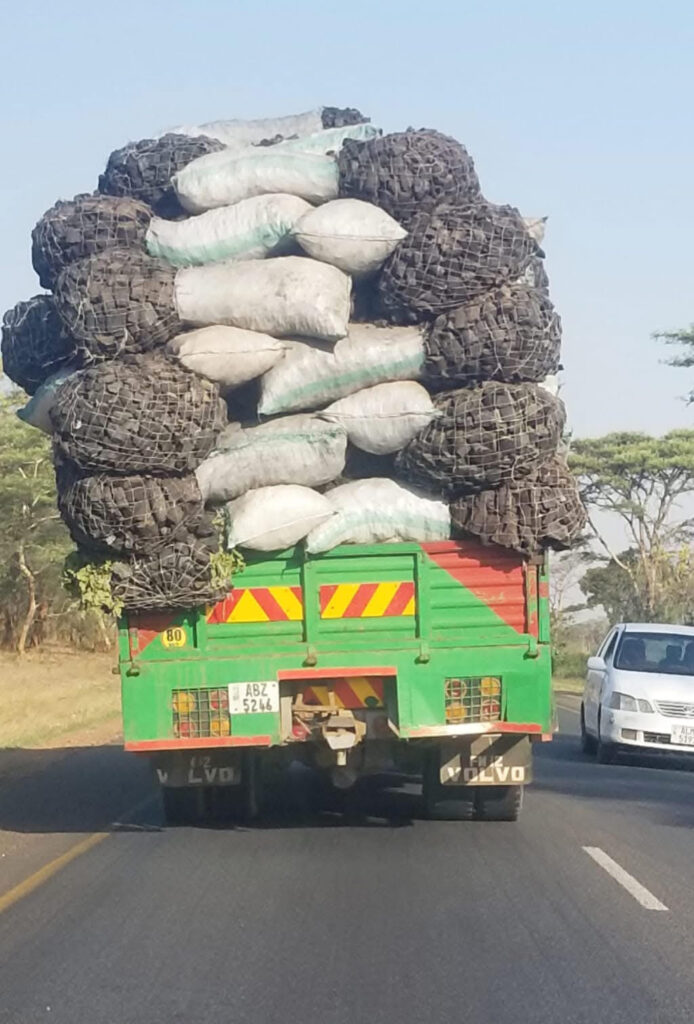
While children like Habwaya produce charcoal in rural Monze, traders and transporters move it freely to urban markets such as Lusaka and Mazabuka. Local authorities acknowledge that some transporters operate with forged permits or pay informal fees at roadblocks, a practice that allows the trade to thrive in plain sight.
Sixteen-year-old Alice Mweemba* dropped out of school in Grade Seven.
“There’s nothing to trade here except charcoal,” she says softly. “We would rather burn charcoal than starve.”
When asked about her future, she laughs nervously before murmuring, “Maybe one day I will go back to school.”
At Chona Primary School, head teacher O’Neill Kanene says absenteeism has reached 20 percent this year.
“Some learners walk up to seven kilometres to school every day,” he explains. “Others stay home to help their parents earn a living through charcoal burning.”
Community forestry officer Stanley Hamiyanda has witnessed the crisis unfold first-hand. Covering 13 villages with only a bicycle and ten volunteers, he conducts sensitisation campaigns on the dangers of deforestation and child labour.
“We find boys as young as 10 cutting trees or packing charcoal. During the school term, most children attend only 30 days out of 90,” he says.
His team confiscates charcoal and urges parents to send their children back to school, but within days, the same children return to the forest.
“People have no alternative,” he says. “Water bodies are drying. Farming is nearly impossible.”
In response, Forestry Department acting director Dr Fredd Siangulube says the use of children in illegal charcoal production is a serious concern that must be addressed with humility and firm protection measures. He notes that the charcoal licencing system is designed to prevent child participation, but enforcement challenges persist in districts like Monze, where limited transport hampers effective monitoring.
He said the department has received multiple reports of rampant illegal charcoal burning in the area and is prioritising strengthening its capacity. To improve the response, Monze and other districts will soon receive mobility support.
Dr Siangulube said 10 motorbikes and four new vehicles will be deployed by the end of the year to districts with the greatest need, a move he says will enhance monitoring of child labour and illegal charcoal burning.
Each day, trucks loaded with charcoal rumble out of Chona. For many families, every bag means another meal, and another tree lost.
According to the Ministry of Labour and Social Security, charcoal production is classified among the worst forms of child labour due to its health and safety risks.
Ministry spokesperson Mwaka Ndawa says the law clearly prohibits children from engaging in hazardous work such as charcoal production, as outlined in the Employment Code Act of 2019, Statutory Instrument No. 121 of 2013, and the Children’s Code Act of 2022.
Labour inspections and district-level child labour committees are meant to enforce compliance, but enforcement remains weak. The Ministry admits it has no data on children withdrawn from child labour in Monze, even as dozens continue to work openly.
In Chona, legality means little when hunger strikes. According to Global Forest Watch, Monze District had about 86,900 hectares of forest in 2020. By 2024, 248 hectares had already been lost, releasing an estimated 73,000 tonnes of carbon dioxide into the atmosphere. Each year, the district produces roughly 903,000 bags of charcoal, with studies indicating that about 65 percent of the charcoal consumed in Lusaka comes from freshly cleared woodlands rather than agricultural waste.
Communities are urged to prune rather than fell trees, but few comply.
“I only cut branches, not whole trees. I make fewer bags, but at least trees survive,” says charcoal burner Fanwell Michelo.
Forestry officer Stanley Hamiyanda notes that many avoid headmen promoting sustainable methods, choosing instead to cut trees in secret. With no real alternatives, the trade continues unchecked.
Despite clear laws and community awareness, there is little political will to act. Local councils rarely prioritise environmental enforcement, while national authorities focus more on energy shortages than on the human cost of charcoal production. The gap between policy and practice remains wide, and children like Mweemba are caught in it.
She dreams of becoming a nurse one day, but she is unsure that dream will ever come true. Until Chona finds real alternatives, children will keep leaving school, and the forests will keep disappearing.
Community members are urging the government to provide livelihood options such as tailoring, carpentry, and farming support, along with better access to CDF opportunities and water restoration projects. Above all, they want their children back in school.
Evidence from Chona shows that children remain deeply involved in charcoal production despite legal protections. Poverty, drought, and limited economic opportunities continue to drive the practice, while weak enforcement allows it to flourish.
Unless stronger interventions are made, including skills training, improved water supply, and tougher law enforcement, both the forests and the futures of Chona’s children will remain at risk.
Emily is a fellow under the Wildlife Crime Prevention (WCP) fellowship for journalists. The MakanDay Centre for Investigative Journalism, in partnership with WCP, provided training in investigative journalism skills and supported journalists in working on impactful stories that promote environmental protection and drive change.

Discover more from MAKANDAY
Subscribe to get the latest posts sent to your email.