

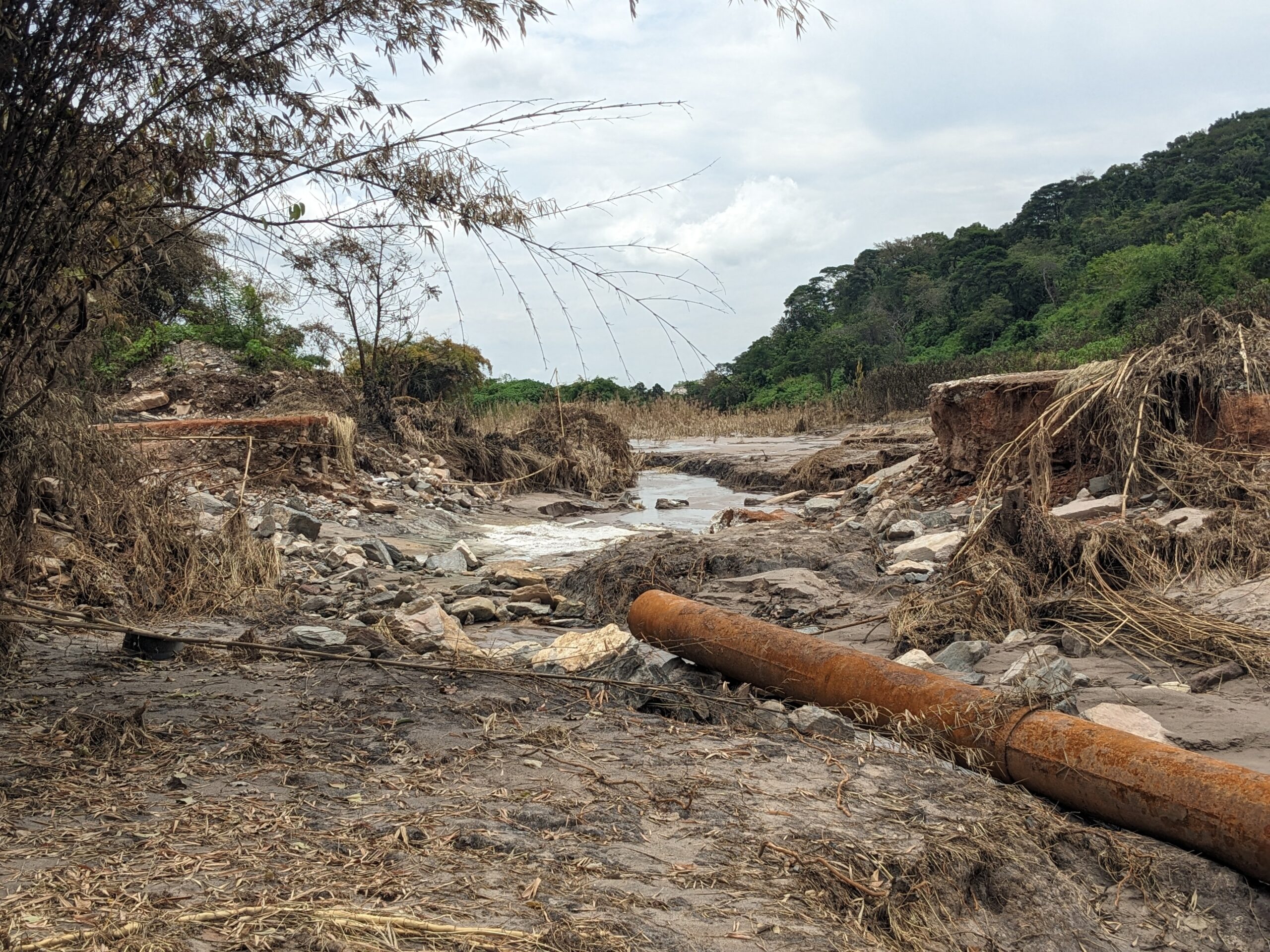
More than a year after a copper mining disaster poisoned the land and water of a Zambian community, key measures to protect residents’ health, recommended in a government-commissioned report, have not been carried out, a co-author of that report told The Examination.
The village of Kalusale, home to hundreds of people, remains heavily contaminated with heavy metals following a February 2025 dam collapse. A December report called for “immediate discontinuation” of shallow well water for drinking and bathing and for the “immediate relocation of its residents to safer areas.”
The mining company, Sino-Metals Leach Zambia, launched cleanup efforts only last month.
“We still have a concern because relocation of the most affected communities has not yet taken place,” said Titus Haakonde, an environmental toxicologist and co-author of the report, which was produced for the Zambian government by the Zambian consulting firm Applied Science and Technology Associates. Haakonde told The Examination that the situation was “concerning and worrying.”
The people of Kalusale have become casualties of a sweeping geopolitical battle over the metals and minerals needed for AI data centers, electric cars and renewable energy. The Zambian copper mine is owned by the Chinese government, part of a vast mining empire that has been accused of human rights and environmental abuses. The Zambian government, dependent on copper revenues and in debt to China, has downplayed health threats from the spill and recently allowed the company to resume operations.
The Zambia Environmental Management Agency said the cleanup effort would include removing contaminated dirt and monitoring water quality. The agency and the company did not respond to The Examination’s questions.
Last year, a firm hired by the mining company assessed the damage and said residents were at serious risk of developing birth defects, cancer, liver and lung disease, heart conditions and other chronic illnesses.
The mining company disputed those findings and fired the company. But after Haakonde found widespread contamination, the company said that it takes his firm’s recommendations seriously and that “proactive measures have been taken to help safeguard the normal livelihoods of affected residents.”
The Examination partnered with MakanDay, a Zambian news outlet, and helped fund a reporting trip to Kalusale last year. One resident told MakanDay, “The coughing, the stomach pains, the burning eyes, these are daily struggles we’ve simply learned to live with.”
The people of Kalusale have no alternative to drinking the contaminated water, said Martin Bwalya Kampamba, director of Future-Preneurs Zambia, a nonprofit that has delivered food to affected residents. The recommendation against using the water, he said, presents an impossible choice: “either to die or to continue consuming the poison.”
This report has been published in the latest edition of the The Examination newsletter.


Discover more from MAKANDAY
Subscribe to get the latest posts sent to your email.


