

By Christopher Bazilio Banda | Chipata, Eastern Province
Despite millions of dollars earned from carbon credits linked to community forests in eastern Zambia, many villagers say they do not know how much money is made from their land, or why far less reaches them.
Communities across Zambia’s Eastern Province are asking a simple but unsettling question: who really benefits from carbon credits generated on their land?
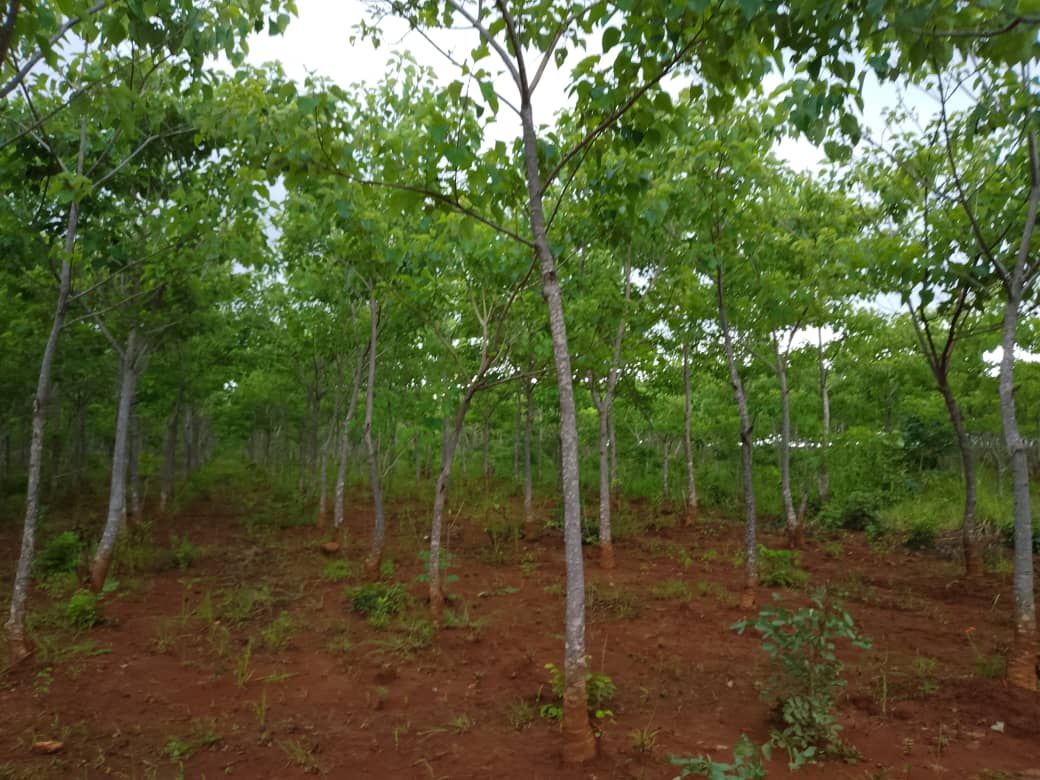
For more than a decade, the Community Markets for Conservation (COMACO) has worked with traditional leaders and local forest management groups to conserve forests and wildlife habitats. These conservation areas generate carbon credits that are sold on international markets to companies and governments seeking to offset their emissions.
The organisation is a Zambia-based non-profit that links conservation to livelihoods by promoting sustainable agriculture, forest protection, and access to markets for rural farming communities.
According to figures it has released, conservation activities in nine chiefdoms, Magodi, Zumwanda, Chikomeni, Mwasemphangwe, Nyamphande, Chikulwe, Jumbe, Mwape, and Luembe, have generated US$3.1 million, paid to communities for reducing deforestation and protecting forests.
On paper, the benefit-sharing formula appears generous: 55% to communities, 35% to the implementing organisation, and 10% to the forest department.
On the ground, the reality is far more contested.
The missing kwacha questions
In Chikuwe chiefdom, chairperson of the community forest management group, Japhet Sakala says the numbers do not add up.
In 2023, Chikuwe received US$309,468 from carbon credit sales. Converted at the prevailing exchange rate at the time, between K20 and K23 per dollar, the community expected to receive more than K6 million.
Instead, they received about K4 million.
“That money was shared among community groups, but the conversion does not make sense,” Sakala says. “There is a difference of over K2 million, and no clear explanation has been given.”
However, COMACO stated that the funds were disbursed in September 2022, when the prevailing exchange rate stood at K15.10 per US dollar. Using that rate, the organisation said the payment converts to K4,672,966.80, which it maintains aligns with the amount received by the community.
“The discrepancy cited arises from applying a later exchange rate to an earlier payment,” COMACO said in statement.
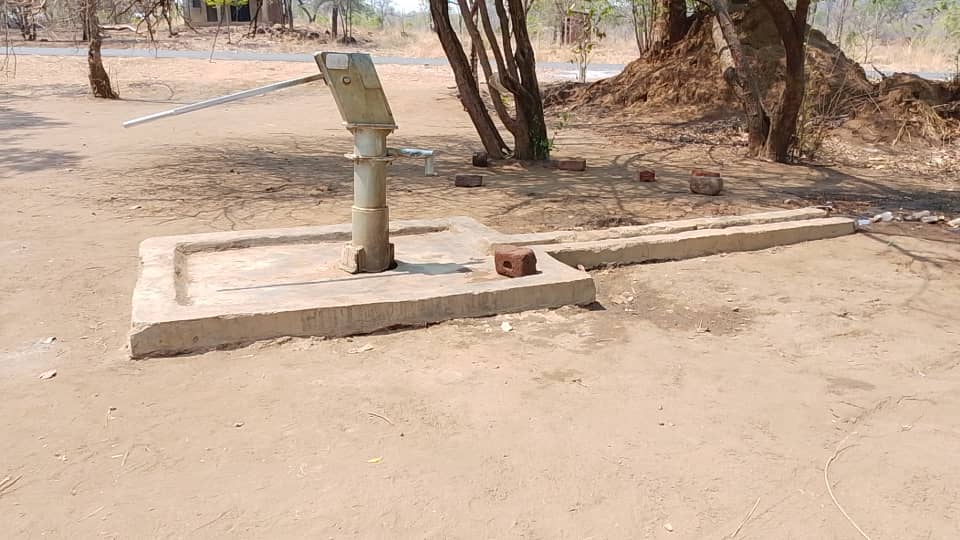
In Jumbe chiefdom, Isaac Chirwa, chairperson of another local forest management group, Msandile, said carbon revenue has supported projects such as an office, boreholes, beehives, motorbikes and livestock, but the overall impact remains limited.
“The money is inadequate,” Chirwa said. “We are struggling to implement meaningful projects.”

Neither the community forest management groups nor ordinary community members say they were provided with detailed financial statements showing how the conversion was done.
Who knows how much is really earned?
Several community representatives interviewed pointed to gaps in publicly available information on carbon credit transactions. Details such as the price per tonne, total revenues, buyers, and independent verification reports are not routinely shared at community level, making it difficult for local stakeholders to assess the overall value of the carbon credits generated.
Without this information, communities say it is impossible to know whether the 55% share reflects a fair deal, or whether their forests are being under-priced on global markets.
Environmental analysts interviewed argue that transparency is not optional in carbon trading.
“Communities are the asset holders,” one analyst said. “If they do not know the value of what is sold, benefit-sharing becomes symbolic rather than economic.”
Chiefs as gatekeepers, not just custodians
Another fault line lies in how community shares are distributed internally.
In Chikuwe, one of the beneficiary chiefdoms, community representatives say approximately 5% of the community allocation, over K200,000, was given to the caretaker chief. In other chiefdoms, multiple sources told this investigation that traditional leaders receive between 10% and 15% of the community share, raising questions about consistency and oversight.
There is no standardised rule governing these deductions.
Community forests management groups say allocations to chiefs are decided internally, often without written guidelines or broad community consultation. Critics argue this turns traditional leaders into financial gatekeepers in a carbon economy, without clear accountability mechanisms.
COMACO’s geographical information system Officer Martin Kambinga says chiefs are expected to use their share to support conservation enforcement, such as discouraging illegal logging. But community members question whether such spending is tracked or audited.
Projects delivered—but not enough
COMACO and community forest groups point to a range of community projects funded by carbon revenue, including boreholes, beehives for honey production, livestock distribution, hammer mills and oil expellers, and motorbikes for CFMG operations, as evidence of local benefit.
However, due to high population levels, benefits reach only a fraction of households, leaving many residents with little incentive to abandon charcoal production or forest clearing.
Charcoal licences undercut conservation
One contradiction repeatedly raised by communities is the continued issuance of charcoal production licences by the forest ddepartment, sometimes in the same areas designated for conservation.
While communities are urged to protect forests for carbon credits, licenced charcoal production continues.
“This undermines everything,” Chirwa says. “You cannot tell people to stop cutting trees while permits are still being issued.”

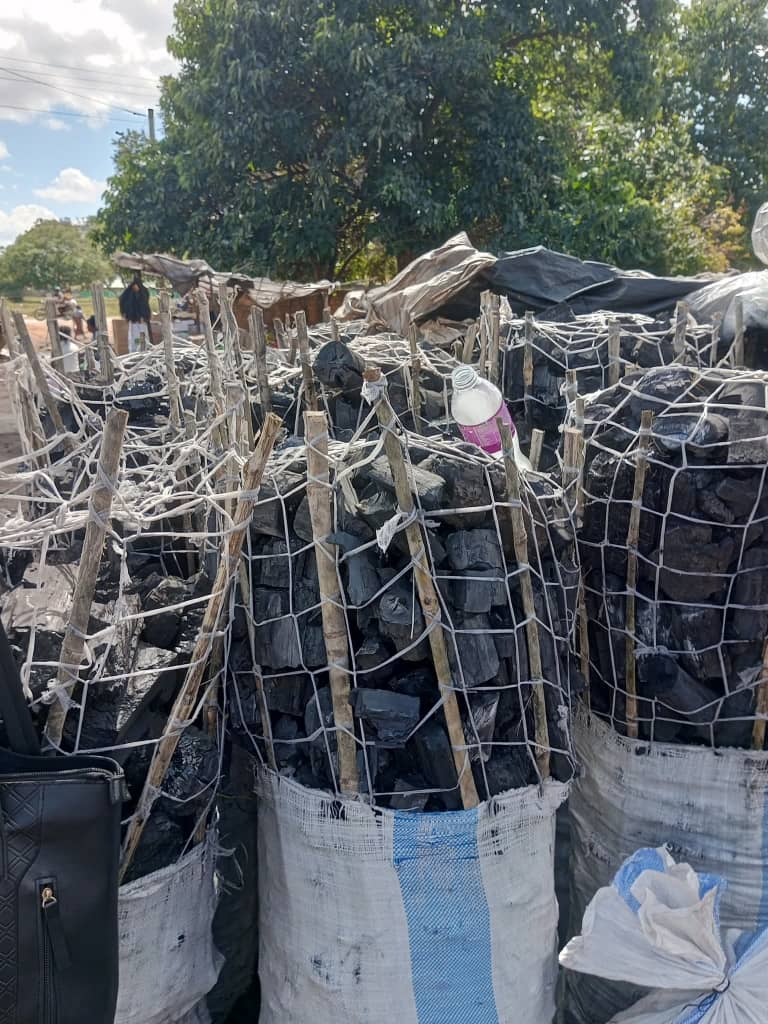
District Commissioner William Banda acknowledges that lack of awareness and enforcement remains a serious problem in Mambwe district, where many households depend on charcoal for survival.
“If people are not sensitised, these programmes mean nothing,” Banda says. “Charcoal production is still rampant.”
Chief Jumbe of the Kunda people says sustained awareness campaigns are critical if communities are to understand the value of forest conservation initiatives, including carbon credit projects. Without clear information on how such programmes work, or how local people benefit, he argues, efforts to protect forests are unlikely to succeed. Better awareness, he adds, could also help communities pursue alternative livelihoods.
But official accounts point to deeper structural failures. Provincial Forestry Officer Catherine Zulu confirms that illegal tree cutting for timber and charcoal is widespread in Mambwe, noting that only one legal concession licence exists in the entire district, rendering most production unlawful. She says communities must be sensitised on the permits required to harvest trees legally.
Zulu explains that permits are now issued through an online system and require consent from traditional leaders before approval. While intended to respect customary land rights, this requirement has created a weak point in enforcement, effectively turning chiefs into gatekeepers in a system with limited oversight, one that can be exploited to enable continued illegal harvesting.
She also acknowledges widespread permit recycling, where a single permit is used by multiple people, undermining regulation and conservation efforts. Although Zulu warns that offenders face legal consequences, the persistence of the practice exposes serious gaps in monitoring and enforcement after permits are issued.

Knowledge gaps, not consent
Across interviews, community members consistently described a limited understanding of how carbon markets operate. Many said they do not know how carbon credits are priced, how payments are calculated, or how frequently communities are meant to be paid. Payments are typically made every three years, a cycle many communities say is too long to sustain alternative livelihoods.
Reuben Zulu, provincial coordinator for the rights group Transparency Action Group, said the knowledge gap between project implementers and communities is profound. His orgnaisation, he noted, has since begun running awareness programmes to address the gap, but critics argue that sensitisation should have preceded carbon trading, not followed it.
A climate solution at risk
Carbon credits are often promoted as a win-win solution, promising global emissions reductions alongside local development. In Eastern Province, however, that promise remains fragile.
Without full transparency, clear accounting, and stronger community control, environmental experts warn that carbon projects risk reproducing the very inequalities they claim to address.
Communities interviewed are not rejecting conservation. They are demanding fair value, clear information, and real participation.
As one community member put it.
“We protect the forest. Others sell the carbon. We are the last to know how much it is worth.”
Christopher is a fellow under the Wildlife Crime Prevention (WCP) environmental fellowship for journalists.
The MakanDay Centre for Investigative Journalism, in partnership with WCP, supported the reporting of this story.
The story has been updated with new information.


Discover more from MAKANDAY
Subscribe to get the latest posts sent to your email.


