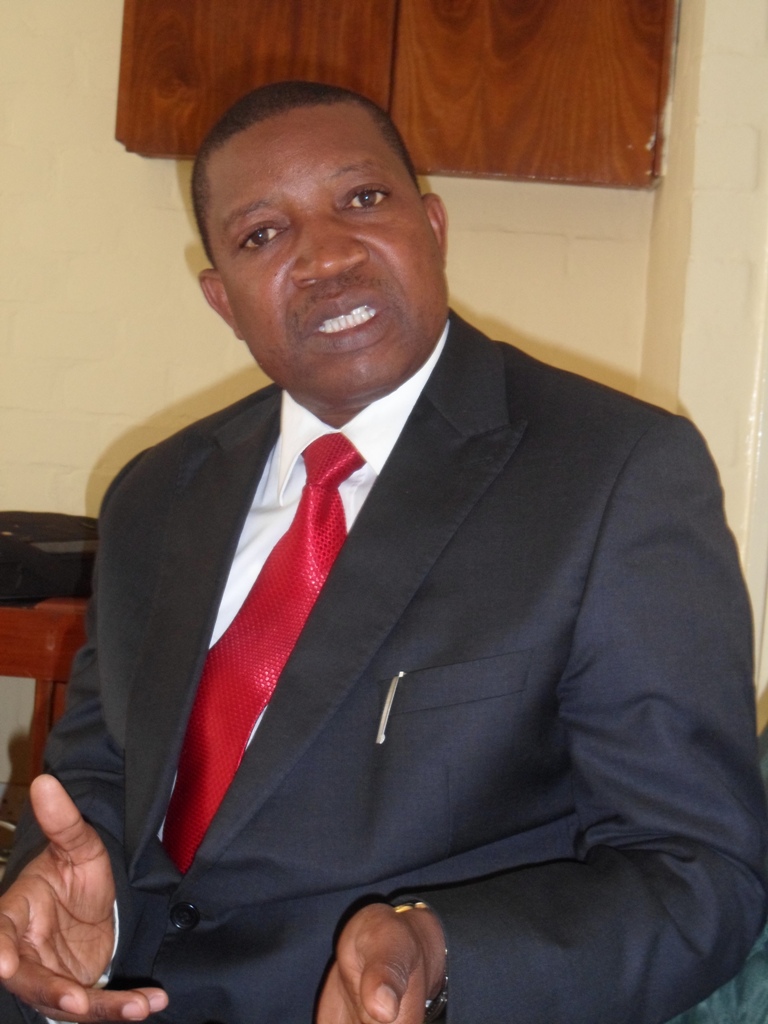
Patrick Mucheleka sticks to his guns, will not be persuaded to join PF
Originally published in September 2014
Twelve years after this interview, Patrick Mucheleka is back in Parliament — this time on the ruling party’s ticket.
Mucheleka was elected MP for Luwingu Central on the United Party for National Development (UPND) ticket in Zambia’s 2026 general election, marking his return to the National Assembly after a long and eventful political journey.
His return gives this 2014 Bulletin & Record interview an interesting contemporary twist. At the time, Mucheleka was an independent MP for Lubansenshi and was adamant that he would not abandon the mandate voters had given him to join the then-ruling Patriotic Front.
“I was elected as an independent MP for a five-year period. I have been given that mandate,” he told B&R, arguing that switching sides would amount to betraying the people who elected him and could trigger an unnecessary by-election.
Mucheleka would later become a prominent UPND figure and serve in government before returning to electoral politics.
His political circumstances have changed considerably since that interview. In 2014, he was an independent MP criticising the government from outside the ruling party. In 2026, he returns to Parliament as an MP for the party in government.
But the question at the heart of his old interview remains strikingly current: What does an MP owe the voters who put them in office — their party, their political ambitions, or the mandate on which they were elected?
By Charles Mafa
Keep your friends close, but keep your enemies closer. These are not exactly the sentiments of Patrick Mucheleka, MP for Lubansenshi, but he has taken the high road by telling the PF he will not join them because he would consider doing so as a betrayal of the people who voted for him.
Ruling political parties have a reputation of luring independent MPs to their side, and Mr Mucheleka has had his share of discreet enquiries from the PF, but there is no indecision on his part. There were three independent MPs after the 2011 general elections, one resigned to join the Patriotic Front while the other is serving as a deputy minister. Mr Mucheleka would consider such a move as one lacking personal integrity on his part.
“I was elected as an independent MP for a five-year period. I have been given that mandate,” he says. “Why should I suddenly change and resign to cause an unnecessary by-election at the expense of development? This is money that should be used to enhance service delivery in my constituency.”
He refers to the tactic used by ruling parties in saying an opposition MP can never take development to his constituency as “huge lies”. He says this “misconception” is especially common in rural areas. Money used for development belongs to the people of Zambia as “that is taxpayers’ money”, he says. “Even when the funds are borrowed, as is the case now when we have this propensity for borrowing, we’re still borrowing on behalf of the Zambian people,” he says.
The independent MP believes there is a price to pay for participating in the country’s leadership. His reflection on the on-going debate concerning the “low salaries” of MPs is that “Parliament is a service to humanity”. He says that as much as the salaries and allowances are low, the MPs should be ready to sacrifice and that “some of us are paying that price”. I am ready to pay that price. That is why those who have crossed the floor are being motivated by personal gain.”
Mr Mucheleka, born in 1965, has come a long way in politics. In 2001, he was caught up in the third term debate as he joined forces with members of civil society organisations in opposing Frederick Chiluba’s push for a third presidential term.
That same year, he contested a Parliamentary seat in Lubansenshi. His motivation was to stand under General Godfrey Miyanda’s Heritage Party and its “village concept”.
“This concept was seriously misunderstood and distorted,” he says. In my view the HP did not do enough to explain what the concept was all about. What attracted me was the whole concept of bringing about balanced development. We were talking about transferring the terms of trade from the urban economy and also promoting the economic activities of the rural areas.”
Mr Mucheleka has a Masters in Development Studies with a specialisation in agriculture and rural development; his interest is to see that the country attains equitable wealth distribution. He worked in the civil society movement before making his second effort to re-contest the Lubansenshi Parliamentary seat, which he won in 2011.
“It’s so important that we identify what can be done by linking the rural areas to the urban economy.” He adds: “That is why the country requires a rural development policy, which I pushed through as a private member’s motion. But to date that policy is not forthcoming.”
In analysing the performance of the PF government, Mr Mucheleka observes that “they have lamentably disappointed”. He pointed out that there is “massive corruption” going on in the current government, making the MMD’s fraud “look like child’s play”. He says PF have failed in democracy and government by turning 360 degrees on the Constitution-making process and that apart from weakening constitutional offices, they have also stifled freedom of expression and assembly — they have deliberately delayed enacting the Access to Information Act, so that people are kept in the dark.
The Lubansenshi MP is busy man and has to find a balance between family life – he is married with four children — and the job of being the “voice of the voiceless”. When the B&R requested a meeting with him, he was in his constituency to meet his people. There was only a day between his return from the more than 2,500 kilometres road trip from Lubansenshi and air travel to South Africa for the Pan African Parliament. In fact, he is head of delegation for the country’s five MPs to Africa’s legislative assembly.
Mr Mucheleka is a member of the Bemba Royal family. He was born with leadership in his blood. His late father, Mr Alexander Mucheleka who was part of the liberation struggle, spent his life as a politician and held various positions in UNIP including District Governor for Luwingu in Northern Province. His mother is a retired teacher who lives in Kasama. Both his parents hail from the royal Bemba families. Despite this, he does not take his position as MP for granted. He says he is ready to be led by others if the people decide otherwise.
His evaluation of Zambia’s fifty 50-year journey is that there have been more challenges than successes. He says the country was on a success path from the time of independence to 1973 when all the industries where nationalised. He says economic challenges that took place eventually forced Dr Kenneth Kaunda to revert to a multiparty political system.
“Poverty levels have remained high despite the economic growth. Also, we a have multi-party system but the mentality is still that of a one-party system and most institutions have not transformed, they’re still tilted towards operating under a single party environment,” he observes. “This in my view is where we have wasted part of our 50 years.”
This story was first published in the September 2014 edition of the Bulletin & Record. It is republished as part of MakanDay’s “This Week in the Bulletin & Record Archive” series, with an update reflecting Patrick Mucheleka’s return to Parliament in 2026.


Discover more from MAKANDAY
Subscribe to get the latest posts sent to your email.