

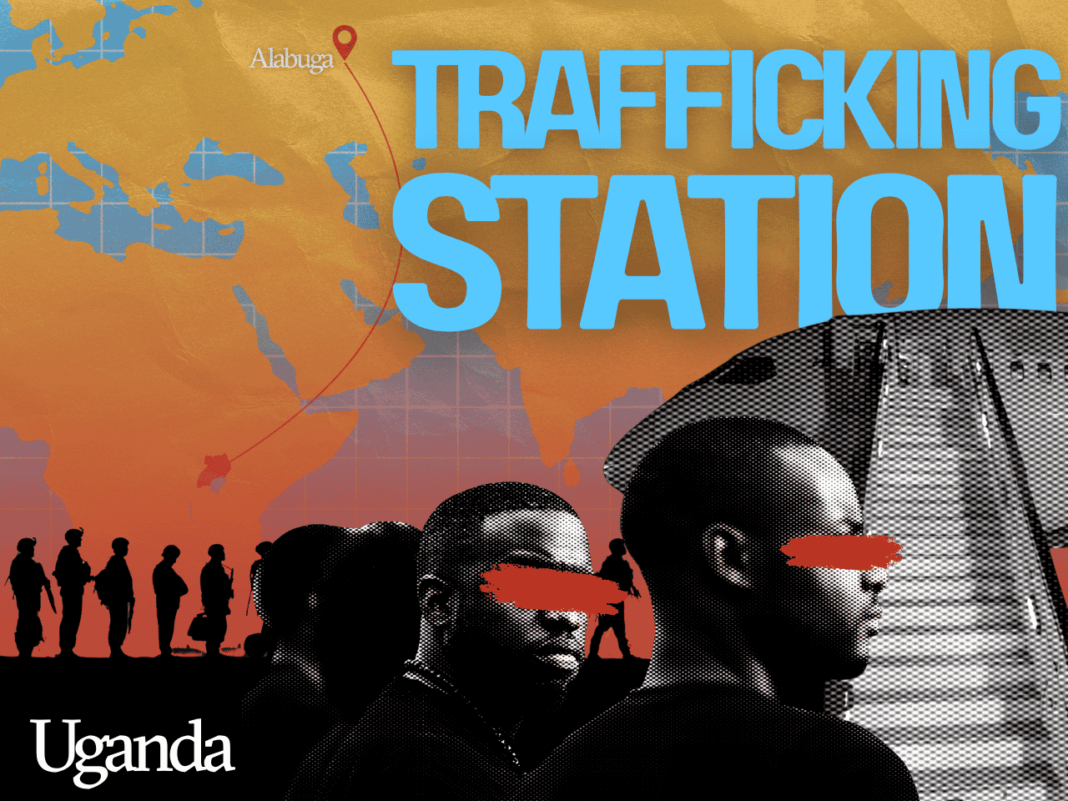
As more vivid and disturbing accounts from the Russia–Ukraine war come to light, they increasingly confirm what MakanDay Centre for Investigative Journalism has been warning about for over a year: Africa is not merely observing this conflict from afar, Africans are being pulled into it, often through deception, coercion, and silence.
A recent CNN investigation laid bare one of the most chilling examples yet. The report shows an African recruit in the Russian army, a Kenyan man, with a landmine strapped to his chest, being ordered to charge Ukrainian positions on the front line.
CNN spoke to more than a dozen African men from Ghana, Uganda, and Nigeria who say they were coerced into joining the Russian army and deployed to active combat with little to no training.
These revelations are horrifying. But they are not isolated.
When MakanDay first encountered early reports of African recruitment linked to Russia in 2024, we noted a dangerous contradiction: on one hand, aggressive recruitment messaging and glossy promotional material circulating in Zambia and elsewhere on the continent; on the other, alarming international reports suggesting exploitation, secrecy, and militarisation.
That contradiction prompted our first investigation, published in December 2024, into the Russian “Alabuga Start” programme, marketed as a work-study or skills-development opportunity, but specifically targeting young African women and girls.
The programme promises free flights, long-term accommodation, work training, and salaries far above average earnings in their home countries. It is presented as a gateway to opportunity and integration into Russian society.
Yet behind the marketing lies a troubling lack of transparency.
Although Zambia’s Immigration Department has not publicly confirmed how many young women have travelled under the programme, MakanDay’s investigations found that at least four Zambian women had recently joined.
Further reporting uncovered the involvement of organisations such as the Zambia-Russia Graduates Alumni Association (ZAMRUS) and the Smile Nation Foundation in The Gambia in promoting the initiative.
Despite being advertised as “an international programme from Russia offering a free flight and a chance to earn well, even without work experience,” the true nature of Alabuga Start remains opaque.
Concerned by the cross-border dimensions of the recruitment drive, MakanDay escalated the investigation through the Network of African Investigative Reporters and Editors (NAIRE). What followed was a seven-country collaborative investigation examining how and why so many young Africans accept these offers, sometimes even after warnings have been raised.
For the Zambian chapter, MakanDay succeeded in interviewing one of the recruited young women in Russia. Her testimony sharply contradicted the cheerful public-relations imagery circulated in Zambia, of smiling girls in uniform, glowing testimonials, and polished media appearances on social media.
According to her account, once inside Alabuga, recruits have limited freedom to communicate with their families and almost no ability to speak publicly.
Contacting her took MakanDay more than seven months. When she finally agreed to speak, she described confusion, isolation, and uncertainty about the work taking place inside the compound.
Even after nearly a year, she said she still does not fully understand what the Alabuga programme is or what its industrial activities truly entail.
She described observing operations related to automotive manufacturing, construction, and what she referred to as “advanced materials,” but could not explain their purpose. “I can’t understand this company and why so many people from around the world are here,” she said.
The contrast between lived reality and public messaging could not be starker.
What is perhaps most alarming, however, is the silence. Governments across the region, including Zambia’s, have said little. Public debate remains muted. Official scrutiny is limited. Meanwhile, young Africans continue to be drawn into opaque systems linked to a foreign war whose risks they do not fully grasp.
MakanDay believes this silence is dangerous.
These are not isolated labour issues. They are matters of human rights, national responsibility, and continental dignity. When African lives are treated as expendable labour or disposable combatants in a foreign conflict, governments have a duty to ask hard questions, and to act.
The stories emerging now should not be met with shock alone. They should provoke accountability. Where are the church leaders? Why are our governments quiet?


Discover more from MAKANDAY
Subscribe to get the latest posts sent to your email.


