

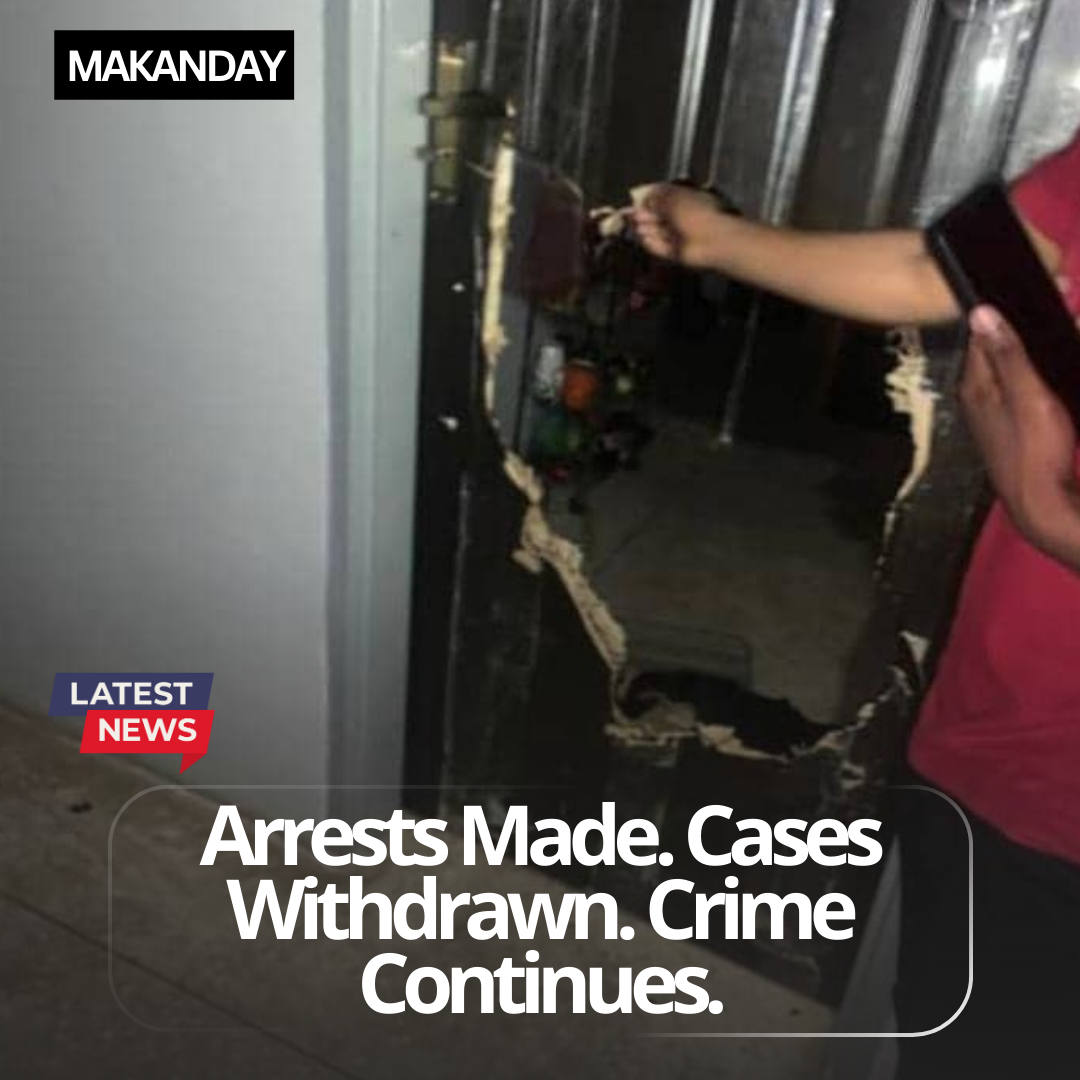
Mtendere and Kalingalinga residents caught between violence and an overstretched police service
By Brenda Muzeya
Residents of Lusaka’s Mtendere, Kalikiliki, Kalingalinga and the Presidential Housing Initiative (PHI) townships are living with daily fear, as violent and property crime surge and an understaffed police service struggles to keep pace.

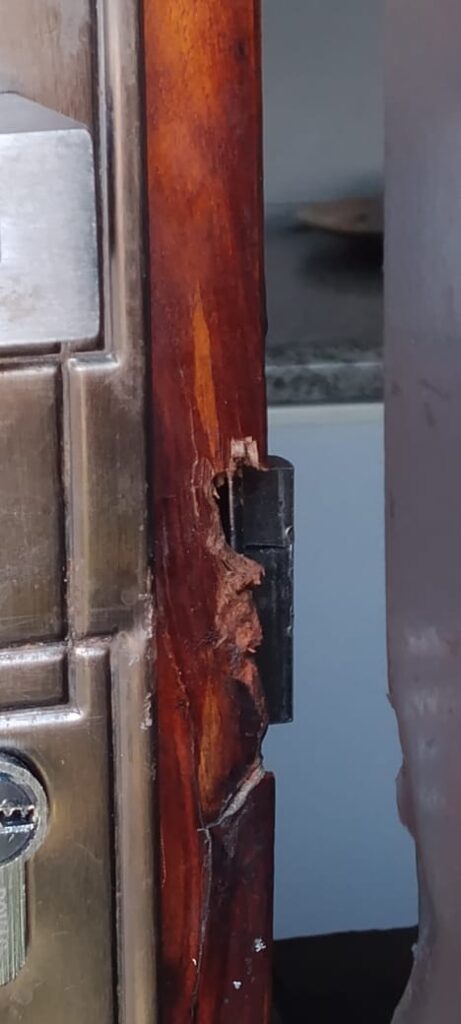
Earlier this year, MakanDay reported how medical students living in Mtendere and PHI were coming under siege, facing repeated attacks, robberies, and intimidation around boarding houses and student hostels near Levy Mwanawasa Medical University.
That report exposed delayed police response, poor night patrols, and growing fear among students, warning signs, residents say, of a deeper and widening public safety problem.
This story builds on those findings, drawing on police crime data and interviews with residents to show that the insecurity documented among students is not isolated. Across surrounding high-density neighbourhoods, residents report a familiar pattern, crimes are reported, arrests are sometimes made, but cases frequently stall, are withdrawn, or quietly disappear from the justice system.
Data obtained by MakanDay through a press query to the Zambia Police Service now reveals the scale of the challenge. In a single year, police posts serving Mtendere, PHI, Kalikiliki, and Kalingalinga recorded dozens of murder, assault, theft, and burglary cases, even as police acknowledge they lack the manpower to adequately prevent crime or see investigations through to conclusion.
Between January 1 and December 31, 2025, police posts under Mtendere police station serving Kalikiliki, Kalingalinga, and Mtendere recorded more than five murder cases, 106 assault cases, 55 theft cases, and 19 burglary cases. While arrests were made in some incidents, a significant number of cases were later withdrawn or stalled, raising questions about investigative capacity, follow-through, and justice for victims.
The numbers, and what they don’t show
According to police statistics shared with MakanDay:
- Murder: over 5 cases, with arrests reported
- Assault: 106 cases, 62 arrests, 11 cases withdrawn
- Burglary: 19 cases, 5 arrests, 2 withdrawn
- Theft: 55 cases, 34 arrests, 4 withdrawn
While the figures point to persistent criminal activities, they also expose a deeper problem. Not all reported crimes translate into prosecutions or convictions. Withdrawn cases, in particular, often signal lack of evidence, or victims losing confidence in the justice process, dynamics police statistics rarely explain.
In percentage terms, the police data points to uneven progress across cases. Of the 106 assault cases recorded, 58.5 percent resulted in arrests, while 10.4 percent were withdrawn, leaving 31.1 percent unresolved. Burglary cases showed the weakest outcomes. Only 26.3 percent of the 19 cases led to arrests, 10.5 percent were withdrawn, and nearly 63 percent stalled without resolution.
Theft cases performed better but still revealed gaps, with 61.8 percent of cases resulting in arrests, 7.3 percent withdrawn, and almost 31 percent remaining unresolved. Police data on murder cases was less precise, reporting arrests but not providing exact case numbers, limiting a full assessment of progress and accountability.
Residents interviewed by MakanDay described a familiar cycle. Crimes are reported, arrests are sometimes made, and then communication and follow-up quietly fade away.
“We reported the cases, but nothing has happened,” said Mirriam Zulu, a medical student and victim who was interviewed for an earlier report. “Police ask for transport to go to the scene. We don’t see patrols at night.”
Police explanations: poverty, alcohol, and ‘junkies’
Police officials attributed the spike in reported crimes largely to poverty, substance abuse, and reduced community vigilance.
“Assault cases increase exponentially towards month-end when people are paid and tend to drink beer more, leading to conflicts,” Godfrey Chilabi told MakanDay.
Students and boarding-house residents were singled out as frequent targets, with officers warning that “junkies” often monitor hostels and rental properties for theft opportunities.
To counter these trends, police say they are intensifying patrols, particularly in crime-prone areas such as Kalikiliki and Kalingalinga, and strengthening community engagement through the Community Service Delivery framework and the Victim Support Unit.
Promises versus presence on the ground
Police said they are responding through increased patrols in high-density areas, community sensitisation on crime prevention, coordination with neighbourhood watch groups, student security-orientation programmes, and institutional partnerships, including with Levy Mwanawansa Medical University, measures residents say are irregular and unpredictable.
“Sometimes you see police vehicles, sometimes you don’t. At night, you are mostly on your own,” said a Mtendere shop owner.
Police themselves acknowledge that patrols are often reactive rather than preventive.
“We do not have specific times to carry out patrols. We target areas where junkies hide,” Chilabi said, urging communities to be vigilant and report suspicious activities.
The manpower crisis behind the crime
At the heart of the problem is a chronic shortage of police officers.
Zambia currently has a police-to-citizen ratio ranging between 1:700 and 1:894, far below the United Nations-recommended standard of 1:450.
According to government figures, Zambia’s roughly 22,000 police officers are responsible for a population of nearly 20 million people.
This gap is not without consequences. In high-density townships like Mtendere and Kalingalinga, one officer may be responsible for thousands of residents, making thorough investigations, follow-ups, and community patrols practically impossible.
Even the Inspector General of Police, Graphel Musamba, has publicly acknowledged the strain, recently appealing for the recruitment of 3,000 new officers ahead of the 2026 general elections.
Government acknowledgment, slow solutions
Government officials have repeatedly conceded that policing capacity has not kept pace with population growth.
The demand for policing services continues to rise due to increased population, urbanisation, and economic activity. In a ministerial statement to Parliament in November 2023, Home Affairs and Internal Security Minister Jack Mwiimbu confirmed that Zambia’s police-to-citizen ratio had worsened to one officer for every 894 citizens.
What remains unclear is when, or how, this gap will be closed, particularly in urban settlements where crime rates remain high and police posts are already overstretched.
Brenda Muzeya is an intern at MakanDay under the Free Press Initiative’s Journalism Graduate Internship Programme, which aims to promote excellence in journalism.


Discover more from MAKANDAY
Subscribe to get the latest posts sent to your email.


