


From the Bulletin & Record Archives
A personal memoir*
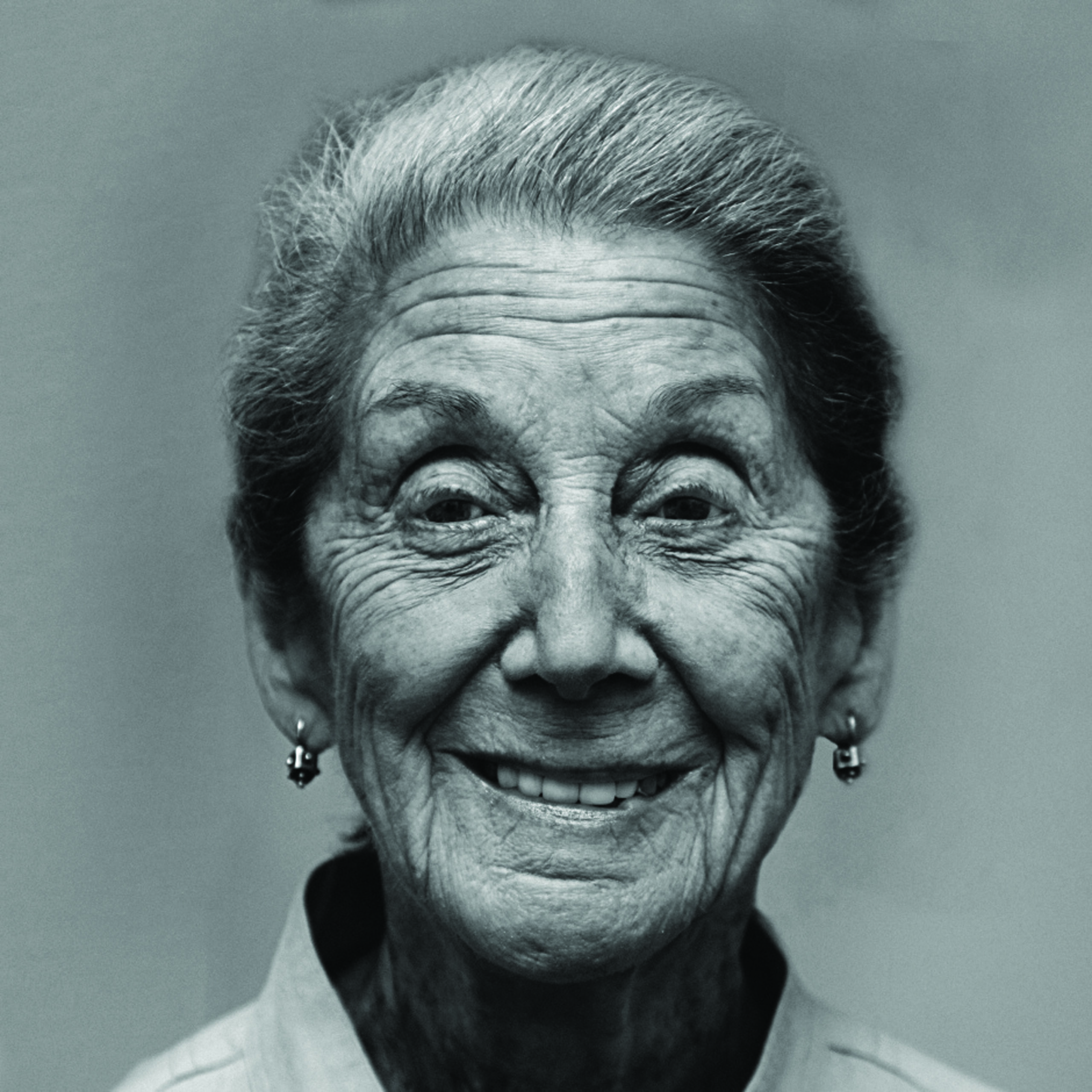
While this issue of The Bulletin & Record was going to press, we learned with great sadness of the death of famous South African novelist and Nobel Prize winner, Nadine Gordimer.
Gordimer’s writings became the major literary conscience of South Africa during the long years of repression of black South Africans by the system of racial governance that became known as apartheid.
She and her husband Reinhold Cassirer, who died in 2001, were occasional visitors to Ndola in the early days of Zambia’s independence, jazzy Bohemian days of political and pseudo- philosophical debate, arguments about theatre, art and music that might have been unthinkable a few years earlier. Nadine and Reinhold used to join in these somewhat pretentious verbal extravaganzas from a room in our small rented house, sandwiched between the house of Julian Elliot, architect of the Kasama Cathedral, and that of Mick Pilcher on the other side of us. Mick is a gifted graphic designer who created the remarkable murals in the National Assembly building, although in those early days he was graphic designer of Horizon magazine for Roan Selection Trust, the mining company.
It might seem strange now, looking at the down-at-heel state of Ndola, but in those early years of independence the town seemed to us to be the centre of the universe. Zambia had just been born and the promise of the future and shedding off of the colonial past by Kenneth Kaunda and his compatriots, and the building of a new nation, gave a heady buzz to those days. The years of assumed white superiority in apartheid and then by the whites in Southern Rhodesia, leading soon after to UDI and a disastrous civil war, and coming on top of years of colonisation, had created an abyss between blacks and whites that was both futile and stupid. But in those early years in Ndola, the liberation of independence was a liberation for all of us.
Interestingly, many years later during the darkness of apartheid, Nadine Gordimer said she had only once thought of emigrating – and it was to Zambia. “Then I discovered the truth,” she said, “which was that in Zambia I was regarded by black friends as a European, a stranger.” She said: “It is only here (in South Africa) that I can be what I am – a white African.”
There was an echo of that confusion about Europeaness in an incident in 1972 when I received a notice declaring me to be a prohibited immigrant (for what reason I still don’t know) and to report to the local immigration office. There, an official told me I had 48 hours in which to leave the country and return to my country of birth, which happened to be New Zealand. He told me I would have to return to Europe. “Why Europe?” I asked. “Well,” he said, “you’re a European aren’t you?” I think the absurdity may have escaped him.
Gordimer was born near Springs, in Gauteng, of a Jewish Latvian father and a British mother, also Jewish. It may have been from her mother that Gordimer first became aware of the systemic injustices of South African society: her mother was always concerned about the poverty and discrimination faced by black people in South Africa and she eventually founded a crèche for black children.
More importantly perhaps, Gordimer was shocked by the events at Sharpeville on 21st March 1960, when 69 people were shot dead by police as a crowd demonstrated against the hated pass laws. Later, she became a firm friend of Nelson Mandela and in fact edited the famous speech he gave – “I am prepared to die” – at his trial in Rivonia, Johannesburg.
Gordimer’s writings dealt with moral and racial issues, particularly in South Africa. She became a beacon for journalists from around the world, seeking rationale explanations, they hoped, for her seemingly hopeless and intractable enmity for the rulers of white South Africa. Though I recall asking her at one stage about how revolutionary she might become, and she replied “The most revolutionary thing I could do would be to keep out of the way” – meaning, of course that the struggle for black emancipation was a struggle for the blacks to undertake on their own behalf, it was not one that whites, however sympathetic, could win for them.
A few years later I was sent on assignment to South Africa and looked up Gordimer at her home in Parktown West to interview her for an article I was writing. She took me for a walk through the family’s smallholding on the edge of Johannesburg. Meandering through the grass stalks, along dusty paths and under acacias I imagined I was at the scene of her latest book The Conservationist, a spellbinding tale about a man called Mehring, a businessman who owned a hobby farm in South Africa – just like the one I was walking through with the writer, who was to win the Booker Prize for this novel.
Mehring learns that a body has been found on his property, and it forces him to examine his own life and mortality. The apartheid system in “old” South Africa is crumbling. Mehring takes in this changing scene as he deals with the black workers on his farm, his activist girlfriend, his bitter ex-wife and his rebellious son. He must think hard about what he really wants out of life.
Back in my hotel room that evening I discovered, to my horror, that the day’s taping of my interview with Gordimer, had recorded not a word. The next day, shamefaced, I made my way back to her house. She was – what can I say? – surprised, but sympathetic. She sat me down, made me a cup of tea, and we went through it all again.
Her next book, Burger’s Daughter, described by one critic as “one of the few truly great political novels ever written”, was banned by the apartheid regime, as was the following one, July’s People. In all she wrote 30 books, and was awarded the Nobel Prize for Literature among an array of major awards.
Once the ANC took power in South Africa, Gordimer was not exactly marginalized, but she was certainly in a kind of twilight world inhabited by white anti-apartheid activists. She was lauded highly outside her country but at home she was, for a time, criticised from all sides – too beholden to the ANC, charged some, a betrayer of the revolution, according to others. She had also become a critic of Jacob Zumu, and of the apparent slow disintegration of moral certainty among the new black governing politicians.
The truths she taught us, however, are there in her books, writ large. They will live on.
* The author of this article, Vernon Wright, was publisher of The Bulletin & Record magazine in Lusaka.
This story was first published in the August 2014 edition of the Bulletin and Record magazine. May Nadine Gordimer rest in peace.
Discover more from MAKANDAY
Subscribe to get the latest posts sent to your email.