

Solwezi and Kalumbila councils have not carried out supplementary valuations covering two major mining expansions worth US$3.25 billion, raising questions about potential local revenue. In Solwezi, the findings add to concerns over Kansanshi’s roads-for-rates arrangement.
By Sanjimba Kanganja in Solwezi
Two councils in North-Western Province have confirmed that they have not carried out supplementary valuations covering major mining expansions worth a combined US$3.25 billion, raising questions about whether their property-rate assessments reflect developments at the mines.
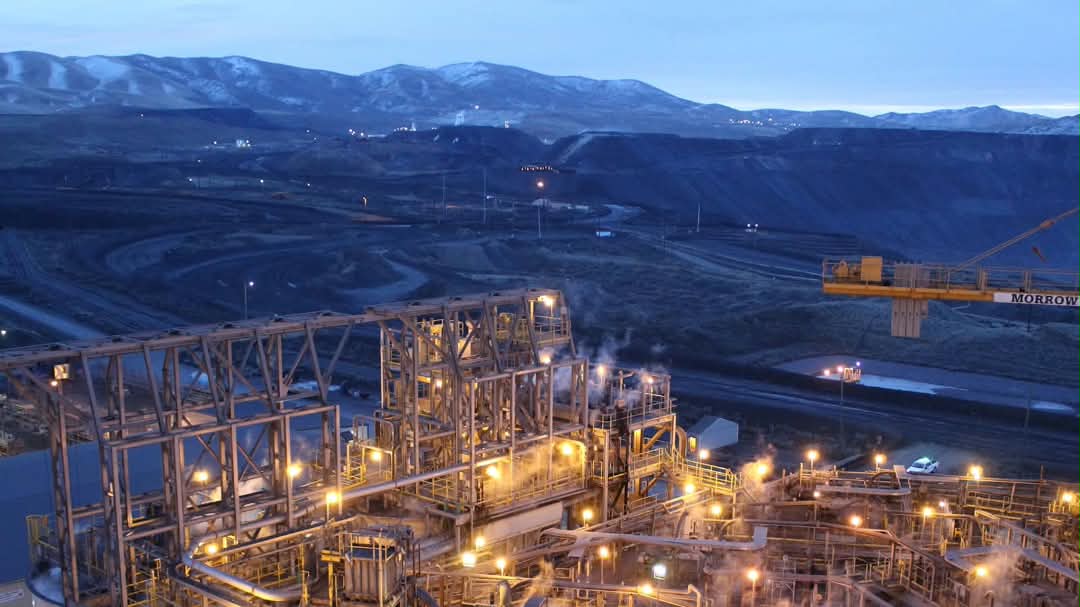
Solwezi Municipal Council said it has not reassessed First Quantum Minerals’ (FQM) US$1.25-billion Kansanshi S3 expansion, while Kalumbila Town Council confirmed that Barrick’s US$2-billion Lumwana Super Pit expansion has not undergone a similar exercise.
A supplementary valuation allows a council to reassess a property following significant changes, such as new buildings or permanent infrastructure, to determine whether its property rates should be adjusted.
The findings raise questions about whether qualifying improvements at the mines have been captured in existing valuation rolls and whether councils could be missing out on additional revenue.
What the law provides
The Rating Act No. 21 of 2018 provides for supplementary valuations where qualifying improvements have been erected, completed, altered or demolished, or where a property’s rateable value has changed.
However, a mining expansion does not automatically require an immediate reassessment. Whether additional rates are payable depends on the nature and completion dates of improvements, existing valuation records and applicable legal provisions.
The Government Valuation Department also has an oversight role in monitoring valuation rolls and advising councils.
Solwezi: Kansanshi S3 not reassessed
Solwezi Municipal Council confirmed that it has not conducted a supplementary valuation specifically covering the Kansanshi S3 expansion, commissioned on August 19, 2025.
The project has expanded the mine’s processing capacity, raising questions about whether new permanent infrastructure has been included in its property assessment.
The council did not disclose Kansanshi’s current rateable value, the amount it assesses and collects from the mine, or when it intends to conduct a supplementary valuation.
According to information previously supplied by Kansanshi to MakanDay, the mine’s property-rates liability for 2025 was approximately K125.16 million.
Of that amount, K95.3 million was settled in cash, while K29.86 million was accounted for through road construction.
The figures demonstrate the scale of Kansanshi’s existing obligations but do not establish whether the S3 expansion should have increased its property-rate assessment.
Roads-for-rates arrangement raises further questions
The absence of an S3-specific valuation comes amid questions about how Solwezi Municipal Council accounts for property rates already assessed against Kansanshi.
A MakanDay investigation published on September 28, 2026, revealed that Kansanshi’s property-rates bill totalled K417.74 million between 2021 and 2025.
Of that amount, K74.36 million, representing 17.8%, was settled through roadworks instead of cash payments.
The value of road construction credited against rates increased from K8.5 million in 2021 to K29.86 million in 2025. The 2025 projects included Chisomo, Magrade and Golf roads.
Kansanshi told MakanDay that the council identifies the roads, while the company prepares bills of quantities, estimates costs and carries out construction without adding a profit margin.
It said the council supervises the works, while completed roads are inspected by the Road Development Agency.
However, MakanDay could not independently verify key aspects of the arrangement because the agreements governing the projects were not provided.
Kansanshi referred us to the council, which had not supplied the documents when the investigation was published.
Solwezi’s newly elected mayor, Evans Lubelenga, said at the time that he needed to familiarise himself with council systems and projects before responding.
Although road construction can provide valuable infrastructure, the arrangement raises questions about cost verification, approval procedures and how the works are recorded in council accounts.
It also means that part of the council’s assessed property-rate revenue is settled through infrastructure rather than cash available for other services.
Kalumbila: Sentinel reassessed, Lumwana still awaiting valuation
Kalumbila Town Council reported that a supplementary valuation carried out in 2024 at the Sentinel mining operation increased its land-rate assessment from approximately K54.4 million to K90.4 million.
The increase of about K36 million, or 66%, illustrates the financial significance of updating property assessments.
However, the council confirmed that it has not conducted a supplementary valuation specifically covering Barrick’s Lumwana Super Pit expansion, officially launched on October 2, 2024.
Kalumbila said Lumwana’s land-rate assessment increased from approximately K64.4 million to K76.1 million because of other improvements, including plant and machinery, rather than the Super Pit expansion.
The council has yet to clarify which Super Pit improvements have been completed, whether they are captured in existing assessments and when further valuation might be necessary.
How much revenue could be at stake?
Experts consulted during the investigation suggested that comprehensive valuations across relevant properties could potentially increase annual collections to more than K300 million for Solwezi Municipal Council and K500 million for Kalumbila Town Council.
However, the estimates have not been independently verified against valuation rolls, applicable rates and property records. It is also unclear whether they represent total projected collections or additional revenue.
They therefore cannot be treated as amounts the councils have already lost.
Adrian Kapumba, a former Solwezi Municipal Council accountant who worked in the Finance Department for more than five years, questioned the delays in conducting supplementary valuations.
Kapumba argued that property rates are an important source of local revenue and that assessments should reflect significant changes to qualifying properties.
Growing mining towns, increasing service demands
The valuation questions arise as mining towns face growing pressure on public infrastructure.
Solwezi’s urban population increased from 96,725 in 2010 to 305,027 in 2022, according to census figures cited in MakanDay’s September investigation.
Previous MakanDay reporting has highlighted difficulties accessing piped water in Kimakolwe and inadequate water and drainage facilities at Kyawama Market, where a planned K53.5-million modernisation project has faced delays.
These challenges do not establish that the mines have underpaid rates, but illustrate why accurate revenue assessments and transparent financial management matter.
Mining companies also pay corporate taxes and mineral royalties, but these are distinct from property rates collected by councils to support local services.
The unanswered questions
More than a year after Kansanshi’s S3 expansion was commissioned and roughly two years after Lumwana’s Super Pit project was launched, neither has undergone a supplementary valuation specifically covering the development.
This does not establish that either council has broken the law or lost revenue.
However, both authorities have yet to explain whether qualifying improvements are captured in their existing valuation rolls and when further assessments will take place.
Solwezi Municipal Council also faces questions about the agreements governing Kansanshi’s roads-for-rates arrangement, including how construction costs are verified and recorded against property-rate obligations.
The Government Valuation Department’s role remains unclear, as the investigation has not established whether it has reviewed either expansion or advised the councils to prepare supplementary rolls.
For residents of North-Western Province’s growing mining towns, the issue is not simply how much mining companies invest, but whether councils accurately assess the revenue they are legally entitled to collect and account for it transparently.
Zambia is targeting annual copper production of three million tonnes by 2030, with major mining expansions in North-Western Province expected to contribute to that ambition.
Among the investments are FQM’s US$1.25-billion Kansanshi S3 expansion and Barrick’s US$2-billion Lumwana Super Pit project.
While these developments are expected to boost copper production, they also raise questions about whether local councils are keeping pace with the expansion of mining infrastructure when assessing property rates.
Photo Credit: Barrick
This article was produced by MakanDay’s Local Reporting Network. Subscribe through our website and follow our Facebook page to receive stories like this one as soon as they are published.
Discover more from MAKANDAY
Subscribe to get the latest posts sent to your email.