

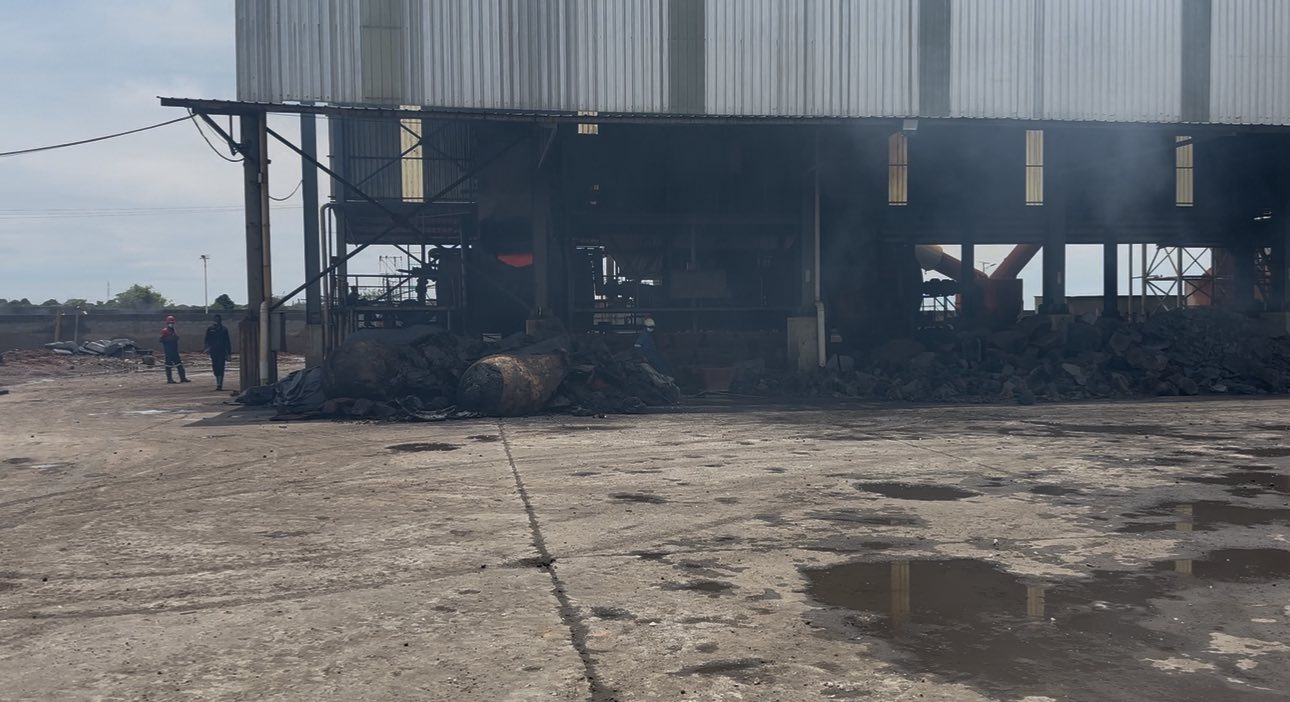
Across Chingola, Kalulushi and Mufulira, communities are living with toxic air, contaminated water, and recurring mine spills, while regulators delay enforcement and mining companies operate with near impunity.
By Justina Matandiko
On 18 January 2025, after days of heavy rain, part of the tailings dam at Mimbula Mine on the outskirts of Chingola collapsed, releasing acidic effluent into streams that feed the Kafue river. Farmland was destroyed, water sources for three townships were contaminated, and hundreds of families were left without a livelihood. Seven months later, no penalties have been imposed.
For communities across Zambia’s Copperbelt, the spill was not an isolated disaster, but a familiar warning of how environmental harm persists long after regulators promise action.
Copperbelt communities depend on the land and water around the mines, which means the unchecked pollution and environmental damage has immediate and lasting consequences. Crops fail, drinking water becomes unsafe, and respiratory illnesses spike during periods of heavy emissions. Across the region, communities in Chingola, Kalulushi and Mufulira describe living with uncertainty about when the next incident will occur, and whether anyone will be held accountable.
Zambia’s environmental regulator, the Zambia Environmental Management Agency (ZEMA), is responsible for approving environmental impact assessments, monitoring mining operations, and enforcing laws meant to prevent pollution and environmental damage.
However, enforcement has often been slow and inconsistent. Official records show that ZEMA is understaffed and underfunded, constraints that limit routine inspections, timely follow-ups, and effective oversight.
In interviews with MakanDay, former and current ZEMA officials acknowledge that enforcement is, at best, not proactive and at worst, selective to ensure that mining continues uninterrupted, no matter the environmental or health costs.
Members of Parliament representing mining-affected constituencies have questioned regulators and ministers about ongoing emissions and delayed interventions, highlighting inconsistencies in how environmental orders are enforced. But communities do not believe this has improved oversight or stopped mining companies from flouting environmental laws.
The three companies in the spotlight for environmental harm are Mimbula Minerals in Chingola, Avocado Mining in Kalulushi, and Mopani Copper Mines in Mufulira.
In November 2024, ZEMA issued a cease-and-desist order to Avocado Mining following serious pollution and environmental concerns. Avocado continued operating in spite of the order. A year later on 14 November 2025, ZEMA shut the mine down, arrested two directors and confiscated 55 copper blisters following a sulphur dioxide emission in September that covered Kalulushi. Residents described it to MakanDay as the worst toxic emission todate.
ZEMA gave the mine 30 days to explain why their mining licence should not be cancelled.
Kalulushi MP Kampamba Mulenga had repeatedly warned parliament about continued emissions, questioning why enforcement targeted other companies while Avocado, a Chinese-owned mine, operated unchecked.
Despite attempts by MakanDay, Avocado Mining has not responded to requests for comment. On 25 November, a letter was sent to the company through a representative who identified himself only as ‘Champo,’ requesting a response to residents’ concerns. No reply has been received.
The human cost of slow or inadequate government action is described by one resident with a chronic respiratory condition who lives near the Avocado mine.
“My chest tightened. I thought it was my last day,” she told MakanDay.
The cost of inadequately monitored mining extends far beyond health.
When the Mimbula Mine tailings dam burst and spilled acidic effluent into the Mushishima and Chananyama streams, and eventually into the Kafue river in January 2025, more than 156 hectares (about 290 football fields) of farmland were destroyed.
“We woke up and everything was gone,” recalled Fridah Kapelembe, a sugarcane and vegetable farmer. “They made me sign for K2,000 as compensation… but my farm yields much more than that. We were told to wait. For how long?”
Under the Environmental Management Act (2011) and the Mines and Minerals Development Act (2015), mining companies must prevent contamination and maintain tailings dams. Environmental advocates say Mimbula failed to meet these obligations, and ZEMA’s slow intervention left communities exposed for months.
Environmental watchdogs, including Sustainable Natural Resources Empowerment Initiative (SUNRIE) national coordinator Eugene Mulenga, warned that without proper remediation, the return of the rains could wash pollutants downstream once again.
Despite ZEMA stating it would penalise the company, no action followed for seven months. Only in August did Mimbula unveil an environmental response plan and hire Drizit Environmental to carry out environmental assessments. For affected families, the delay meant hunger, financial loss and lasting ecological damage.
The mine, which is 85% owned by UK-based Moxico Resources PLC, has not responded to questions from MakanDay, including a request for details of the ‘comprehensive environmental and community response plan’ announced in August 2025 and the scope of work assigned to Drizit Environmental company. Corporate Affairs Officer Ian Chomba acknowledged receiving the letter but did not provide a response.
Mufulira’s Kankoyo – Living and dying with senta
In Kankoyo, Mufulira, a town on Zambia’s border with the Democratic Republic of Congo in the north, pollution is not an incident, it is a way of life. Corroded roofs greet visitors long before they meet residents who breathe sulphur dioxide, locally known as senta, which eats away at both homes and lungs.
Section 67 of the Public Health Act prohibits air pollution and harmful gases, described under the nuisanceprovisions emissions, yet residents say senta continues to engulf the township, often at night.
Under Section 68, local authorities are empowered to issue notices requiring a person or entity to abate a nuisance. Mufulira Municipal Council acknowledged receiving questions on why it has not acted, but did not respond.
On 20 September 2025, resident Abigail Kabula filmed the township engulfed in a thick white sulphur fog. The video went viral.
Another resident, Abigail Bweupe, left Kankoyo after a severe exposure incident.
“I inhaled the fumes and woke up in Ronald Ross Hospital,” she said. I will never go back… I want to live.”
Annie Chileshe, 68, believes pollution has contributed to countless deaths. She recalls a visiting relative who died after exposure and cites the well-known case of the late Mufulira District Commissioner Beatrice Miti, whose family won a Supreme Court case against Mopani in 2022 for negligence.

Former miner Andrew Mpundu, who worked under both ZCCM and Mopani, said emissions have remained constant.
“They say it’s within ‘acceptable standards’, but we choke and die. Government cares more about investors than us,” he said.
At Clinic five in Kankoyo, a health worker, speaking anonymously, said they receive three to five cases daily, mostly children. Severe cases are referred to Ronald Ross Hospital.
Vegetable seller Charity Mwelwa, 48, sources her produce from outside Kankoyo.
“Nothing grows here, not even the famous lunsonga,’’ she said. “All my children have been affected by senta. Just last month, I rushed my baby to the clinic, the records are there.”
A senior Mopani employee dismissed the residents’ videos as AI-generated, claiming the plant had shut down on 16 September. But Kankoyo MP Heartson Mabeta told parliament this was untrue and urged Mines Minister Paul Kabuswe to intervene.
Still, regulatory action remains sporadic — and often symbolic.
Mopani Copper Mines’ Public Relations Manager, Nerbert Mulenga, did not respond to a request for comment. Since 2024, a majority stake in Mopani has been held by International Resources Holding (IRH) through its subsidiary, Delta Mining Ltd, which owns 51%, while ZCCM-IH retains the remaining 49%.
Why enforcement fails?
Under the Environmental Management Act (2023), penalties for serious offences can reach 700,000 penalty units (around K21 million) or imprisonment of up to seven years or both. But for multi-million-dollar mining companies, these fines are negligible.
In practice, companies pay small fines and resume business as usual.
Speaking to journalists after a stakeholders’ meeting at Garden Court Hotel in Kitwe in March, following the Sino Metals pollution incident, lawyer Mehluli Malisa Batakathi of the Conservation Advocates Zambia consortium questioned why the government continues to treat environmental crimes “with kid gloves”.
“The law already provides for punitive measures,’’ he said. “Companies should not operate above the law.”
ZEMA’s own annual reports show persistent capacity gaps. At the end of 2019, the agency had 101 staff against a target of 135. By 31 December 2024, staffing stood at 142, far below the approved establishment of 246.
The 2024 report also confirms that monitoring and licensing activities were scaled back due to budget constraints. ZEMA received ZMW 110.3 million against an approved annual budget of K 185.9 million, with only K 76.2 million coming as a treasury grant.
These shortfalls help explain why ZEMA often intervenes only after public outcry or viral videos force action.
Political and economic influence
During a debrief following the Sino Metals incident, Minister of Green Economy and Environment Collins Nzovu acknowledged that the ministry faces resource constraints. Inspectors cannot monitor all sites, and reports are often delayed or weakened by the influence of powerful mining interests.
That influence is underpinned by the sector’s enormous economic weight. According to the Zambia Extractive Industries Transparency Initiative (ZEITI) report, Zambia, Africa’s second-largest copper producer, depends heavily on the sector, which accounted for 72% of export earnings and 44% of government revenues in 2022. Extractive revenues totalled approximately K33 billion in 2023 and about K38 billion in 2024, including taxes, non-tax payments and dividends.
With so much at stake, transparency often suffers. Communities rarely see lab results, inspection reports or compliance audits. They rely on what officials tell them, often too little, too late.
No responses were received from the Ministry of Mines and Minerals Development, the Ministry of Green Economy and Environment, Chingola, or Kalulushi Councils.
Justina is a fellow under the Wildlife Crime Prevention (WCP) fellowship for journalists. The MakanDay Centre for Investigative Journalism, in partnership with WCP, provided training in investigative journalism skills and supported journalists in working on impactful stories that promote environmental protection and drive change.
Photo Credit | ZEMA Facebook Page


Discover more from MAKANDAY
Subscribe to get the latest posts sent to your email.


