

They trusted the water. Now they’re fighting for justice.
By Charles Mafa
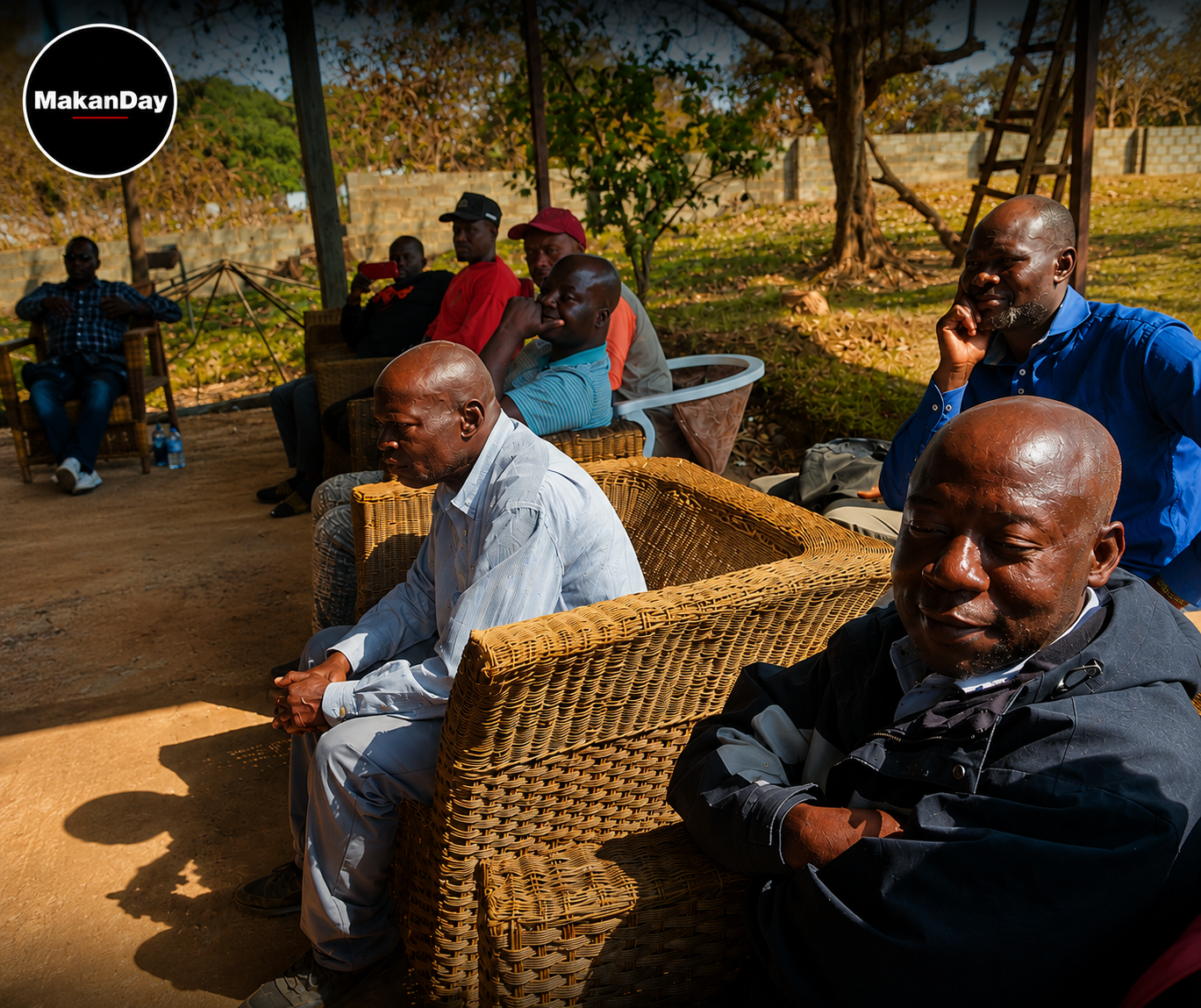
Every few weeks, dozens of former Lumwana Mine employees gather under a modest outdoor shelter in Solwezi, northwestern Zambia. Some arrive quietly carrying medical records, while others exchange updates on a lawsuit they hope will finally provide answers. No longer colleagues at work, they are now plaintiffs in one of Zambia’s most closely watched workplace health cases, united by a belief that the water they drank while at work made them ill.
At the front of the recent gathering attended by MakanDay in Solwezi stands their chairman, Mbuyi Sambondu. He urges the former workers to remain united as they await the outcome of a lawsuit filed in the High Court in September last year against Lumwana Mining Company, operated by Barrick Mining Corporation.
The lawsuit, brought on behalf of 193 former employees, alleges that the workers were exposed to uranium-contaminated drinking water during their employment, resulting in serious health problems, loss of employment and other harm. The allegations are contained in court documents reviewed by MakanDay and have not yet been proven in court.
Before publication, MakanDay invited Barrick Mining Corporation to respond to questions about the November 2023 incident, including its public statements, water quality monitoring systems and other matters of corporate policy that were not directly before the High Court. The company declined to comment, saying the matter is currently before the court.
The case raises broader questions about workplace safety, environmental monitoring and corporate accountability in one of Zambia’s most important economic sectors.
While the High Court will determine the disputed facts in this case, the issues it raises sit within a broader national conversation about balancing Zambia’s economic dependence on mining with the protection of workers and the environment.
For the former workers, however, the lawsuit is about something more personal. They say they trusted the water their employer provided every day, believing it was safe to drink. Today, they are asking the courts to determine whether that trust was misplaced.
Mining remains one of Zambia’s most important industries. According to the Zambia Extractive Industries Transparency Initiative (ZEITI), the extractive sector contributed 25% of Zambia’s total government revenueand74% of the country’s exports in 2024, underscoring the sector’s importance to the national economy.
Lumwana Mine is one of the country’s largest copper operations and among its major taxpayers. ZEITI records show that the mine paid approximately ZMW 3.9 billion to government institutions in 2023, making it one of Zambia’s largest contributors to public revenue.
The same report shows that Lumwana contributed more than US$1 million to Zambia’s Environmental Protection Fund in 2024, a statutory fund established to support environmental management and mine rehabilitation.
ZEITI also outlines Zambia’s environmental governance framework, under which mining operations are subject to oversight by institutions including the Zambia Environmental Management Agency (ZEMA), the Mine Safety Department and other regulators.
These statutory payments and regulatory requirements form part of Zambia’s broader mining governance framework and should not be interpreted as evidence supporting or refuting the allegations currently before the High Court.
Against that backdrop, legal challenges involving major mining companies are relatively uncommon and closely watched because they raise questions not only about the circumstances alleged by the parties, but also about how workplace safety, environmental oversight and corporate accountability operate in one of Zambia’s most economically significant industries.
For years, the former employees say, drinking water supplied at the mine was simply part of everyday working life. Before each shift, workers filled bottles from taps around the Incoming Pre-Shift (IPS) area without questioning its safety.
According to the Statement of Claim, that confidence changed dramatically in November 2023 when an internal memorandum was allegedly circulated beyond its intended recipients. The plaintiffs claim the memorandum disclosed that drinking water supplied from Chimiwungo Crossing Dam contained uranium. They say the information came as a shock, particularly to workers who had already been experiencing unexplained health problems over several years.
According to the court documents, Lumwana Mining Company began supplying drinking water from Chimiwungo Crossing Dam in 2012 through a water distribution system owned and operated by the mine.
The plaintiffs further allege that from around 2015, increasing numbers of workers began suffering illnesses that resulted in medical discharges, voluntary separations, resignations and employment terminations. These allegations remain contested and will ultimately be determined by the High Court.
Central to the lawsuit are laboratory test results dated 16 November 2023, which the plaintiffs rely upon in support of their claims. According to the Statement of Claim, the tests recorded uranium concentrations ranging from 0.04 to 0.19 milligrams per litre.
The plaintiffs contend that these levels exceeded what they describe as the maximum permissible limit of 0.03 milligrams per litre for drinking water. Whether those test results are accurate, what they demonstrate, and whether they establish liability remain matters for determination by the court.
The Statement of Claim further alleges that Lumwana Mining Company was negligent by sourcing drinking water from a dam surrounded by waste rock dumps, failing to prevent surface runoff and underground seepage from entering the water source, and allowing dust and rock debris generated during blasting to settle in an uncovered reservoir supplying drinking water to employees.
Those allegations have not yet been tested in court.
According to the Statement of Claim, the plaintiffs allege that 41 former employees were medically discharged, 51 accepted voluntary separation packages, four resigned from employment, while several others continue receiving medical treatment.
The plaintiffs further allege that one former employee died, with the lawsuit attributing the death to complications they believe were linked to uranium exposure. That allegation remains disputed and has not been determined by the High Court.
The former workers are asking the court to issue declarations of negligence and award compensation, special damages and other relief.
The case centres on Lumwana Mine, located about 65 kilometres west of Solwezi in North-Western Province. Copper production began in 2008, and Barrick Mining Corporation became the operator after acquiring Equinox Minerals in 2011. According to ZEITI, Lumwana remains one of Zambia’s largest copper producers and one of the country’s leading contributors to government revenue, reflecting its strategic importance to both the mining industry and the national economy.
In addition to its extensive copper reserves, the Lumwana orebody has long been known to contain naturally occurring uranium mineralisation. Previous geological and feasibility studies have identified uranium-bearing zones within both the Chimiwungo and Malundwe deposits. The existence of naturally occurring uranium within the orebody is not, by itself, evidence that drinking water supplied to workers was unsafe. That question forms part of the issues now before the High Court.
Under Zambia’s civil justice system, allegations contained in a Statement of Claim represent the plaintiffs’ case. They remain subject to response by the defendant and, ultimately, determination by the court based on the evidence presented.
Back under the shelter in Solwezi, the meeting comes to an end. Some of the former workers climb onto bicycles while others begin the long walk home. For now, the answers they seek will not come from the discussions held beneath the shelter, but from a courtroom where the evidence, the company’s response and the workers’ allegations will be tested before a judge.
According to the World Health Organization (WHO) and the U.S. Centers for Disease Control and Prevention (CDC), prolonged exposure to sufficiently high levels of uranium may affect the kidneys, with the health impact depending on the amount, duration and route of exposure. Whether any illnesses alleged by the plaintiffs are linked to the exposure claimed in this case is one of the issues that remains before the High Court.
EDITOR’S NOTE: This report is based in part on documents filed in the High Court of Zambia. The allegations described are those made by the plaintiffs in ongoing civil proceedings. They are contested, have not been proven in court, and remain subject to determination by the High Court.

Discover more from MAKANDAY
Subscribe to get the latest posts sent to your email.