


UN reveals how Russia recruited Africans for Ukraine war
By Charles Mafa
Investigation uncovers coordinated recruitment networks spanning 29 countries, as findings raise fresh questions over the fate of Zambians drawn into Russia’s war.
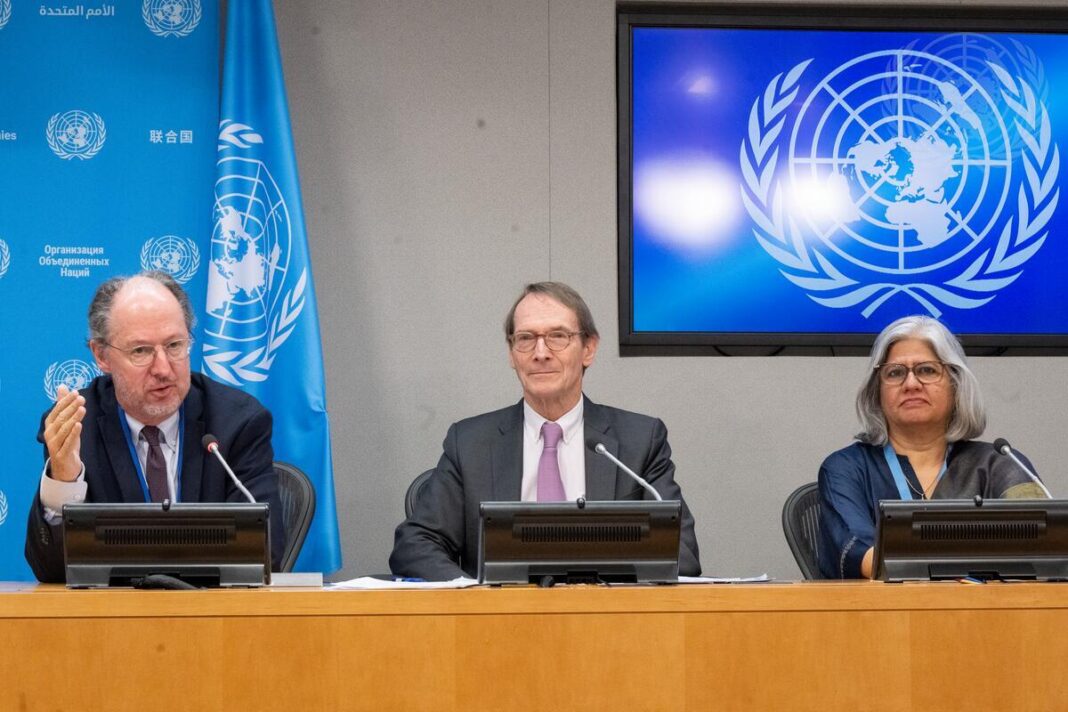
A United Nations investigation has concluded that Russian authorities worked with recruitment agents across the world to traffic foreign nationals, including Africans, into fighting in Ukraine by luring them with false job offers before forcing them to sign military contracts.
The findings, contained in a report by the Independent International Commission of Inquiry on Ukraine dated 19 October 2026, reveal a coordinated recruitment operation involving agents who promised lucrative civilian employment in Russia, arranged travel documents and transported unsuspecting recruits into the hands of the Russian military.
The Commission investigated recruitment involving nationals from 48 countries and found evidence of deception or coercion involving people from 29 countries, including Botswana, Ghana, Kenya, Nigeria, South Africa, Uganda and Zimbabwe.
The findings add a significant international dimension to investigations by MakanDay into the recruitment of Zambians for Russia’s war against Ukraine, including the case of a Zambian student who died after joining the Wagner private military group.
Although Zambia is not among the 29 countries specifically identified in the latest UN findings, the report says investigators also examined credible allegations of similar recruitment from other countries.
The Commission concluded that Russian authorities, working with recruitment agents, had committed trafficking in persons and other human rights violations.
Promised jobs, sent to war
According to the report, men from economically vulnerable communities were approached by recruitment agents offering employment as security guards, drivers, mechanics, electricians, welders, construction workers and technicians.
Some were promised high salaries, accommodation, Russian citizenship and pensions.
The offers appeared genuine, with recruitment agencies sometimes producing official-looking documentation, employment guarantees and travel arrangements.
But the recruits discovered a different reality when they arrived in Russia.
Instead of being taken to civilian workplaces, they were transported to accommodation controlled by recruitment agents and subsequently handed over to the Russian military.
They were then compelled to sign contracts with Russia’s Ministry of Defence, often without understanding their contents.
The contracts were written in Russian, a language most of the recruits could neither read nor speak.
One recruit told UN investigators: “They just asked me to sign, the whole document was in Russian, I could not even read my own name. I only understood it was for one year”.
The report says passports, driving licences and mobile phones were frequently confiscated, preventing recruits from communicating freely or translating documents.
Some were threatened with violence when they resisted.
One man described what happened when he refused to sign a military contract: “They took me 100 metres away, shot four Russians in my presence, and told me if you don’t sign, you are the next”. He subsequently signed the contract.
The Commission found that recruitment agents operating in different countries followed strikingly similar procedures, suggesting a high degree of coordination with Russian authorities.
A deadly recruitment operation
The UN investigation documents the devastating consequences of the recruitment networks.
In one case, a group of 30 men received employment guarantees from a civilian company in Russia.
The documentation explicitly promised that the recruits would not be deployed to fight in Ukraine.
Yet, according to the Commission, 17 of the men subsequently died on the front lines, five remained missing and only one was reported to have returned after sustaining injuries. The report does not identify the nationality of this particular group.
Other recruits described receiving only minimal military training, sometimes lasting just 20 minutes, before being deployed into combat.
They were assigned dangerous tasks, including advancing on Ukrainian positions, digging trenches and recovering bodies and body parts from battlefields.
The Commission also documented allegations that commanders beat and threatened recruits, while drones monitored their movements to prevent them from retreating.
Some men went missing shortly after deployment, leaving their families desperately searching for information.
The wife of one recruit described how her husband was pressured into signing a contract: “They took his passport and just told him to sign here, here and here on the contract. It was only in Russian. He was totally pressured and had no choice.”
Echoes of MakanDay’s Zambian investigations
The UN findings come against the background of MakanDay’s reporting on the involvement of Zambians in Russia’s war against Ukraine.
In 2022, MakanDay reported on the case of a Zambian student who died in Ukraine after being recruited by Russia’s Wagner private military group.
The case drew attention to how a young Zambian who had travelled to Russia for education ended up fighting in a foreign war.
MakanDay has subsequently investigated Russia-linked recruitment activities, including the Alabuga project, raising broader questions about employment opportunities advertised to Africans and the circumstances under which they are recruited.
The latest UN report identifies two principal methods through which foreign nationals were drawn into Russian military service.
The first involved people recruited from their home countries through misleading promises of civilian employment.
The second involved foreigners already living in Russia who were pressured or deceived into joining the armed forces.
The Commission documented cases in which foreign nationals held in Russian detention facilities or prisons were offered military contracts, sometimes under threats of prolonged imprisonment or mistreatment.
It found that people already in Russia could be particularly vulnerable to coercion.
These findings provide a wider framework for examining the circumstances under which Zambians have become involved in the conflict, although the Commission does not specifically assess the Zambian cases previously reported by MakanDay.
Families left searching for answers
The UN report describes the anguish of families whose relatives disappeared after travelling to Russia.
Some only discovered that their loved ones had been killed through social media, news reports or messages from fellow recruits.
Others were unable to establish whether their relatives were alive, injured, captured or dead.
The Commission found that families frequently struggled to obtain assistance from authorities in their home countries or from diplomatic missions.
Recruitment agents sometimes stopped answering calls or blocked relatives attempting to establish the whereabouts of missing men.
In some cases, families were unable to recover the remains of relatives who had died in combat.
“It is so hard, explaining to a child that your dad is gone, when they don’t even see his body and bury him – they will never believe he is dead if they don’t bury him,” One woman told investigators.
The Commission also documented financial losses among families who had borrowed money to pay recruitment agents.
Some recruits were charged between US$400 and US$8,000 for travel and recruitment arrangements.
Others complained that promised salaries were withheld, bank accounts were blocked or money was withdrawn without their permission.
UN rejects classification of trafficked recruits as mercenaries
In a potentially significant finding for countries whose citizens have been recruited into the conflict, the Commission concluded that foreign nationals trafficked into the Russian armed forces should not be treated as mercenaries merely because they subsequently served in the military.
The report says that once recruited into Russia’s armed forces, these individuals became members of the military and acquired combatant status.
Those captured or surrendering to Ukrainian forces are therefore entitled to protection under the Third Geneva Convention governing prisoners of war.
The Commission urged countries whose nationals had been trafficked not to prosecute them for military service resulting from trafficking.
It also called on governments to investigate recruitment networks, cooperate internationally to secure the release of victims and assist families seeking information about missing relatives.
The findings could have implications for African governments seeking to determine whether citizens who joined Russian forces did so voluntarily or were deceived into military service.
Russia denies illegal recruitment
The report says Russian officials have repeatedly denied allegations of illegal recruitment.
The Commission, however, found evidence of coordination between recruitment agents and Russian authorities, including the processing of travel documents, the use of similar recruitment methods across countries and the signing of standardised contracts with Russia’s Ministry of Defence.
Its findings were based on 245 testimonies from recruits, family members and other sources, alongside documents including visas, flight tickets, employment invitations and Russian military contracts.
The Commission said it sent 69 letters to countries seeking information about recruitment and received only six responses.
Russia has also declined to recognise the Commission, leaving 41 requests for access, information and meetings unanswered.
The report calls on Russia to immediately end deceptive and coercive recruitment, discharge foreign nationals who are victims of trafficking and cooperate with other governments to address the cases of those killed, injured or missing.
For Zambia, the findings renew questions about the recruitment of its citizens into Russia’s war, the safeguards available to Zambians seeking opportunities abroad and the assistance provided to families when their relatives become caught up in a foreign conflict.
Discover more from MAKANDAY
Subscribe to get the latest posts sent to your email.