


By Linda Soko Tembo
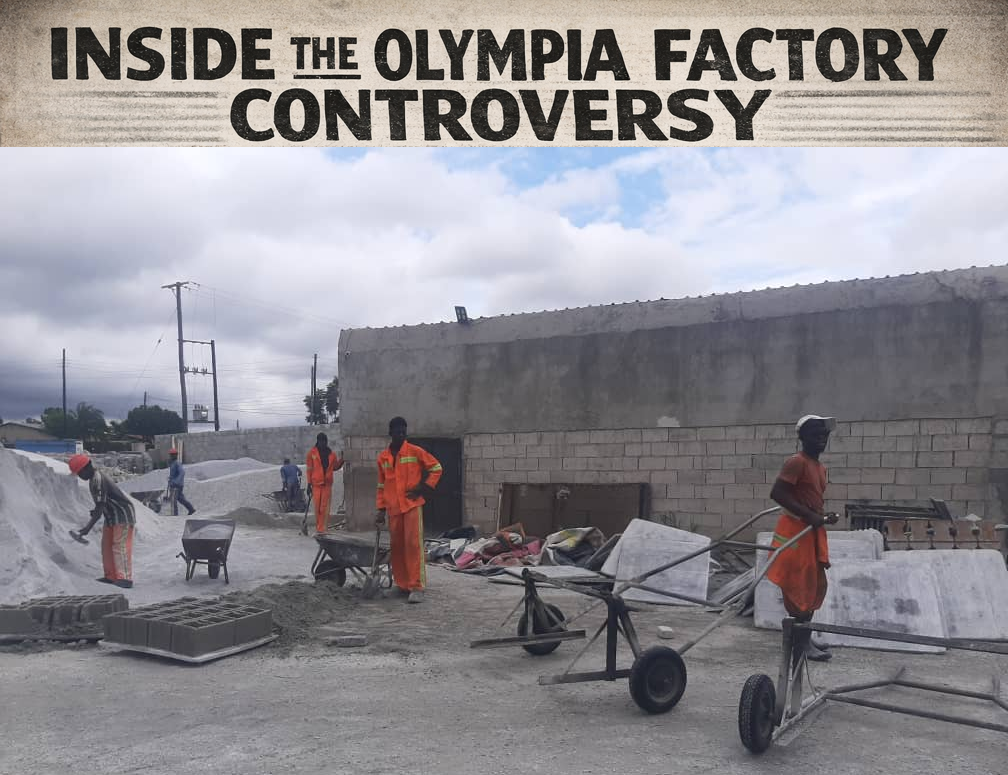
A block-making factory that Lusaka City Council (LCC) ordered shut down for violating public health regulations has reportedly resumed operations only days later, raising fresh questions about the enforcement of environmental and public health laws in the city.
Deniz Company Limited, located in Olympia along Katima Mulilo Road, was closed on 5 March 2026 after public health inspectors found multiple violations, including dust pollution, excessive noise and insanitary working conditions.
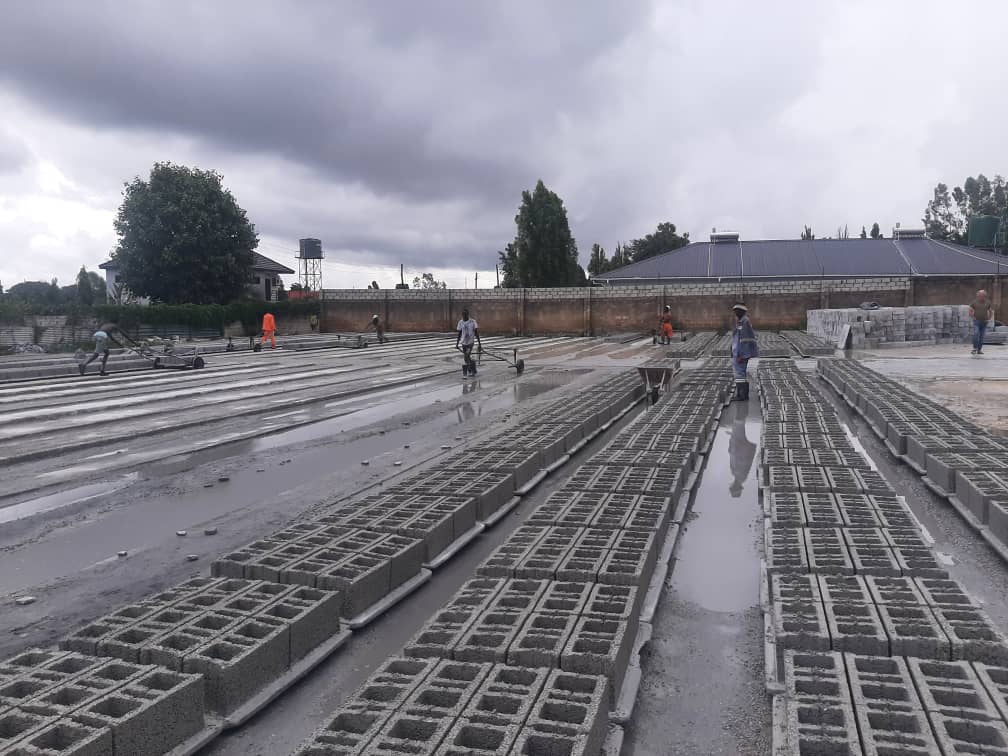
But residents told MakanDay that machinery at the factory has since started running again, with dust emissions and noise continuing to affect nearby homes despite the council’s enforcement action.
The development has renewed concerns among residents who say they have complained about the company’s operations for years without lasting intervention from authorities.
Council action
LCC Director of Public Health Victor Kagoli confirmed that inspectors closed the facility after identifying several breaches of public health regulations.
According to Kagoli, the violations included failure to provide adequate personal protective equipment for workers, poor sanitation conditions, lack of proper kitchen facilities for employees, improper waste storage, and unresolved complaints of dust and noise pollution.
The facility is located in what residents say is a residential area, raising further questions about how the factory was allowed to operate in the neighbourhood.
Complaints dating back years
Records indicate that concerns about the company’s operations date back to February 2023, when LCC conducted an inspection and issued a 30-day abatement notice directing the company to address noise nuisance concerns.
The notice, effective from 16 March to 16 April 2023, warned that failure to comply could result in suspension of operations and possible legal action.
It remains unclear whether the company fully complied with the directives issued at the time.
A recent visit by MakanDay to the area earlier this year found residents still experiencing persistent dust and noise pollution from the factory.
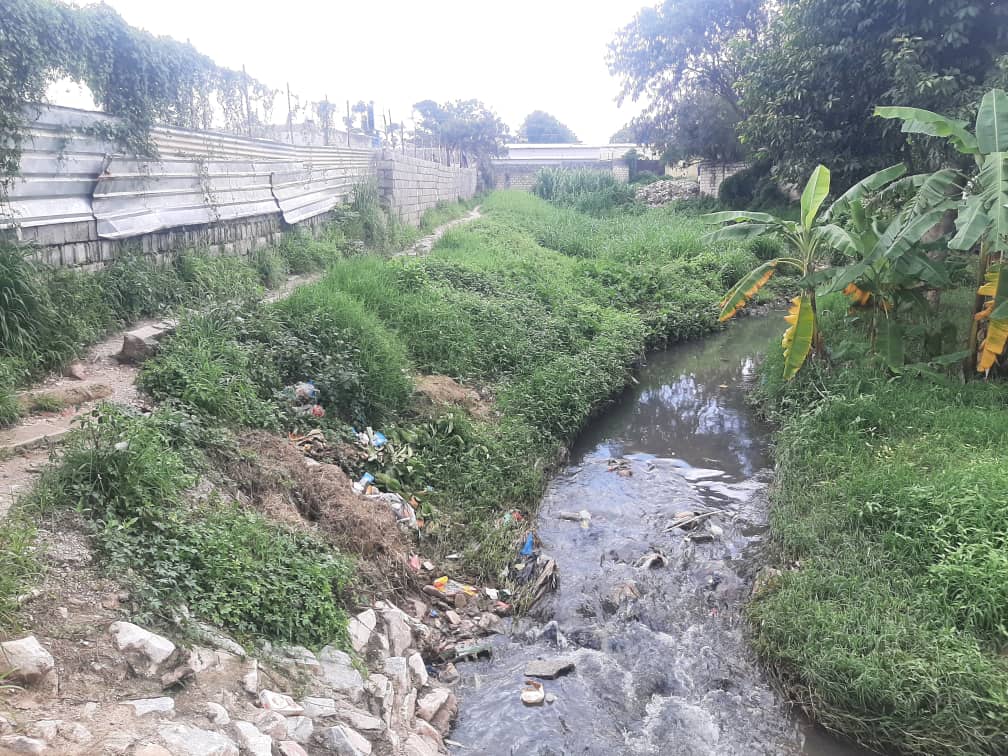
MakanDay observed dirty water around the premises, poorly maintained toilet facilities and indiscriminate waste disposal, conditions that may violate both public health and environmental regulations.
Residents describe daily ddisturbances
Residents say the factory’s operations have disrupted daily life in the area for several years.
Chinda Chembe and her husband, Peter Geraerdts, who purchased property in Olympia Extension between 2011 and 2012, said the area had been approved for residential use when they began building flats there.
“When we started construction, we discovered that our neighbour had rented out their property to a brick-making factory called Deniz,” said Chembe.
“The machines operate within a residential area and the noise has affected our business because tenants constantly complain.”
Residents say dust from the factory’s operations has also affected their homes.
“The dust has caused our roof to turn black. Even when we close our windows, dust still enters the house,” Chembe said.
She added that the company’s operations often begin early in the morning.
“Their staff toilets are attached to our wall and the machines start running as early as 05:00 hours.”
Another resident, Maria Nyirongo, said the noise sometimes begins even earlier.
“We cannot sleep properly. Sometimes the machines start as early as 04:00 hours, and when there is no power they switch on a generator. The smoke enters our house,” she said.
Residents also allege that wastewater from the factory flows into nearby drainage systems.
They further claim that the company’s boundary wall collapsed several years ago, killing a 10-year-old child. According to residents, the wall remains structurally unstable.
Environmental oversight questions
Residents say they reported the matter to both LCC and the Zambia Environmental Management Agency (ZEMA), questioning how the factory had been licensed to operate in a residential area.
According to residents, ZEMA previously inspected the premises and identified several violations, including lack of protective clothing for workers, inadequate sanitation facilities and improper waste disposal.
The company was reportedly fined and instructed to insulate a noise-producing machine within 30 days.
However, residents say the measures did little to address the problem.
“They never close permanently and always bounce back,” Chembe said.
A source familiar with the matter indicated that ZEMA had issued the company a licence subject to conditions requiring effective management of dust emissions and noise levels.
Failure to comply with those conditions could result in the licence being revoked.
MakanDay submitted a press query to ZEMA about the company’s compliance status one month ago but had not received a response by the time of publication.
Company response
When contacted on 4 March 2026, the director of Deniz Company Limited, identified as Hakim, declined to comment in detail, saying he was travelling within Zambia.
“But there is no dust. You have to bring equipment to measure the dust and noise,” he said.
When asked whether the company had conducted its own environmental measurements, he said the last assessment had been done some time ago.
“Some time back when I measured, it was okay. The best thing is that we measure together next week,” he said.
Closure — and reopening
Despite LCC closure order issued on 5 March, residents say operations resumed within days.
The development has raised concerns about whether regulatory authorities are able to enforce environmental and public health standards once enforcement action is taken.
Residents say they are now hoping that authorities will ensure the closure is properly enforced or relocate the factory to a designated industrial area.
For now, however, the machines are running again.
And for the residents of Olympia, the dust and noise they say they have lived with for years have returned.

Discover more from MAKANDAY
Subscribe to get the latest posts sent to your email.