

A newly published study suggests that fears of international scrutiny ahead of the August 2026 general election, alongside Chinese diplomatic pressure, influenced the Zambian government’s decision to abandon the global digital rights summit.
By MakanDay Editor
When the Zambian government abruptly halted RightsCon 2026 in April, the organisers blamed foreign interference. But new research suggests that the government had political reasons of its own for allowing the conference to collapse.
A policy brief published in November by Megatrends Afrika, authored by researcher Hangwei Li, points to concerns within government that the conference could expose Zambia’s record on digital freedoms to international scrutiny at a politically sensitive time.
Based on interviews and fieldwork conducted in Zambia, the study identifies both Chinese diplomatic pressure and the ruling United Party for National Development’s (UPND) electoral considerations as factors behind the decision.
From government endorsement to cancellation
RightsCon, one of the world’s largest gatherings dedicated to human rights in the digital age, was scheduled to take place in Lusaka from 5 to 8 May 2026.
More than 2,600 participants were expected to attend in person, with another 1,100 participating online, representing more than 150 countries.
The Zambian government had initially embraced the conference. The Ministry of Technology and Science had signed a memorandum of understanding with the organisers, while other government departments assisted with preparations, including visa processing.
As late as April 26, the government publicly endorsed the event.
However, according to Access Now, the organisation behind RightsCon, government officials informed the organisers the following day that Chinese diplomats had raised objections to the participation of Taiwanese civil society representatives.
On April 28, state-owned media announced that the government had postponed the conference.
The government subsequently said it required further information about the proposed discussions to ensure they were consistent with Zambia’s national values and public interest.
Access Now said it was informally informed that the conference could only proceed if certain discussions were restricted and some participants, including Taiwanese delegates, were excluded.
The organisers rejected those conditions, and the conference did not take place.
Fears of political exposure
Li’s research suggests that, as the August election approached, officials became concerned that the conference could give international visibility to government critics.
The emergence of Brian Mundubile as a significant electoral challenger to President Hakainde Hichilema formed part of that political backdrop.
The study also suggests that officials feared being held personally responsible for any political fallout from hosting the conference.
According to the research, concerns raised within government departments were passed to ministers, who developed a common position and submitted recommendations to President Hichilema.
The weight of China
China’s objections came against the backdrop of Zambia’s longstanding diplomatic and economic relationship with Beijing and its commitment to the One-China principle.
The conference programme included discussions involving Taiwanese organisations that were critical of China’s approach to digital governance.
China’s economic importance to Zambia, Li argues, made resisting diplomatic pressure particularly difficult.
However, the Chinese Embassy in Zambia has not publicly acknowledged exerting pressure over RightsCon, according to the study.
Digital rights and national values
The cancellation also came amid controversy surrounding Zambia’s Cyber Security Act and Cyber Crimes Act, both signed into law by President Hichilema in April 2025.
Concerns about government surveillance, media freedom, privacy and freedom of expression were among the issues the conference was expected to address.
The government’s reference to national values also raised questions about whether it objected to discussions on LGBTQ+ rights.
Li’s interviews suggest that officials considered the potential electoral repercussions of hosting such discussions, although some respondents regarded the national values argument as a justification for a decision shaped by wider political concerns.
Questions of accountability
The findings raise questions about the transparency of government decision-making and the extent to which domestic political interests influenced Zambia’s response to foreign diplomatic pressure.
Who ultimately authorised the government’s withdrawal of support for the conference? What advice was given to the President? And why were concerns about the programme not communicated to organisers earlier, despite months of government involvement?
The research offers a new perspective on these questions but does not establish who personally issued the final instruction.
Seven months after the cancellation, an important question remains: whose interests were served by preventing an international discussion on digital rights from taking place in Zambia?
Read the full report here: https://www.megatrends-afrika.de/en/publication/mta-policy-brief-55-why-zambia-cancelled-rightscon-external-and-domestic-pressures
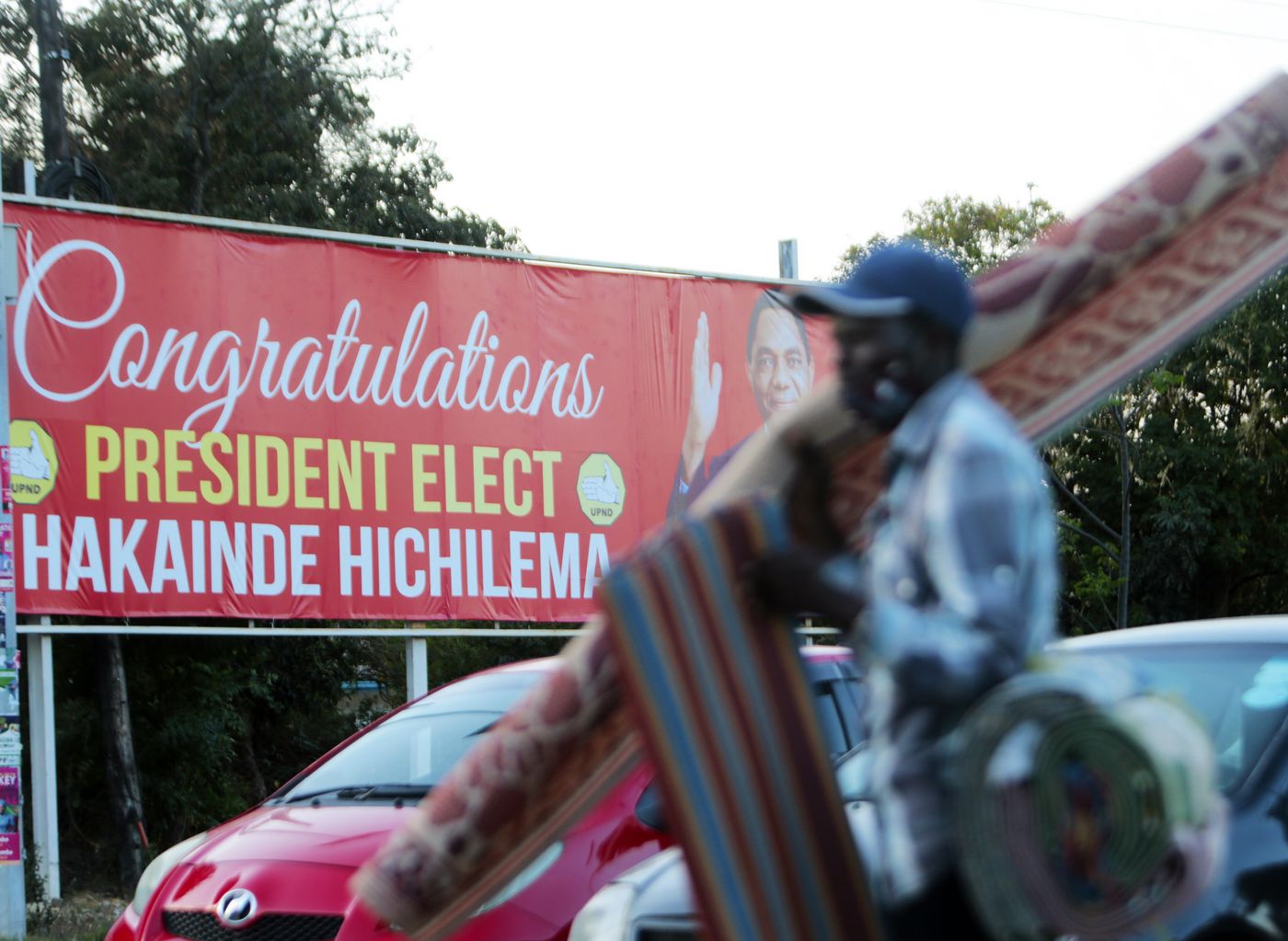
Photo: A vendor sells his carpets in front of posters congratulating the president, Hakainde Hichilema, in Lusaka, Zambia on August 17, 2021.
© picture alliance / ASSOCIATED PRESS | Tsvangirayi Mukwazhi
Hangwei Li is an Associate at Megatrends Afrika and a Senior Researcher at the German Institute of Development and Sustainability (IDOS).
This article draws on Li’s November 2026 policy brief, Why Zambia Cancelled RightsCon: External and Domestic Pressures, published by Megatrends Afrika.

Discover more from MAKANDAY
Subscribe to get the latest posts sent to your email.


