


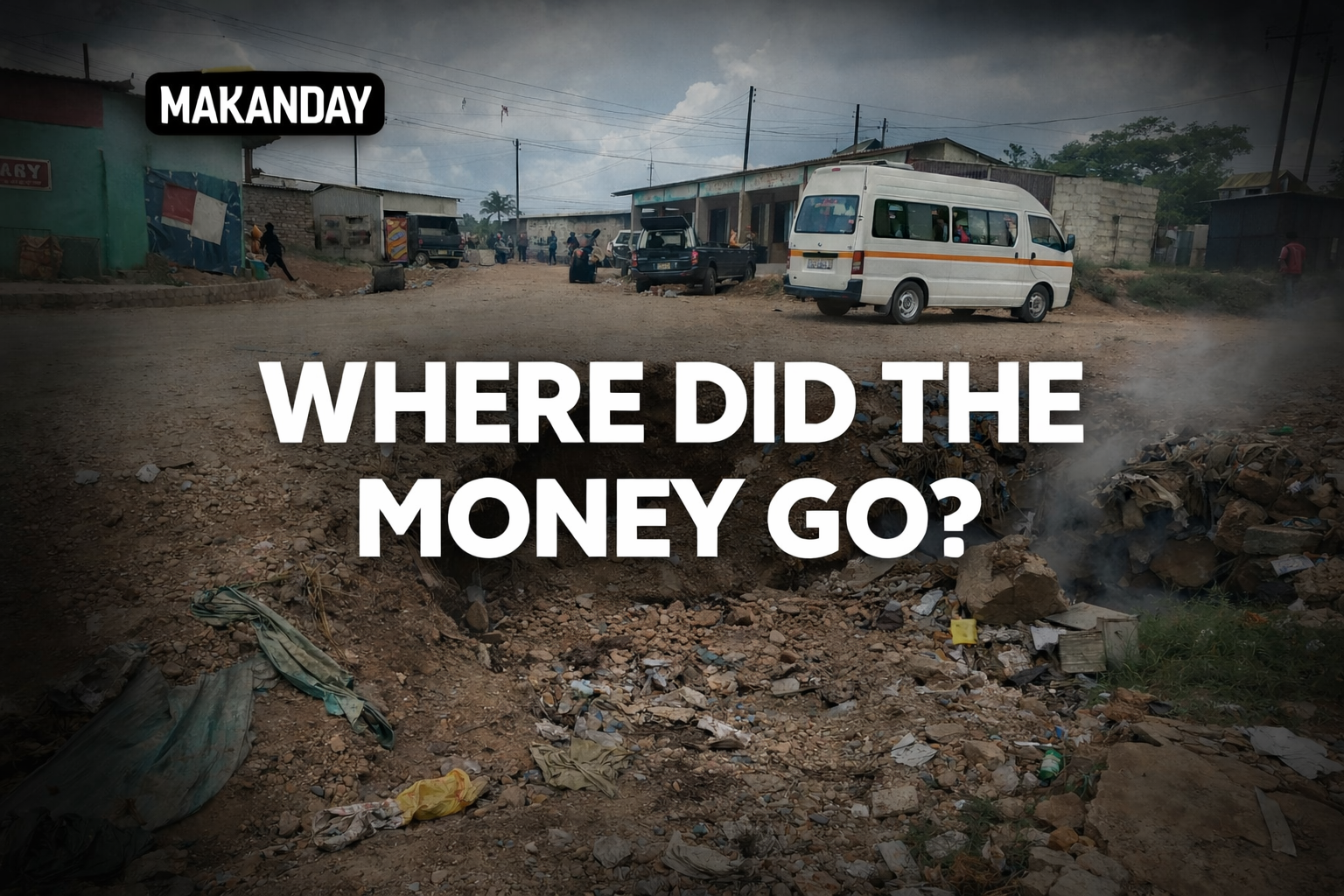
Ward Development Committee members are supposed to identify development priorities and monitor projects at ward level. But in Kalikiliki, some say they were left in the dark.
By Ennety Munshya
When it rains, traders along JK and Niza Roads in Kalikiliki must carefully step around pools of muddy water and deep potholes as vehicles struggle to pass.
Some residents say the two roads were recently “rehabilitated” using public development funds.
But there is little evidence of meaningful work.
For many residents, the question is simple: if money was spent here, where did it go?
A MakanDay investigation has found damaged roads, conflicting accounts and unanswered questions about how funds meant to improve conditions in Kalikiliki Ward 35 of Lusaka’s Munali Constituency were used.
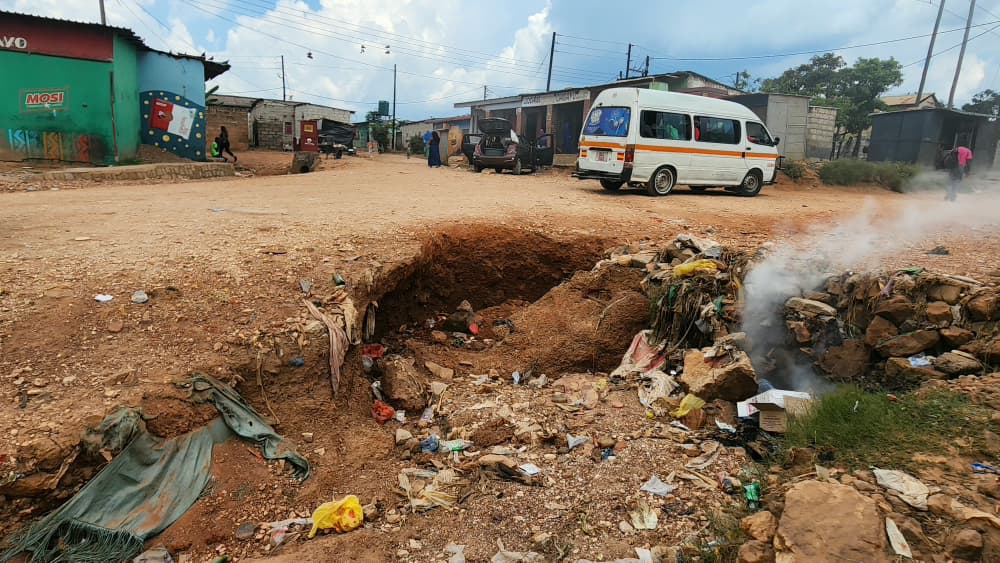
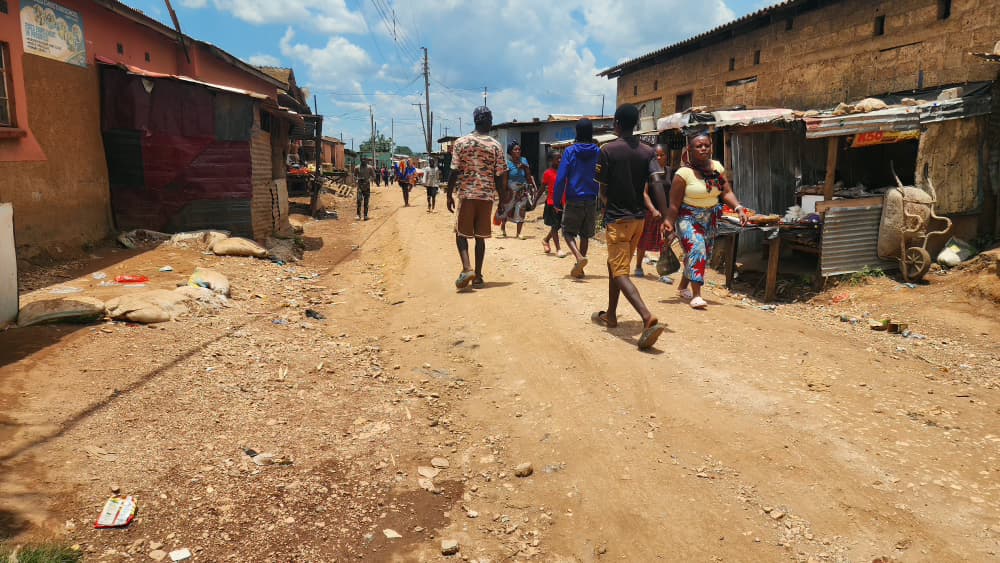
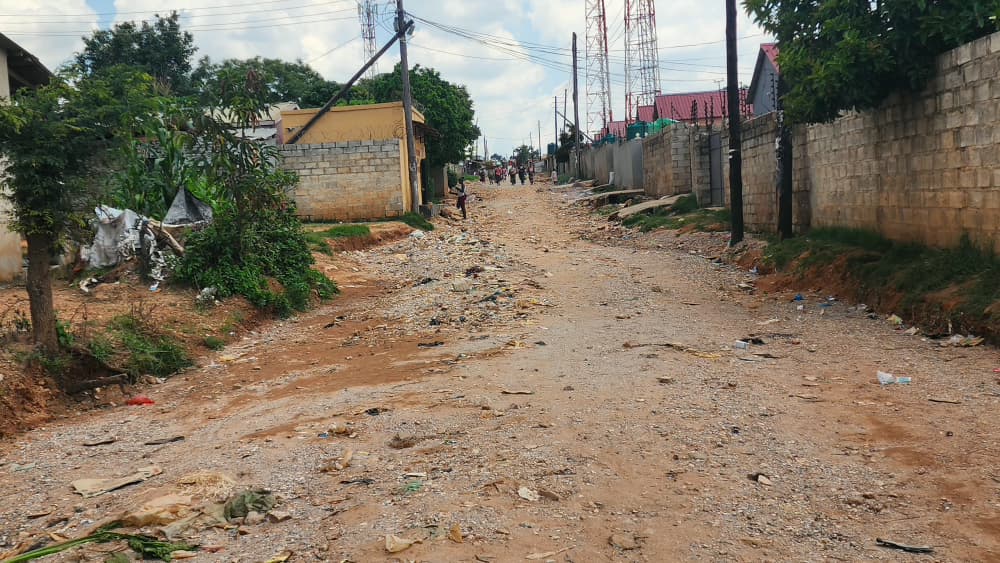
The condition of several roads reportedly rehabilitated under the Constituency Development Fund (CDF) has also raised concerns. Roads such as Watch-Tower Road, WEBA Road, Kalikiliki Market Road and Zaoga Komboni Missionary Road are already showing signs of deterioration only a few months after the rehabilitation works were reportedly completed.
Members of the Ward Development Committee (WDC) say they cannot account for how money allocated to their community was spent.
Some committee members say they were excluded from decisions on projects funded under both the Ward Development Fund and the Constituency Development Fund (CDF).
Meanwhile, inspections by MakanDay found that some roads reportedly rehabilitated using the Ward Development Fund, financed through five percent of the council’s own-source revenue, are already damaged.
Committee says it was left out
WDCs are legally recognised structures responsible for identifying development priorities and monitoring projects at ward level.
They are established under Part Five of the Local Government Act No. 2 of 2019 to ensure communities participate in identifying and overseeing local development projects.
Governance experts say the committees are intended to strengthen transparency and local accountability.
But members of the Kalikiliki WDC say they were not informed about how the ward’s development funds were used in 2025.
Godfrey Miyanda, chairperson of the Kalikiliki Ward 35 WDC, told MakanDay that the committee has struggled to obtain information about projects implemented using the ward fund.
“The committee has no clear information about which projects have been done using the ward fund,” Miyanda said.
He said that after making follow-ups with the area councillor, the committee was informed that part of the money had been used to rehabilitate JK Road.
However, when a MakanDay journalist visited the road, it remained in poor condition.
Traders operating along the road said they had not seen contractors working there in recent months. The only activity they recall was minor drainage clearing carried out by community members under the government’s cash-for-work programme.
Questions over ward development fund
A Lusaka City Council (LCC) official who spoke on condition of anonymity said each ward receives about K500,000 for ward development activities.
The funds are intended for small community projects such as drainage clearing, minor road repairs and other public works.
However, the official said the money is not deposited into ward accounts. Instead, projects proposed by WDCs are submitted to the council for approval, after which payments are made directly to contractors.
But Kalikiliki WDC Treasurer John Likolo says the committee has not been informed about how much was allocated to the ward for 2025 or how the funds were spent and even the ward account, according to him, has remained dormant..
“No money is deposited there. Even financial documentation for the projects is not available to us.”
Likolo also said the committee proposes projects and submits them to the council but is rarely informed when the projects are approved or which contractors have been engaged.
Without that information, he said, the committee cannot effectively monitor how public funds are being used.
Yet official council records suggest that the structure and allocation of the ward development fund are clearly defined.
Information published on the LCC website suggest a clearer framework for how the ward development fund is supposed to operate. Minutes of the Finance, Valuation and Commercial Undertakings Committee meeting held on 22 November 2024 indicate that ward development projects across all 38 wards would be financed based on works certified by the Director of Engineering Services.
The minutes further show that each ward was expected to receive K500,000, with 10 percent allocated to WDC operational costs. The council’s 2025 budget estimates indicate that a over K19.8 million (K19,865,025.96) was allocated to the ward development fund, raising questions about how funds meant for Kalikiliki were administered when members of the WDC say they have little information about how the money was spent.
Leadership tensions
The dispute over development funds has unfolded amid tensions within ward leadership.
Some committee members say they are sidelined during project implementation, with contractors sometimes arriving without the committee being informed whether the works are funded under the ward development fund or the CDF.
Former WDC chairperson Arnold Mutinta also raised concerns after he was expelled from the committee in September 2025.
Mutinta says he was removed without a disciplinary hearing and appealed the decision to LCC, arguing that the letter served on him did not explain the reasons for his removal.
LCC told MakanDay that all disciplinary procedures were followed in accordance with the guidelines governing Ward Development Committees.
Despite the disputes, Miyanda said development oversight has been weakened by miscommunication among ward leaders.
“Even when monitoring projects we are sometimes left out,” he said.
Councillor’s response
Area councillor Shadreck Chimwanga acknowledged that relations between the Ward Development Committee and ward leadership had previously been strained but said the situation has since improved.
He told MakanDay that the ward development fund for last year was used to rehabilitate JK Road and Niza Road.
However, Chimwanga said procurement and contractor selection are handled by Lusaka City Council.
“I am not the one who awards contracts. That is done by the council,” he said.
“I am only informed to expect a contractor in the ward and ensure that the works are carried out.”
He added that projects funded under the CDF are approved by the CDF committee.
Governance experts say divisions within WDCs can weaken their oversight role.
Gerald Mutelo, National Coordinator of Democratic Governance and Human Rights Advocates (DEGHA), said internal disputes within committees can affect community development.
“When a Ward Development Committee is divided, development priorities can easily be overshadowed by internal disagreements,” Mutelo said.
“That weakens oversight of community projects and reduces public trust in local governance structures.”
Council provides limited information
For nearly two months, members of the WDC say they have been trying to obtain details from the council about how the ward fund was used.
According to the committee, they met the Director of Finance, who informed them that information about the ward fund could only be shared in the presence of the area councillor.
The councillor was summoned to attend a meeting with the committee at the council but did not attend.
Further follow-ups with other council officials, including the Director of Planning, also failed to yield information.
MakanDay also made several attempts to obtain details from the council about projects implemented in Kalikiliki Ward 35 under both the ward development fund and the CDF.
No detailed response had been provided by the time of publication.
For residents of Kalikiliki, however, the debate about procedures and approvals matters less than the condition of the roads they use every day.
As vehicles continue to navigate potholes along JK Road and muddy water pools after every rainfall, residents say the improvements promised through public development funds remain difficult to see on the ground, leaving them still asking a simple question: what happened to the money meant to fix their roads?

Discover more from MAKANDAY
Subscribe to get the latest posts sent to your email.