


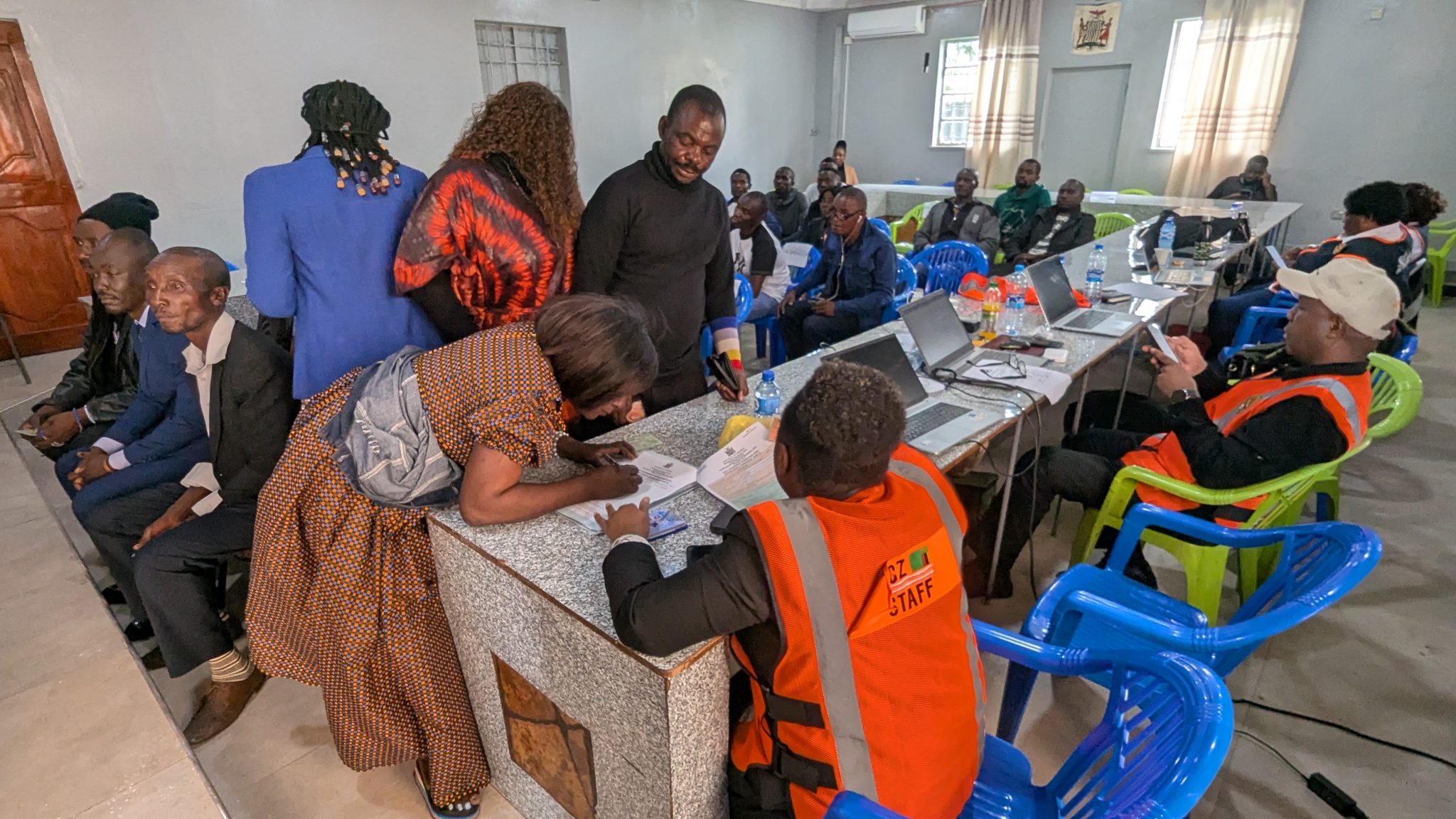
By MakanDay Centre for Investigative Journalism and Field Reporters in Kasama
A mayoral by-election in northern Zambia was officially recorded as peaceful.
But an on-the-ground investigation by MakanDay Centre for Investigative Journalism suggests a more complex reality, one shaped by fear, political pressure and weak enforcement of electoral standards.
The election, held on January 29 in Kasama, the provincial capital of Northern Province, was won by Bywell Simposya of the ruling United Party for National Development (UPND), the party of President Hakainde Hichilema. It followed the death of Mayor Theresa Kolala in December 2025.
While Zambia has in recent years positioned itself as a stabilising democratic force in Southern Africa, governance experts say the events surrounding this local vote raise broader questions about how “peaceful” elections are defined, and who decides.
Silence as self-protection
Within days of arriving in Kasama, journalists encountered an unexpected obstacle: silence.
A senior church leader, widely regarded as a moral voice in the region, declined to comment on the by-election.
“I wasn’t around when it was taking place, so I wouldn’t know what transpired,” he said.
Similar responses came from Senior Chief Mwamba and several residents across the town.
During our interview with Luka Kangwa Mandosa, the Senior Chief Mwamba, he chose to commend voters for what he described as the “peaceful manner” in which they conducted themselves during the election.
“I’m grateful that the election process went well, because what was important was to elect someone who should develop our area,” he said. “There were allegations from some voters, but we cannot focus on those negative claims.”
Further conversations with both residents and political figures often began openly, but quickly stalled.
A violent undercurrent
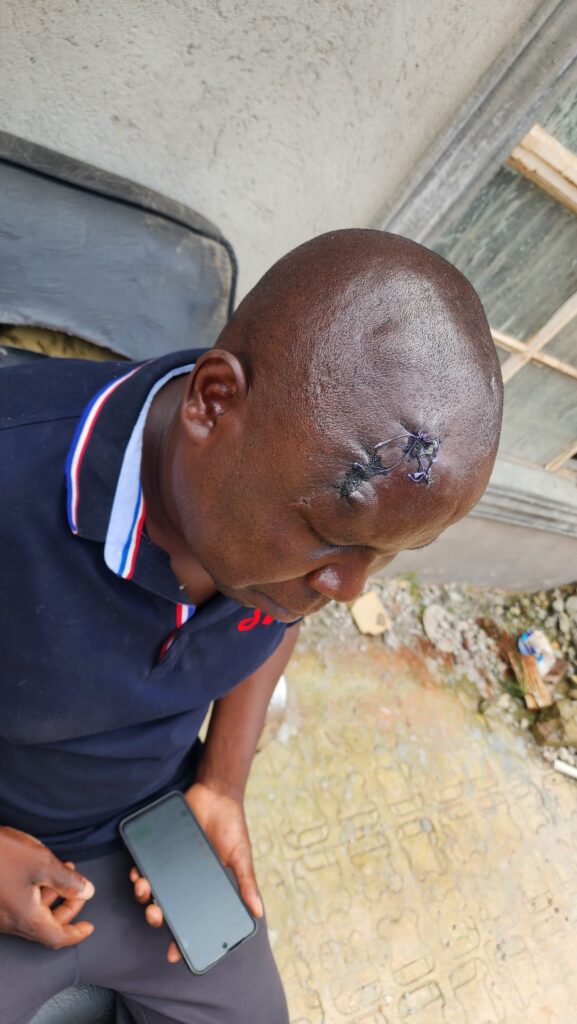
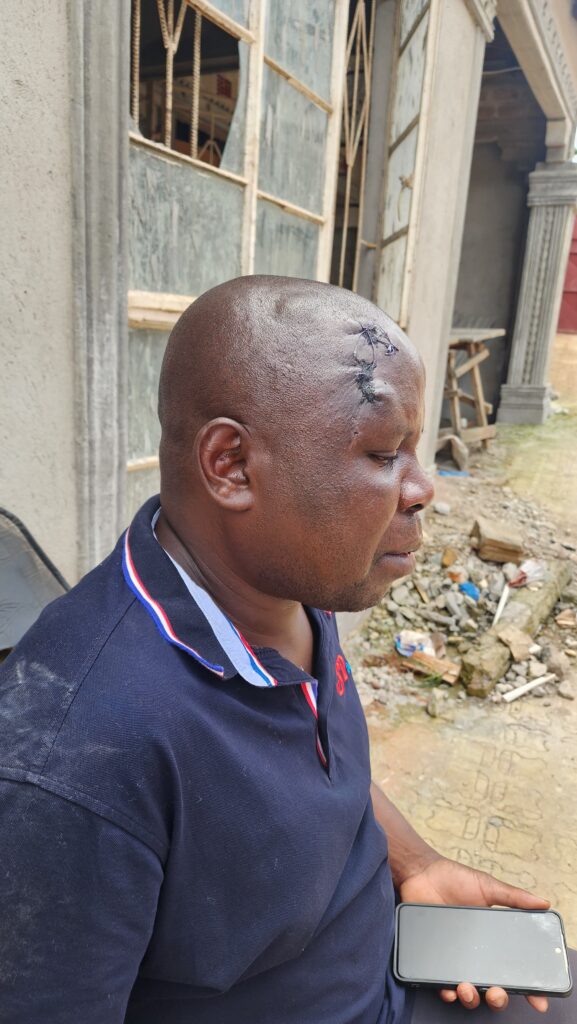
The silence was finally broken when the journalists met Abel Lombe, a local resident known as Bashi Lombe.
He still bore stitches on his forehead, injuries he said he sustained during the campaign period.
Lombe alleged he was attacked by an organised group travelling in a convoy of new, unregistered vehicles, including Toyota Hilux pick-up vehicles, a detail he cited as evidence that the violence was coordinated rather than spontaneous.
He further explained that after the assault, the group forcibly took the vehicle and drove off with it as part of their extensively assembled convoy. The vehicle, he said, was later abandoned on the outskirts of Kasama before being recovered. It is currently parked at Kasama Police Station.
But authorities described the election as calm and orderly. Yet testimonies from residents and opposition actors suggest that episodes of intimidation punctuated the campaign.
While no widespread violence was officially recorded, gunshots were reportedly fired during the vote-counting process at the district’s tally centre. That same night, at the same venue, two opposition vehicles allegedly had their windscreens smashed. No comprehensive public account of these incidents has been released.
An unusual show of political force
What drew equal attention was not only alleged violence, but the scale of political presence.
During the campaign period, nearly ten cabinet ministers, alongside senior officials from State House and multiple district commissioners, travelled to Kasama.
In a country where municipal by-elections are typically low-profile affairs, the concentration of executive power in a single local race was striking.
Opposition candidates and local observers argued that this show of force created an uneven playing field, blurring the line between state resources and party campaigning. The ruling UPND has rejected accusations of misconduct and defended the presence of its officials as legitimate political mobilisation.
Allegations of inducements
The investigation also uncovered allegations that local councillors from the opposition Patriotic Front were approached with financial incentives to switch allegiance or offer political support.
One councillor told MakanDay he received an initial cash payment of K5,000 (equivalent to roughly USD 280), with additional promises contingent on the election outcome. Another said he declined a similar offer.
Allegations of inducements are difficult to independently verify, particularly as the alleged payments were made in cash and are strongly denied by ruling party officials. However, they have contributed to a broader perception among opposition actors that the political playing field during the by-election was neither neutral nor evenly administered.
Yuda is the Forum Democracy and Development losing candidate
An Anti-Voter Apathy (AVAP) representative, one of the few organisations that monitored the polls from the campaign period through to voting day, also raised a few concerns about the campaign environment.
AVAP Northern Province regional coordinator, Amos Muselema said the election was fairly good and that campaigns were largely peaceful, despite isolated incidents of alleged electoral malpractices that had been reported. He added that, overall, the election was peaceful because all political parties had been allowed to campaign.
“All in all, the election was peaceful …, except for a few incidents that we observed were some political parties were seen taking hold of voters’ cards of some voters, but generally speaking in almost all the polling stations, there was nothing like that,’’ said Muselema.
Some residents also confirmed instances in which voter and national registration cards were allegedly collected in exchange for cash ahead of polling day. According to those accounts, individuals were paid K50 upon surrendering their voter and national registration cards, with an additional payment reportedly made when the documents were returned.
One voter from Chisanga area, a domestic worker in New Town, said she was among those who surrendered her documents under this arrangement.
She added that some individuals later collected their documents after polling day, meaning they had not cast their ballots.
But the ruling UPND rejected allegations of inducement and intimidation. The party’s Northern Province chairperson, Nathan Ilunga, defended both the heavy presence of government officials including ministers and the conduct of its campaign.
In an interview with Radio Mano, he said party officials were merely collecting information from voters’ cards in selected wards and comparing it with the details contained in the voter register.
Weak enforcement, lingering questions
Police maintained a visible presence throughout the campaign period. However, several complaints raised by residents, including from Lombe, as well as opposition representatives, did not appear to result in any publicly documented investigations. The police presence seemed focused more on maintaining surface order than enforcing the law, and even that order was not consistently upheld.
The Northern Province Police Command referred all questions regarding its conduct, including allegations of professional misconduct and lack of impartiality, to its headquarters in Lusaka.
Police spokesperson Godfrey Chilabi said the Service would respond “once I have the full report from Kasama,” but no response had been received by the time of publication.
The Electoral Commission of Zambia (ECZ), which administered the vote, announced the final results without publicly detailing how reported irregularities were assessed or addressed.
In a response to MakanDay, the Commission said the query was shared with its legal team, which handles conflict management, and that a response would be issued once they reverted. No response had been received by the time of publication.
The broader stakes
Zambia has often been cited as one of Southern Africa’s more resilient democracies, particularly after the 2021 general election marked a peaceful transfer of power.
However, experts say that by-elections, though localised, can serve as important stress tests for institutional neutrality. They offer insight into how security forces operate under pressure, how the advantages of incumbency are exercised, and how secure citizens feel in expressing their political preferences.


Discover more from MAKANDAY
Subscribe to get the latest posts sent to your email.