

By Lucy Nambela
Illegal tree cutting in the Chiawa Game Management Area (GMA) is robbing the community of its natural future. The destruction is driven by poverty, alleged involvement of traditional leaders, and a thriving timber route through Chirundu border.
A disappearing forest
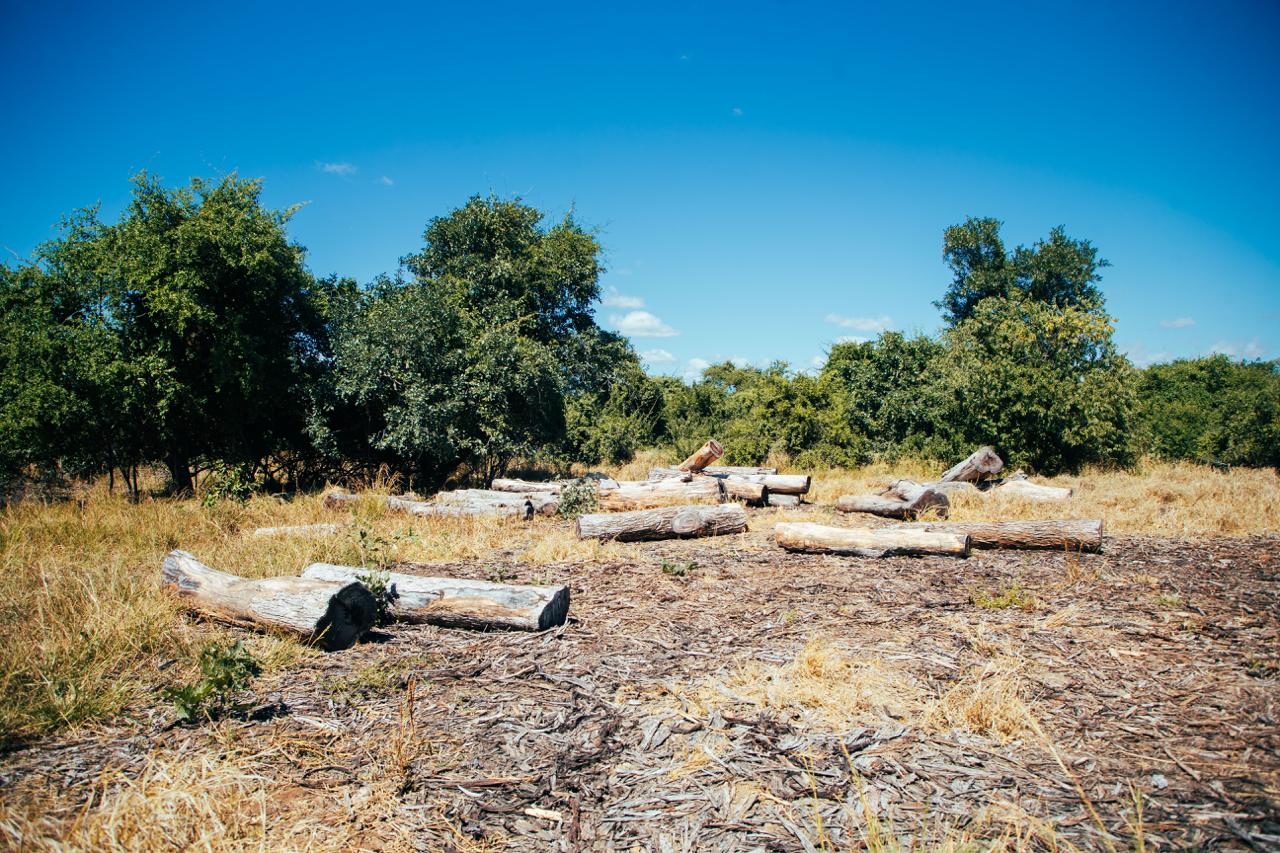
Chiawa GMA, about 150 kilometres southeast of the capital – Lusaka, is a key conservation buffer zone bordering the Lower Zambezi National Park. Its mopani and leadwood forests, vital wildlife corridors, are now marked by dusty tracks and fields of tree stumps. Between 2023 and 2024, illegal logging surged, with reports of powerful individuals exploiting vulnerable residents.
Eyewitnesses describe a coordinated, round-the-clock operation using heavy machinery. Investigations by Capital FM found that even some Community Resources Board (CRB) members tasked with protecting the forests were complicit.
CRB Executive Officer Chiwala Matesamwa said poverty and greed were fuelling the destruction.
“Community members were involved because they saw an opportunity to make money from the illegal activity,” he said. “The loggers used heavy equipment and would even camp in the area for days.”
He also accused some headmen and CRB members of participating, calling it a betrayal of their conservation mandate.
The human cost
At the bottom of the chain are the cutters—men and women working in dangerous conditions for minimal pay.
A 28-year-old logger described spending two weeks in the bush: “I saw at least 10 trucks loaded during that period.”
Another said he earned only K250 a day and quit after cutting 20 trees. Women earned even less.
Martha Kamalata, a mother of three, said: “For removing the bark from the trees, we were paid only K20, sometimes K30 per log.”
A 32-year-old man broke down explaining how his relative was arrested escorting a timber truck.
“I don’t want to speak to you. My relative was arrested,” he said sharply, later adding through tears that the family was still struggling to pay the fine.
The Department of Forestry has not responded to a 27 October 2025 press query on the outcomes of logging-related cases.
Allegations against the royal establishment
Multiple residents alleged involvement of the Chiawa royal establishment.
A 24-year-old man claimed palace officials were recruiting young people to cut mopani and leadwood.
51-year-old long-time resident, recalled hearing “machine-like cutting” late at night in 2024. He said villagers were told the palace was aware of the logging, though he later believed the chieftainess’ name was being used for private gain.
A senior headman confirmed palace representatives had asked him for permission to cut “a few trees,” only for the operation to expand massively.
“The only benefit I got was a bottle of cooking oil,” he said. “Those who came are the only ones who benefitted.”
He warned of the long-term impact.
“If we cut down the trees, where will we get shade? Protecting the trees is everyone’s responsibility,” he said.
Response from the royal establishment
Royal establishment Secretary Oliphans Madzwanya declined to comment, saying he required authorisation from Chairperson Boniface Chiawa.
Chiawa denied any involvement by himself or Madzwanya. He said the logging in places like Kambale was driven by “immigrant loggers” who negotiated with village headmen.
He said the establishment later imposed a logging and charcoal ban and dismissed two headmen who had allowed the activity. He dismissed the accusations as false, suggesting they came from “frustration” among those affected by the ban.
Chieftainess Chiawa was unavailable for comment as she was out of the country for medical treatment.

A betrayal of climate responsibility
Illegal logging has left Chiawa vulnerable to erosion, floods and declining agricultural productivity. Trees that once stored carbon and supported rainfall patterns are vanishing. Rivers and streams are drying up.
A senior resident who was interviewed fears the long-term consequences. “Back then, you couldn’t walk two metres without finding a mopani tree. Now, it’s hard to spot even one… That’s why rains are delaying because there are no trees,” he said.
“It’s unfortunate that this is happening at a time when we should be advocating for reforestation,” environmental activist Elliot Goledema added.
Headman Joseph Kajiwa said the community was already feeling climate change impacts.
“Illegal logging takes away from the community,” he said, adding that youths had been “used as cheap labour.”
He criticised weak enforcement. “The law clearly states that no logging should take place in a GMA, but there is no effective enforcement,” he said.
What authorities say
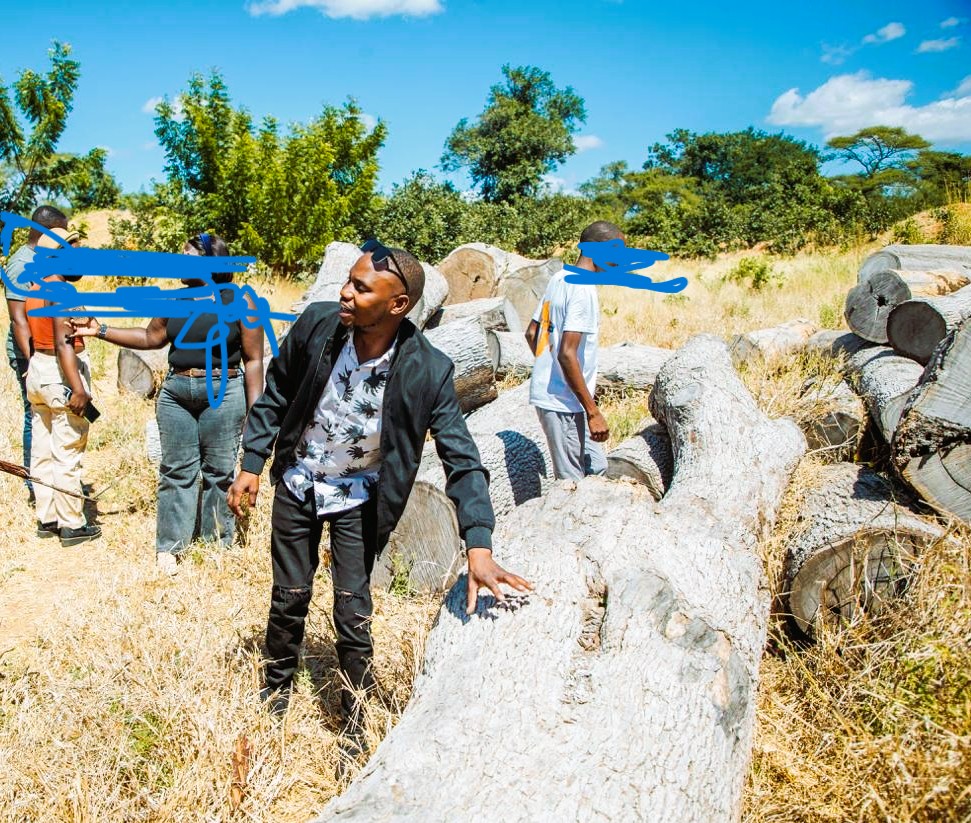
In May 2025, the author witnessed extensive timber destruction during an Environmental Crimes Journalism Fellowship tour led by Forestry Officer Olland Singogo. Six months later, Singogo was suspended and investigated for wrongful disposal of logs. He did not respond to calls.
A senior official at the Ministry of Green Economy and Environment said all logging in Chiawa appeared to be illegal. This was confirmed by Chief Forestry Officer Dr. Freddie Siangulube, who said no concession licence had been issued for the area as it is restricted.
Under Section 15(23)(a) of the Forests Act No. 4 of 2015, cutting or removing any forest product without a permit is illegal.
The Department of National Parks and Wildlife (DNPW) said the Forestry Department is the authority responsible for enforcing forest laws. Tourism Ministry Permanent Secretary Evans Muhanga added that forest-impact assessments fall under Forestry, although DNPW, which sits under his ministry, continues to monitor wildlife populations and land-use trends.
Enforcement actions and wider ccorruption
On 26 June 2025, the Zambia Revenue Authority (ZRA) and Zimbabwe Revenue Authority (ZIMRA) intercepted four timber trucks at Chirundu without proper export permits.
According to a statement on the ZRA website, the timber and vehicles were forfeited, avoiding a K188,000 loss in export duty. The trucks were valued at K3.6 million.
Illegal timber trade is part of a broader national problem. According to Transparency International Zambia, illegal logging of rosewood alone leads to staggering losses of about US$3.2 million in revenue and estimated bribes paid to state officials of about US$1.7 million.
Is there a solution?
Despite the devastation, small steps toward recovery are emerging. CRB Executive Officer Matesamwa said six trucks carrying illegal logs had been impounded.
Chitende Ward Councillor Paul Kagiye is pushing for alternative livelihoods to reduce reliance on environmental destruction.
Lucy is a fellow under the Wildlife Crime Prevention (WCP) environmental fellowship for journalists.
The MakanDay Centre for Investigative Journalism, in partnership with WCP, supported the reporting of this story.


Discover more from MAKANDAY
Subscribe to get the latest posts sent to your email.


